UNESCO World Heritage Destination category

Alhambra and Generalife (Granada, Spain)
Alhambra and Generalife (Granada, Spain)
Convent of Christ / Convento de Cristo (Tomar, Portugal)
Convent of Christ / Convento de Cristo (Tomar, Portugal)
Historic Centre of Évora / Centro Histórico de Évora (Évora District, Alentejo, Portugal)
Historic Centre of Évora / Centro Histórico de Évora (Évora District, Alentejo, Portugal)
Prehistoric Rock Art Sites in the Côa Valley (Vila Nova de Foz Côa, Portugal)
Prehistoric Rock Art Sites in the Côa Valley (Vila Nova de Foz Côa, Portugal)
Monastery of Batalha / Mosteiro de Santa Maria da Vitória (Batalha, Portugal)
Monastery of Batalha / Mosteiro de Santa Maria da Vitória (Batalha, Portugal)
Monastery of Alcobaça / Mosteiro de Santa Maria de Alcobaça (Alcobaça, Portugal)
Monastery of Alcobaça / Mosteiro de Santa Maria de Alcobaça (Alcobaça, Portugal)
Jerónimos Monastery / Mosteiro dos Jerónimos (Lisbon, Portugal)
Jerónimos Monastery / Mosteiro dos Jerónimos (Lisbon, Portugal)
Pena National Palace / Palácio Nacional da Pena (Sintra, Portugal)
Pena National Palace / Palácio Nacional da Pena (Sintra, Portugal)
Porto Cathedral / Sé Catedral do Porto (Porto, Portugal)
Porto Cathedral / Sé Catedral do Porto (Porto, Portugal)
Clérigos Tower / Torre dos Clérigos (Porto, Portugal)
Clérigos Tower / Torre dos Clérigos (Porto, Portugal)
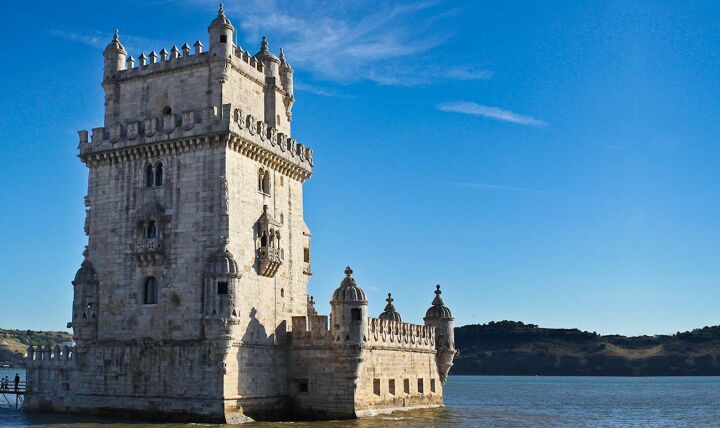
Tower of Belém / Torre de Belém (Lisbon, Portugal)
A sixteenth-century fortress on the Tagus estuary combines a low artillery platform built to defend Lisbon’s harbor with a four-story tower whose carved decoration reflects Portugal’s maritime expansion.
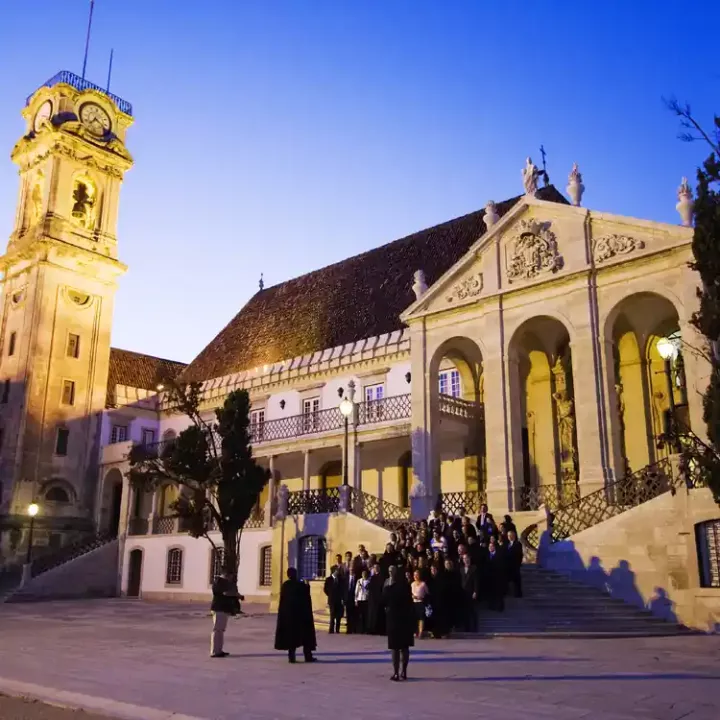
University of Coimbra – Alta and Sofia (Coimbra, Portugal)
A hilltop royal palace and a street of former religious colleges form the two historic centers of a Portuguese university whose architecture, teaching, and academic traditions influenced higher education across the Portuguese-speaking world.