Baklava
Desserts and Bakery Products Desserts and Sweets COUNTRIES AND TERRITORIES Türkiye
-
2026

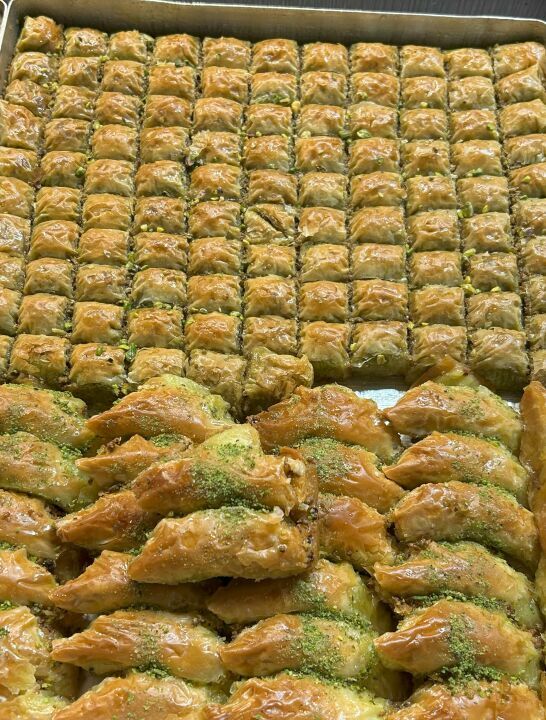
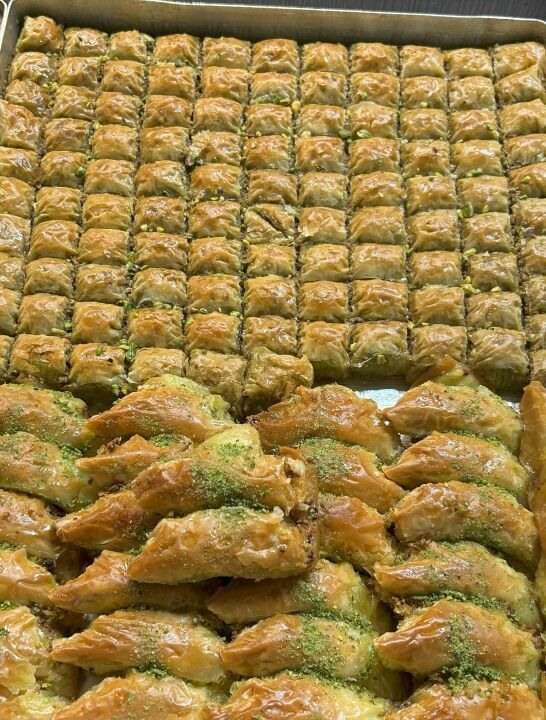
Baklava is a renowned dessert made from very thin layers of yufka (phyllo pastry), filled with ingredients such as walnuts, pistachios, hazelnuts, almonds, or kaymak (clotted cream), baked, and then sweetened with şerbet (sugar syrup). Although many countries have incorporated baklava into their culinary traditions, it remains one of the most widely recognised desserts of Turkish cuisine. Gaziantep is generally regarded as the principal centre of baklava production.
As of 2025, 15 baklava products have been registered as geographical indications in Türkiye (Antep Baklavası, 2008; Sivrihisar Muska Baklavası and Tavas Baklavası, 2018; Bartın Beyaz Baklavası and Devrek Beyaz Baklavası / Devrek Baklavası, 2020; Akşehir Peynir Baklavası and Erzurum Pekmezli Baklavası, 2021; Afyonkarahisar Hurma Baklavası / Afyon Hurma Baklavası, Amasya Cevizli Ballı Baklavası, Kayseri Gül Baklavası, and Uşak Baklavası, 2022; Arapgir Deli Kız Baklavası, 2023; Çerkeş Sırma Baklavası, 2024; Çorum Baklavası and İskilip Baklavası, 2025). Antep Baklavası, first registered as a geographical indication in Türkiye in 2008, was also granted Protected Geographical Indication (PGI) status in the European Union in 2013.
During the Ottoman period, baklava became one of the most popular desserts served at religious festivals, weddings, and special celebrations. Particularly from the late seventeenth century onwards, trays of baklava were presented to the Janissaries by the Sultan in the middle of the month of Ramadan. This ceremonial tradition was known as the Baklava Alayı (Baklava Procession). Today, baklava continues to be an important dessert served especially during Ramadan, celebrations, and special occasions, such as traditional marriage proposal ceremonies. Thus, baklava occupies a significant place in Turkish culture owing both to its long history and to the cultural meanings and rituals associated with it.
The word baklava is of Turkish origin and was used in Old Turkish in the forms baklağu or baklağı. Although different accounts exist regarding the history of baklava, there is broad agreement that its origins can be traced to Central Asia. Its early development is associated with the nomadic Turks of Central Asia, who used yufka as a staple food and prepared multilayered pastries by placing various fillings, such as kaymak and honey, between layers of dough. Following the migration of Turks to Anatolia, ingredients such as pistachios, walnuts, and hazelnuts began to be incorporated into baklava fillings. Over time, baklava was further developed during the Ottoman period and gradually acquired its present form.
It has been suggested that the earliest written record of baklava from the Ottoman period dates to 1473, when it appeared in the kitchen registers of Topkapı Palace during the reign of Sultan Mehmed II (Mehmed the Conqueror). Baklava was subsequently diversified and refined within Ottoman palace cuisine, eventually evolving into the form known today. Since the Ottoman Empire extended well beyond the borders of present-day Türkiye, encompassing territories in Central Europe, the Balkans, the Middle East, North Africa, and parts of the Caucasus, baklava was also adopted by various peoples throughout these regions.
Although baklava varieties are generally similar in terms of preparation and appearance, they can be distinguished according to their fillings—such as pistachios, walnuts, hazelnuts, almonds, sesame seeds, and kaymak—as well as their shapes and cutting styles. Numerous varieties of baklava have emerged over time. Among the best known are pistachio baklava, walnut baklava, şöbiyet, havuç dilimi (carrot-slice baklava), sarığı burma, saray sarması, cevizli bülbül, fıstıklı prenses, fıstıklı dürüm, fıstıklı dolama, kuşgözü, and sütlü nuriye.
Despite the existence of numerous varieties and recipes, the basic ingredients of baklava are largely similar. To prepare a two-kilogram tray of baklava, the dough requires 500 g of flour, 250 g of starch, two eggs, one teaspoon of salt, and 140 g of water. The filling requires 250 g of crushed walnuts and 250 g of melted butter. For the şerbet, 700 g of sugar, 350 g of water, and 10 g of lemon juice are required. Although numerous recipes exist, the basic stages of baklava preparation are generally similar. First, flour, eggs, salt, and water are kneaded together to prepare the dough. The kneaded dough is then divided into portions weighing approximately 50–60 g. These portions are rolled out with a rolling pin, with starch sprinkled between them. The rolled dough is left to rest for approximately half an hour under a damp cloth. Each piece is subsequently dusted with starch and rolled out with a thin rolling pin (oklava) as finely as possible until it reaches the size of the baking tray. Half of the prepared pastry sheets are placed in a greased baking tray, after which the filling—crushed walnuts—is spread evenly over them. The remaining sheets are then layered over the filling in the same manner. The baklava is cut into the desired shape, and the remaining butter, which should not be hot, is poured over it. It is then baked in a preheated oven at 160°C for approximately 30–35 minutes. Meanwhile, the şerbet is prepared by boiling water, sugar, and lemon juice for approximately 30 minutes. The hot şerbet is poured over the baked baklava. After being left to rest and cool, the baklava is ready to serve. It may be served on its own, although it is also commonly accompanied by ice cream or kaymak.
Baklava is a labour-intensive dessert, and one of the most important aspects of its preparation is rolling the pastry sheets extremely thin. Determining the appropriate baking time and achieving the correct consistency and absorption of the şerbet are also crucial to successful preparation. Furthermore, the flour used for baklava should preferably be durum wheat flour or special-purpose flour, while the starch should be wheat starch obtained from durum wheat. Some recipes may use vegetable oil or shortening instead of butter. Ultimately, the types and quantities of ingredients and the preparation methods used for baklava may vary not only from one region to another but also from one individual to another. Historically, in addition to asking prospective cooks to prepare rice pilaf, their professional skills were sometimes assessed by having them prepare baklava. Even today, food and beverage establishments may employ specialist baklava ustaları (baklava masters) whose primary responsibility is the preparation of baklava. For these reasons, it is difficult to provide a single definitive standardised recipe for baklava. Regional variations are also common throughout Türkiye. Pistachio baklava is widespread in Southeastern Anatolia, walnut baklava in Central Anatolia, almond baklava in the Aegean Region, hazelnut baklava in the Black Sea Region, and sesame baklava in Thrace.
In terms of the sensory characteristics of baklava prepared in accordance with established standards, each piece on the tray should have a uniform golden-yellow colour. The upper and lower surfaces should be evenly coloured, without differences in the degree of baking. High-quality baklava should not appear burnt or overly dark, while the pistachios used in the filling should display an emerald or grass-green colour. When chewed, it should not leave a greasy or coating sensation in the mouth; neither the şerbet nor the overall texture should be excessively heavy or cause an unpleasant burning sensation in the throat. Owing to its characteristic degree of baking, high-quality baklava should break apart easily and melt pleasantly in the mouth.
References
Bilgin, A., & Samancı, Ö. (2015). Türk mutfağı [Turkish cuisine]. Ministry of Culture and Tourism; Özbay, G. (2019). Güneydoğu Anadolu Bölgesi mutfağı [Cuisine of the Southeastern Anatolia Region]. İçinde M. Sarıışık & G. Özbay (Eds.), Ulusal gastronomi ve Türk mutfağı: Tarihçe, hammadde, ritüeller, özgün yemekler ve reçeteler [National gastronomy and Turkish cuisine: History, raw materials, rituals, traditional dishes and recipes]. Detay Publishing; Şavkay, T. (2000). Tatlı kitap: Türk ve dünya tatlıları [The dessert book: Turkish and world desserts]. Şekerbank–Radikal; Türk Dil Kurumu (TDK). (t.y.). Güncel Türkçe Sözlük. https://sozluk.gov.tr/ (Erişim tarihi: 7 Mart 2021); Türk Standartları Enstitüsü (TSE). (t.y.). Türk Standartları Enstitüsü. https://www.tse.org.tr/Icerik/HaberDetay?HaberID=4900 (Erişim tarihi: 7 Mart 2021); Türk Patent ve Marka Kurumu (TÜRKPATENT). (t.y.). Coğrafi İşaretler Portalı: “Baklava” arama sonuçları. https://ci.turkpatent.gov.tr/cografi-isaretler/liste?il=&tur=&urunGrubu=&adi=baklava (Erişim tarihi: 23 Ağustos 2026); European Commission. (2013). Commission Implementing Regulation (EU) No 1399/2013 of 18 December 2013 [Antep Baklavası/Gaziantep Baklavası (PGI)]. https://eur-lex.europa.eu/legal-content/EN/TXT/?uri=CELEX%3A32013R1399 (Erişim tarihi: 23 Ağustos 2026).
See Also:
See Also
Map