Flag Carrier Airlines
TRANSPORT INFRASTRUCTURE, TRANSPORT TERMINALS AND PASSENGER CARRIERS Airlines Airline Business Models Airline Ownership Air Transportation
-
2026

National airlines are companies established through initiatives of their respective countries, wholly or partially owned by the state, generally operated in accordance with national policies, and commonly referred to as flag carrier airlines. Historically, ownership restrictions imposed on national airlines were intended to protect national interests, ensure territorial and airspace integrity, and maintain strategic control. While these considerations remain relevant today, the aviation sector's high investment requirements, globalisation, and the need to maintain market competition have led governments facing financial constraints to reduce or sell their ownership stakes.
Following the liberalisation of the US airline industry, which subsequently influenced aviation markets worldwide, government policies in the aviation sector increasingly focused on privatisation. Thus, airlines that were initially state-owned were gradually privatised. This period of liberalisation increased international competition in the aviation sector. As liberalised airlines expanded their route networks and commercial operations, government support proved insufficient to meet the demands of increased competition and service quality. As a result, countries either completely privatised their flag carriers or reduced their ownership stakes by offering shares to the public. However, national airlines may also be regarded as significant barriers to market entry for private air transport operators in their respective countries. Airlines that remain state-owned may be required to operate scheduled flights to destinations determined by the state within the framework of the government's social, economic, and political policies. Therefore, the full or partial privatisation of flag carrier airlines may reduce barriers to entry into the airline market, facilitate the opening of new routes, and, to some extent, reduce monopolistic power in the market. The entry of new operators into a country's airline market increases competition, leading to improvements in both infrastructure and services. Therefore, it can be said that many national flag carriers are now partially or fully privatised.
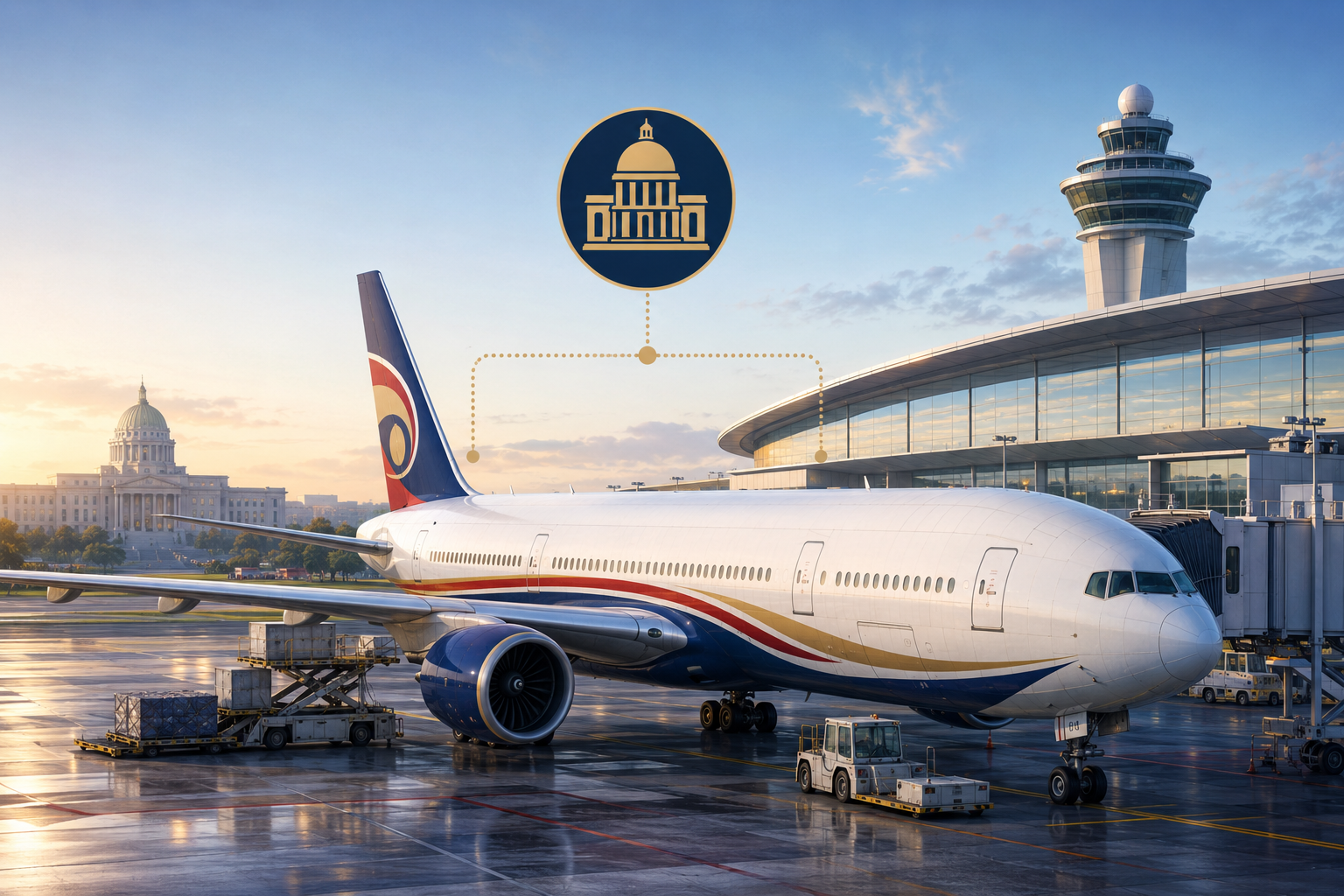
The most prominent characteristic of national airlines is their flag carrier identity. These airlines operate as representatives of their countries and may also serve strategic and political objectives. It is particularly important that their corporate policies and practices remain consistent with national policies and that the country's image is protected in their activities. National airlines are often perceived by the public as symbols of national identity representing their respective countries. These national, or flag carrier, airlines are also important instruments for promoting a country in economic, political, and tourism contexts. Airlines with a strong competitive position in the international aviation market can contribute to a country's air cargo transportation and import and export activities. Moreover, they not only promote tourism but also contribute significantly to its growth by facilitating international travel and offering extensive route networks. These airlines, in particular, may be able to establish new routes and operate flights to previously unserved destinations with the financial and non-financial support they receive from the state. In short, governments may adopt a more protective and supportive stance towards airlines that represent national identity and prestige. From this perspective, such support may contribute to economic and social prosperity in both the national airline's home country and the destination country.
National airlines typically select one of the busiest international airports in their home countries as their main hub. Examples include Turkish Airlines at Istanbul Airport (IST), Lufthansa at Frankfurt Airport (FRA), and British Airways at London Heathrow Airport (LHR). Furthermore, these airlines generally demonstrate a high level of compliance with the standards and regulations of international aviation organisations such as IATA and ICAO. Flag carrier airlines may have a competitive advantage in operational planning owing to historical slot rights protected under grandfather rights; however, this advantage may also create barriers for new airlines entering the market. These advantages enable flag carriers to maintain high service standards and operate scheduled flights across different markets simultaneously. National airlines can expand their route networks not only through their extensive fleets but also through the airline alliances to which they belong. For example, Turkish Airlines, Lufthansa, and Air Canada are members of Star Alliance, one of the world's largest airline alliances; Air France is a member of SkyTeam; and British Airways and Japan Airlines are members of Oneworld.
National airlines generally employ large numbers of flight crew members owing to the size of their fleets and the frequency of their operations. In short, national airlines can be regarded as important assets for countries, not only because of their representational role but also because of the employment they generate and the commercial and tourism activities they support.
References
Burghouwt, G., Mendes de Leon, P., & de Wit, J. (2015). EU air transport liberalisation process, impacts and future considerations (International Transport Forum Discussion Paper No. 2015-04). International Transport Forum, OECD. http://www.internationaltransportforum.org/jtrc/DiscussionPapers/DP201504.pdf; British Airways. (t.y.). About British Airways. https://www.britishairways.com/content/information/about-ba (Erişim tarihi: 15 Ağustos 2025); Gerede, E. (2015). Uluslararası havayolu taşımacılığında liberalleşme süreci. İçinde E. Gerede (Ed.), Havayolu taşımacılığı ve ekonomik düzenlemeler: Teori ve Türkiye uygulaması. Sivil Havacılık Genel Müdürlüğü Yayınları; ICAO. (2025). Compilation of information on air carriers’ ownership. ICAO Secretariat, Economic Regulatory Framework Section, Air Transport Bureau; Khan, A. (2024). Assessing the influence of state-owned national airlines on economic growth: Policy implications for developing economies. SSRN. https://doi.org/10.2139/ssrn.4993056; Lee, W. J., & Yoon, S. Y. (2024). Growing stakeholderism in the airlines after the COVID-19 pandemic. Journal of Air Transport Management, 116, 102574. https://doi.org/10.1016/j.jairtraman.2024.102574; Lufthansa Group. (t.y.). Company portrait. https://www.lufthansagroup.com/en/company.html (Erişim tarihi: 15 Ağustos 2025); Oneworld. (t.y.). Oneworld member airlines. https://www.oneworld.com/members (Erişim tarihi: 15 Ağustos 2025); Orhan, G. (2019). Slot ve permi işlemleri. İçinde E. Kaya (Ed.), Havayolu işletmelerinde operasyonel planlama. Anadolu Üniversitesi; SkyTeam. (t.y.). SkyTeam members. https://www.skyteam.com/en/about/our-members (Erişim tarihi: 15 Ağustos 2025); Star Alliance. (t.y.). About Star Alliance. https://www.staralliance.com/en/about (Erişim tarihi: 15 Ağustos 2025); Turkish Airlines. (t.y.). Hakkımızda. https://www.turkishairlines.com/tr-tr/basin-odasi/hakkimizda/ (Erişim tarihi: 15 Ağustos 2025); Yaslioglu, D. T., Akyurt, İ. Z., Yaslioglu, M. M., & Erdag, T. (2023). A comparative research on the crew planning department of airlines adopting different business models: Turkish flag carrier and a low-cost airline example. Journal of Aviation, 7(1), 17–28.
External Link / Internet Address
https://www.turkishairlines.com/en-tr/press-room/about-us/index.html
See Also:
See Also