Free Walking Tours
TOURISM TYPES AND FORMS Emerging Tourism Types

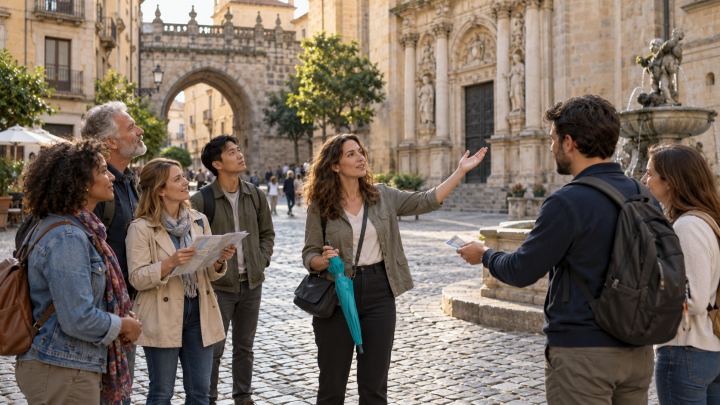
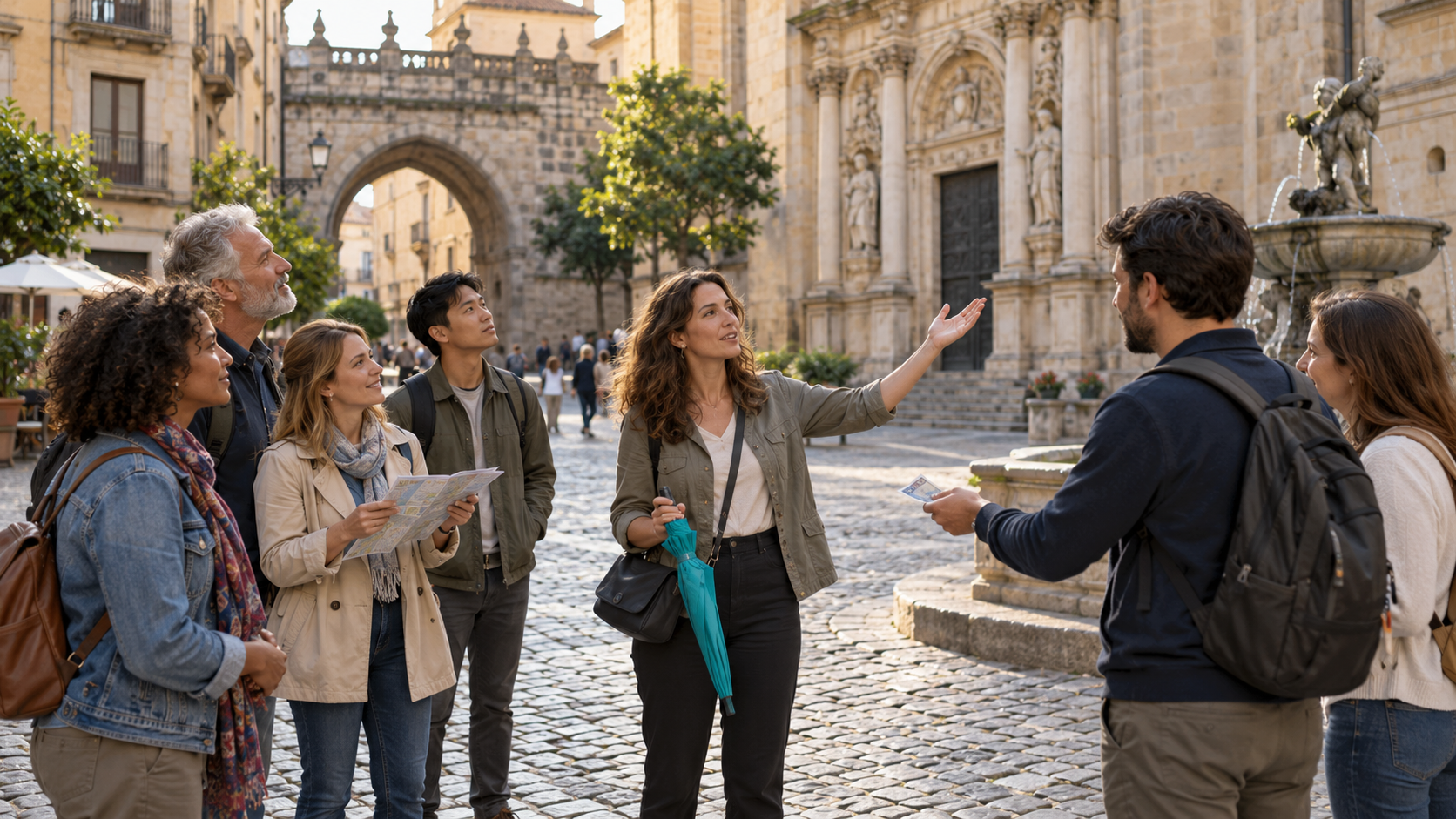
Free walking tours (FWTs) are guided urban itineraries that introduce visitors to the history, culture, architecture, heritage, everyday life and social identity of a destination. They are generally organised around a voluntary-payment model, commonly described as pay what you want, whereby participants are not required to pay a fixed price in advance but may offer a tip or contribution after the tour. Their business model relies heavily on the principles of the sharing and collaborative economy and the cultural tourism 4.0 paradigm (Almeida et al., 2026). Their defining characteristics are the combination of pedestrian mobility, locally situated interpretation, flexible pricing and, increasingly, promotion and booking through digital platforms (García & Ruiz, 2022; Nilsson & Zillinger, 2020).
Unlike conventional guided excursions, which normally have a predetermined price and may be sold through travel agencies or tour operators, free walking tours are frequently marketed directly by individual guides or small businesses. Digital platforms and social media facilitate the promotion of itineraries, reservations, customer reviews and communication between guides and prospective participants. This arrangement can reduce reliance on traditional intermediaries, although platform commissions, advertising costs and other commercial arrangements may still apply (Rivera-García et al., 2023).
The word free therefore requires qualification. It usually refers to the absence of an obligatory upfront ticket price rather than the absence of an economic transaction. Participants may contribute according to their assessment of the experience, their financial circumstances and prevailing expectations about appropriate payment. For guides, the model creates a direct relationship between the perceived quality of the tour and potential remuneration, while transferring part of the uncertainty over revenue from the visitor to the service provider (Minchuk & Keren, 2025).
Free walking tours are particularly associated with historic city centres, cultural quarters, traditional commercial districts and neighbourhoods with distinctive architectural or social identities. Their itineraries may encompass internationally recognised landmarks, lesser-known heritage sites, street art, local food cultures, political histories, migration, religious traditions and contemporary urban life. Although the format is predominantly associated with walking in cities, the themes and narratives are specific to the places in which the tours operate.
An important feature is the relationship between global practices and local interpretation. The organisational format may be similar across different countries, but guides adapt their stories, examples and interactions to the historical, cultural and social context of each destination. Nilsson and Zillinger (2020) examine this relationship through the role of storytelling in connecting global tourism practices with local urban places.
Free walking tours overlap with cultural tourism, heritage tourism, experiential tourism and urban tourism, but they are not synonymous with any one of these categories. Cultural tourism describes the broader motivation to experience cultural resources; heritage tourism focuses on the past and inherited cultural assets; and urban tourism encompasses a wider range of activities in cities. Free walking tours constitute a particular guided-experience format that may serve these markets.
Their distinguishing features can be summarised as follows:
- Flexible pricing: participants normally decide whether and how much to contribute at the end.
- Pedestrian exploration: visitors encounter streets, buildings, public spaces and neighbourhoods at walking pace.
- Narrative interpretation: guides use storytelling to explain tangible and intangible cultural resources.
- Local mediation: guides connect visitors with place-specific knowledge, perspectives and everyday practices.
- Digital intermediation: online platforms, search engines and social media increasingly facilitate discovery, booking and evaluation.
- Relatively accessible participation: the absence of a mandatory upfront fee may lower the financial barrier to joining.
- Variable formality: organisational arrangements, guide qualifications, insurance, payment practices and regulatory compliance differ between destinations and operators.
- Some free tours are operated by qualified professional guides and established companies, whereas others rely on informal working arrangements. Likewise, the quality, depth and reliability of interpretation vary according to the guide, the itinerary and the operator.
Origins of a New Trend in Cultural Itineraries
Free walking tours did not emerge from a single, universally established place of origin. Walking tours, urban guiding and voluntary gratuities have longer histories, while the contemporary free-tour model developed through the convergence of urban tourism, entrepreneurial guiding, flexible pricing, digital distribution and the recent liberalisation of the tourism guiding profession. Consequently, it is more accurate to describe the phenomenon as an internationally diffused tourism innovation than to attribute its invention definitively to one city or country.
The contemporary format became increasingly visible in European city tourism during the early twenty-first century. Historic urban centres provided favourable conditions because they offered concentrated heritage resources, walkable routes, international visitor flows and demand for relatively affordable ways of discovering a destination. The model also allowed individual guides and small operators to enter the market without necessarily adopting the pricing and distribution structures of conventional excursion businesses (García & Ruiz, 2022; Nilsson & Zillinger, 2020).
Several interrelated developments contributed to its emergence.
The expansion of independent and city-break travel increased the importance of short, flexible experiences that could be incorporated into itineraries at relatively short notice. Visitors sought introductions to unfamiliar cities, practical orientation and explanations of landmarks and neighbourhoods beyond what could be obtained from guidebooks alone.
The growth of digital communication transformed the relationship between guides and visitors. Websites, online booking systems, social networks and review platforms made it easier for independent providers to advertise tours internationally and for prospective participants to compare experiences before arrival. Digital intermediation also encouraged the development of destination-specific products that could be marketed to international audiences while retaining a local narrative (Rivera-García et al., 2023).
The collaborative and sharing economy provided a conceptual framework for understanding tourism services based on flexible participation, direct interaction and alternative forms of exchange. However, free walking tours should not automatically be considered non-commercial or genuinely collaborative: their economic organisation may involve professional entrepreneurship, platform-mediated competition and commercial marketing. Dredge and Gyimóthy (2015) caution against treating all tourism activities associated with the collaborative economy as equivalent or inherently beneficial.
According to the authors, the evolution of free walking tours can be understood in several phases:
Early experimentation. Individual guides and small operators began using flexible contributions to attract visitors who might be reluctant to purchase a conventionally priced excursion. The model offered an alternative route into the guided-tour market during a period marked by changes in tourism behaviour.
Digital expansion. The development of online platforms and the increased visibility of free tours on social media made reservations easier and allowed customer ratings and reviews to influence demand. The result was a more extensive international marketplace for locally delivered walking experiences.
Diversification and professionalisation. Tour operators expanded beyond general introductions to include specialised themes, alternative neighbourhoods, food cultures, street art, political histories and other forms of place-based interpretation. Some businesses adopted more formal operational structures, while others retained informal practices.
More recently, as the model became more prominent in heavily visited cities, attention increasingly turned towards the working conditions of guides, platform dependence, the quality of interpretation, urban congestion and regulatory responsibilities. Research on Spanish cultural destinations indicates that the territorial and governance effects of free tours vary according to the scale of activity and the maturity of the destination (Rivera-García & Fernández-Villarán, 2023).
The COVID-19 pandemic represented a wider turning point for tourism digitalisation, although it should not be interpreted as the origin of free walking tours. The increased use of digital communication and interest in virtual experiences illustrated the potential of technology to mediate cultural encounters, while the subsequent recovery of urban travel renewed attention to in-person guided experiences. Research on virtual tours provides relevant context for this broader transformation, but virtual tours remain distinct from the conventional outdoor free walking-tour format (Geng, 2022).
More recent scholarship has examined free walking tours as a platform-mediated tourism practice rather than merely an inexpensive form of sightseeing. Rivera-García et al. (2025) investigate the motivations underlying tourists’ selection of platform-mediated free tours, including the roles of platform trust, electronic word of mouth, sustainability values and online loyalty. Minchuk and Keren (2025), meanwhile, analyse competition between operators and the relationship between promotional effort, tour quality and voluntary payment. Together, these studies indicate that the phenomenon is best understood through the interaction of cultural interpretation, digital entrepreneurship, consumer behaviour and urban governance.
Demand Structure and Current Situation Worldwide
Demand Profile and Motivations
Free walking tours appeal to a diverse international audience, particularly independent travellers, city-break visitors, backpackers, younger adults, international students and tourists seeking an introductory understanding of a destination. They may also attract families, older travellers and visitors with particular cultural interests, depending on the itinerary, language, duration, physical demands and accessibility of the route. These groups should be understood as potential market segments rather than a universal demographic profile.
The absence of a compulsory upfront fee is an important consideration for visitors managing limited travel budgets. It enables them to try a guided experience before deciding on a contribution and may make guided interpretation accessible to travellers who would otherwise explore independently. Nevertheless, the model does not necessarily produce a lower final cost than a conventional tour: the participant’s contribution, the duration of the experience and the quality of service all influence the perceived value of the activity.
Walking tours can provide historical context, explain architectural features and reveal relationships between monuments, public spaces and contemporary urban life. Guides often combine factual information with anecdotes, personal observations and local narratives, helping visitors develop an initial understanding of a destination. The emphasis on storytelling is particularly important because the experience is produced through the interaction between the guide, the group and the urban environment rather than through the physical attractions alone (Nilsson & Zillinger, 2020).
Social interaction also contributes to the appeal of the format. Group walks provide opportunities for travellers to exchange recommendations, meet other visitors and ask questions in an informal setting. For solo travellers, this may offer a temporary sense of companionship and a convenient introduction to a city.
Digital information plays an increasingly important role in the selection process. Tourists may discover an itinerary through search engines, social media, booking platforms, ratings or recommendations from other travellers. Online reviews help reduce uncertainty about the guide, language, duration and content, although they cannot fully guarantee the quality or accuracy of the experience. Rivera-García et al. (2025) identify platform trust, electronic word of mouth and online loyalty as relevant elements in understanding tourists’ intentions to select platform-mediated free tours.
Economic Organisation and Guide Remuneration
The voluntary-payment model creates a distinctive relationship between service provision and remuneration. Guides invest time in designing routes, researching local histories, preparing narratives, attracting participants and delivering the experience. Their earnings depend partly on group size, visitor satisfaction, participants’ contribution decisions and the costs associated with marketing or operating through platforms.
Minchuk and Keren (2025) conceptualise the interaction between operators’ promotional investment, tour quality and visitors’ payment decisions as a competitive process. The model highlights the importance of balancing the effort devoted to attracting participants with the effort devoted to delivering a worthwhile experience.
This arrangement can encourage guides to develop engaging presentations and respond to visitors’ interests. However, it may also produce income instability and pressure to prioritise entertainment, popularity or positive ratings. A strong focus on tips and online reputation may influence which stories are emphasised, how controversial subjects are presented and how guides perform their professional identities. Recent research on platform-mediated tours in Barcelona, Lisbon and Naples has drawn attention to these relationships between digital visibility, narrative performance and informal labour (Rivera-García, 2025).
The term free can also create ambiguity for visitors who do not understand the expected payment practice. Clear communication before and after the tour is therefore important. Operators should explain whether contributions are voluntary, whether additional expenses are excluded and whether booking through a platform involves any charges.
Major Source Markets and International Distribution
Free walking tours operate across numerous international city destinations, especially those with substantial cultural tourism markets, concentrated heritage attractions and established digital tourism infrastructure. European cities have been particularly prominent in the emerging academic literature, including Barcelona and other Spanish destinations, where platform-distributed tours have been examined in relation to urban sustainability and destination governance (Rivera-García & Fernández-Villarán, 2023).
It is difficult to identify a definitive ranking of source markets for free walking tours because comprehensive, internationally comparable statistics on participation, visitor nationality and operator revenue remain limited. In many cases, tour platforms publish listings and customer reviews without providing a standardised account of the overall market. Demand is therefore better described through the international mobility patterns of urban cultural tourism than through an unsupported ranking of national markets.
English-language tours are particularly useful in attracting international visitors who use English as a shared language, while tours in Spanish, German, French and other languages may serve specific visitor groups. The availability of languages varies by destination and operator.
Current Trends and Challenges
Digitalisation and platform dependence. Platforms facilitate discovery, reservation, reputation management and competition. At the same time, operators may become dependent on platform visibility, review systems, commission structures and changing commercial policies. Digital distribution therefore expands market access while creating new forms of intermediation.
The diversification of narratives. Tours increasingly extend beyond canonical monuments to encompass local neighbourhoods, everyday practices, street art, food, migration, political histories and other dimensions of urban culture. This diversification can broaden the interpretation of destinations, although the accuracy and depth of the material depend on the guide and the organisational framework.
Sustainability and urban pressure. Walking reduces the need for motorised transport within the tour itself and can encourage closer engagement with local environments. However, it does not automatically make a tourism activity sustainable. Large groups, concentrated routes, obstruction of pavements, noise and the repeated occupation of sensitive public spaces can create difficulties for residents and other users. Research into Spanish cultural destinations shows that the territorial effects of free tours depend on their scale and the wider tourism context (Rivera-García & Fernández-Villarán, 2023).
Professionalisation and governance. Questions concerning guide qualifications, insurance, working conditions, consumer protection and the use of public space remain important. Regulatory approaches differ between jurisdictions, and the appropriate balance between professional standards and flexible entry into the market is still contested. Excessively weak oversight can expose visitors and workers to risks, whereas poorly designed restrictions may disadvantage small operators and independent guides.
Overall, free walking tours occupy an increasingly visible position within digitally mediated urban tourism. Their future development is likely to depend not only on consumer demand but also on the ability of operators, platforms and destination authorities to maintain service quality, fair working arrangements and compatibility with local urban life.
Major Destinations Worldwide
There is no universally accepted global ranking of free walking-tour destinations. The following examples illustrate cities in which the combination of historic urban environments, cultural attractions and international tourism creates favourable conditions for the format. Their inclusion should not be interpreted as a quantitative ranking of market size.
Barcelona, Spain. Barcelona provides an important case for examining the relationship between free tours, platform-based distribution and destination sustainability. Historic districts, architectural heritage, public spaces and contemporary cultural narratives support a wide range of itineraries. The city is also significant in research concerning tourist concentration, the governance of public space and the social effects of urban tourism (Rivera-García & Fernández-Villarán, 2023).
Lisbon, Portugal. Lisbon’s historic neighbourhoods, viewpoints, squares, architectural heritage and distinctive urban landscape provide opportunities for walking-based interpretation. Routes may connect central historic areas with narratives about maritime history, urban change, local traditions and contemporary city life. Research on pay-what-you-want walking tours in Lisbon also highlights the relevance of visitor perceptions and service-related factors to payment decisions (Bernardi, 2024/2025).
Rome, Italy. Rome’s concentration of archaeological remains, religious sites, historic streets and monumental architecture makes walking an effective means of interpreting the relationships between different historical periods. Free tours may provide introductory accounts of the ancient city, the historic centre and the social history of particular neighbourhoods.
Paris, France. Paris offers opportunities for itineraries centred on architecture, urban planning, literature, art, political history and neighbourhood identity. Its established cultural tourism infrastructure and international visitor market provide favourable conditions for multilingual guided walks.
Berlin, Germany. Berlin’s twentieth-century history, memorial landscapes, architecture and contemporary cultural districts support thematic walking tours. The format is particularly suitable for interpreting sites whose significance depends on historical explanation and the relationships between individual locations.
Prague, Czechia. The historic centre, architectural heritage and compact network of pedestrian routes provide suitable conditions for introductory tours focusing on the city’s medieval, early modern and modern histories.
Amsterdam, the Netherlands. Canal-side streets, historic architecture, neighbourhoods and urban cultural institutions support walking itineraries, including tours that examine the relationship between heritage, contemporary life and tourism management.
Istanbul, Türkiye. Istanbul’s Byzantine, Ottoman and contemporary urban heritage provides opportunities for tours linking monuments, markets, religious architecture, waterfront areas and everyday cultural practices. The city also illustrates how free walking tours can operate in destinations whose cultural resources extend across multiple historical periods and geographical areas.
The prominence of these destinations can be explained by several shared characteristics: a concentration of attractions within walkable areas, a substantial international visitor market, multilingual guiding opportunities, digital discoverability and a recognisable cultural identity. Nevertheless, the scale and consequences of free walking tours differ between cities. Destination authorities and operators must consider local transport conditions, crowding, residential needs, accessibility and the carrying capacity of individual streets and public spaces.
Major Destinations in Türkiye
Türkiye offers favourable conditions for free walking tours because of its historical cities, architectural diversity, cultural landscapes and established international tourism markets. However, comprehensive comparative statistics on the number of free walking tours, their economic contribution and their participants are not readily available. The destinations below should therefore be understood as relevant examples rather than a measured national ranking.
Istanbul. Istanbul is the clearest example of a destination suited to free walking tours. On the historic peninsula, itineraries commonly introduce visitors to Sultanahmet Square, the Hippodrome, the exterior settings of Hagia Sophia and the Blue Mosque, and the surrounding Ottoman and Byzantine urban landscape. Other routes can explore the Grand Bazaar area, Süleymaniye, traditional commercial districts, waterfront neighbourhoods and contemporary cultural spaces. These different itineraries enable guides to interpret the city from religious, architectural, commercial, political and social perspectives. The availability of tours in international languages also makes the format suitable for visitors seeking an introductory orientation to the city (Free Tour Istanbul, n.d.).
Izmir. Izmir’s urban waterfront, historic commercial areas, markets and neighbourhoods provide opportunities for walks focused on the city’s port history, cultural diversity and contemporary urban identity. The historic Kemeraltı market district is particularly relevant to interpretations of commerce, everyday life and the relationship between the historic urban fabric and present-day activity.
Antalya. The historic district of Kaleiçi, with its narrow streets, traditional buildings, harbour and layered architectural heritage, provides a compact environment for guided urban walks. Free walking tours can complement Antalya’s broader coastal tourism offer by directing attention towards the city’s history and built environment.
Ankara. The capital offers opportunities for itineraries addressing the foundation of the Turkish Republic, modern architecture, political institutions, museums and the historical development of the city. Such routes can provide a perspective distinct from those offered by Türkiye’s better-known coastal and imperial heritage destinations.
Bursa. Bursa’s early Ottoman heritage, historic commercial areas, religious architecture and traditional urban spaces provide material for walking itineraries that connect architectural interpretation with the development of Ottoman urban culture.
Gaziantep. Gaziantep’s historic streets, markets, culinary traditions and craft heritage create opportunities for walks linking tangible heritage with food culture and everyday economic activity. The city illustrates the potential for thematic tours to connect built heritage with intangible cultural practices.
Demand profile and common practices in Türkiye. In Istanbul, free walking tours are marketed to international visitors, including independent travellers and those seeking an accessible introduction to the historic centre. English-language tours are available, alongside tours in other languages depending on the operator. Online reservations, platform listings, customer reviews and direct marketing facilitate participation, while voluntary contributions commonly provide the guide’s remuneration (Free Tour Istanbul, n.d.).
Across Türkiye, the development of free walking tours could support the diversification of urban tourism beyond monument-focused sightseeing and conventional package itineraries. The model may also create opportunities for local guides and small tourism businesses to develop specialised products. However, these benefits depend on the accuracy of interpretation, appropriate professional standards, fair working conditions and responsible use of public space.
The regulatory and institutional context is important. Tour guiding in Türkiye operates within a national professional and legal framework, and the fact that an activity is marketed as a free tour does not in itself establish that all applicable requirements have been met. Operators and destination authorities therefore need to distinguish flexible payment arrangements from the separate questions of professional qualifications, business registration, consumer protection and insurance.
References
Carvalho, R. (2024). Free walking tours: Uma tendência em itinerários turísticos [Free walking tours: A trend in tourist itineraries]. In P. Reis & A. Lavaredas, Gestão de itinerários turísticos (pp. 14–15). Pactor; Dredge, D., & Gyimóthy, S. (2015). The collaborative economy and tourism: Critical perspectives, questionable claims and silenced voices. Tourism Recreation Research, 40(3), 286–302. https://doi.org/10.1080/02508281.2015.1086076; Geng, W. (2023). Whether and how free virtual tours can bring back visitors. Current Issues in Tourism, 26(5), 823–834. https://doi.org/10.1080/13683500.2022.2043253; Gössling, S., & Hall, C. M. (2019). Sharing versus collaborative economy: How to align ICT developments and the SDGs in tourism? Journal of Sustainable Tourism, 27(1), 74–96. https://doi.org/10.1080/09669582.2018.1560455; Ivanov, S. (2022). The economics of technology in travel, tourism, and hospitality. Journal of Global Hospitality and Tourism, 1(2), 175–177. https://doi.org/10.5038/2771-5957.1.2.1013; Lima-Almeida, L., Carvalho, R., & Gonçalves, A. R. (2026). Cultural tourism 4.0 and urban planning: Mapping the role of technological innovation. Revista Turismo & Desenvolvimento, 51(SI), 45–78. https://doi.org/10.34624/rj7ds349; Minchuk, Y., & Keren, B. (2025). Free walking tours: A game theoretical approach. Managerial and Decision Economics, 46(8), 4374–4381. https://doi.org/10.1002/mde.70024; Nilsson, J.-H., & Zillinger, M. (2020). Free guided tours: Storytelling as a means of glocalizing urban places. Scandinavian Journal of Hospitality and Tourism, 20(3), 286–301. https://doi.org/10.1080/15022250.2020.1772866; Richards, G. (2021). Rethinking cultural tourism. Edward Elgar Publishing; Rivera-García, J., & Pastor Ruiz, R. (2022). Free walking tours. In D. Buhalis (Ed.), Encyclopedia of tourism management and marketing (pp. 340–343). Edward Elgar Publishing. https://doi.org/10.4337/9781800377486.free.walking.tours
See Also