FAA Clears Boeing 737 MAX 7 for Commercial Service
-
04 Aug, 2026
The US Federal Aviation Administration has issued an amended type certificate for Boeing’s long-delayed 737 MAX 7. The approval removes the most significant obstacle to the aircraft’s entry into commercial service, while Boeing and launch customer Southwest Airlines prepare for the first delivery.
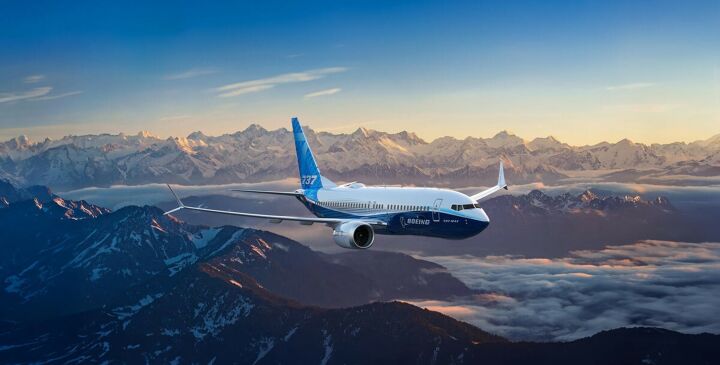
The US Federal Aviation Administration (FAA) has certified the Boeing 737-7, the smallest member of the 737 MAX family. The amended type certificate confirms that the aircraft’s design complies with the regulatory requirements for commercial aviation and clears the way for the model to join airline fleets.
The certification marks the completion of a programme that began in 2018 and was delayed for several years by technical issues and changes in regulatory requirements. Boeing conducted more than 1,000 hours of flight and ground testing, along with extensive system safety analyses and human-factors assessments.
The FAA required updates to the aircraft’s flight-control software and cockpit warning systems, as well as a redesigned engine anti-ice system intended to prevent the possibility of overheating. Associated Press
The longest-range member of the MAX family
Although it is the smallest member of the 737 MAX family, the 737-7 offers the longest range. The aircraft can accommodate between 135 and 160 passengers in a two-class configuration, with a maximum capacity of 172 seats. It has a range of up to 3,800 nautical miles, or approximately 7,040 kilometres.
These capabilities allow the aircraft to serve short- and medium-haul routes as well as longer routes with lower passenger demand. It is also designed to deliver strong performance when operating from hot-and-high airports.
According to Boeing, 737 MAX aircraft reduce fuel consumption and carbon dioxide emissions by 20 per cent compared with the previous-generation aircraft they replace. The manufacturer also states that the aircraft have a 50 per cent smaller noise footprint. Boeing 737 MAX technical specifications
“The certification confirms the rigour of our design”
Stephanie Pope, president and CEO of Boeing Commercial Airplanes, said the certification confirmed the rigour of the aircraft’s design and reflected the determination of the 737 MAX development team in overcoming the challenges encountered during the programme.
Pope said the extended pandemic period and the transition to new certification processes had affected the programme, but the company remained focused on meeting all regulatory requirements and providing customers with a safe and more capable aircraft.
Mike Sinnett, Boeing senior vice-president of Product Strategy, Product Development and Development Programmes, said the company had maintained regular and extensive discussions with the FAA throughout the certification process.
Sinnett added that the experience gained during the programme would support future aircraft development by further strengthening the company’s focus on human factors, safety and quality.
Certification process reshaped
The 737-7 certification programme was conducted under heightened regulatory scrutiny following two Boeing 737 MAX 8 crashes in 2018 and 2019 that killed a total of 346 people.
Following the crashes, the FAA changed its approach to certifying Boeing aircraft. The regulator required additional testing, design changes and a detailed examination of the new model’s flight-safety systems. The FAA has also said its inspections, audits and monitoring of Boeing’s production facilities will continue after certification. FAA
First aircraft to be delivered to Southwest Airlines
Boeing and Southwest Airlines, the launch customer for the 737-7, are preparing for the first aircraft delivery. Boeing teams are applying final configuration updates to previously manufactured aircraft and preparing them for handover.
The FAA has also expanded Boeing Production Certificate No. 700, known as PC 700, to include the 737-7. This authorises the company to manufacture 737-7 aircraft in conformity with the approved design. Each aircraft must still undergo the required production inspections and meet airworthiness requirements before delivery.
By the end of June 2026, total orders for the 737 MAX family had exceeded 7,200 aircraft, with more than 2,300 delivered to customers. Following FAA certification, the 737-7 is now expected to join Boeing’s delivery programme.