Hagia Sophia’s Underground Passages Cleared as Türkiye Plans Visitor Access
-
20 Nov, 2026
Teams working beneath Hagia Sophia in Istanbul have cleared 420 metres of tunnels and removed approximately 3,000 tonnes of accumulated fill. Türkiye’s Culture and Tourism Minister Mehmet Nuri Ersoy said plans would be prepared to open suitable underground sections to visitors, subject to conservation and safety requirements. No opening date has been announced.
The work is revealing previously inaccessible parts of the underground network beneath the Byzantine landmark, which today functions as a mosque. During an inspection, Ersoy received a briefing from Professor Hasan Fırat Diker, a member of the project’s scientific advisory board, on excavation, cleaning, documentation and structural reinforcement.
According to the minister, initial surveys began on 31 December 2024, followed by a second phase of work on 2 December 2025. Investigations in the Vezir Garden and Western Garden have helped researchers examine underground spaces and the passages connecting them.
Excavations have been completed in the Vezir Garden’s hypogeum—an underground burial structure comprising interconnected sections. Its main space measures approximately eight metres in length and eight metres in overall width.
Excavation extending 1.5 metres below the mud-covered floor exposed a section that researchers believe may predate the existing Hagia Sophia building. This interpretation remains under investigation. A channel extending approximately 25 metres eastward has been cleared, while work continues along another channel to the west.
In the Western Garden, teams identified six underground spaces and nine connecting tunnels. Ersoy said the first three spaces were basement areas associated with the atrium, or courtyard, while investigations into the remaining areas were continuing.
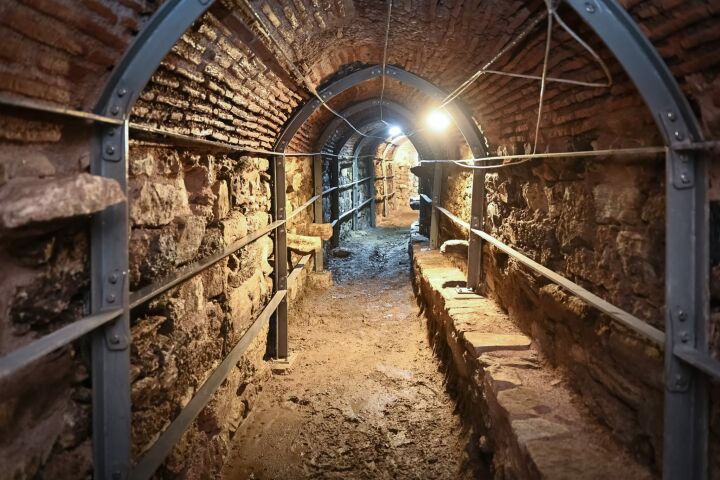
Fill has been removed from seven tunnels, with survey and documentation work undertaken in the other two. The cleared passages total 420 metres. The longest, the 180-metre Tunnel 4, may be connected with a historic route known as Roman Street.
Structural repairs are proceeding alongside excavation. Stainless-steel supports have been installed along a 50-metre section of Tunnel 4, while reinforcement work continues over a 90-metre stretch of Tunnel 5.
Ersoy said the underground network had historically served water distribution and rainwater drainage functions. Any potential use of the tunnels for ventilation would depend on further findings, laser surveys and technical assessments.
The proposed visitor-access project would determine which sections could be presented to the public while protecting the historic fabric and ensuring visitor safety.