Historic Coastal and Urban Complex of Figueira da Foz and Buarcos (Coimbra District, Portugal)
City Tourism COUNTRIES AND TERRITORIES Portugal City Destination Port City Destination
Coimbra District, Portugal
-
2026

Figueira da Foz and Buarcos developed through successive phases of settlement, maritime commerce, coastal defence and tourism. Their documented history predates the thirteenth century: references to the Church of São Julião and the defensive tower at Redondos survive from 1096. Figueira da Foz received town status in 1771 and city status in 1882. Its growth was closely connected to the Mondego estuary, which provided access to inland markets, supported port activities and sustained salt production.
The surviving defensive structures represent several distinct sites. The Fortaleza de Buarcos, also known as Forte de São Pedro de Buarcos, was constructed principally between 1570 and 1602 and subsequently enlarged. Its surviving curtain walls and three bastions mark the historic waterfront. Farther south, the separate Fortim de Palheiros and Forte de Santa Catarina formed part of the same coastal defence network. Santa Catarina developed following a request submitted to Philip I in 1585 and was strengthened after the restoration of Portuguese independence. Both the Fortaleza de Buarcos and Forte de Santa Catarina were classified as Properties of Public Interest in 1961; the Buarcos fortifications underwent consolidation during the twentieth century.
Nineteenth-century seaside tourism introduced a different urban character. The Companhia Edificadora Figueirense, founded in 1861 by engineer Francisco Maria Pereira da Silva, promoted Bairro Novo to accommodate growing demand from seaside visitors. Its regular street pattern, eclectic residences and Art Nouveau decoration contrasted with the older settlement. Casino Figueira occupies a building originally inaugurated in 1884 as the Teatro-Circo Saraiva de Carvalho and subsequently adapted for casino use. The French-influenced Palácio Sotto Maior, constructed for businessman Joaquim Sotto Maior between 1900 and 1920, further illustrates the wealth associated with this period of urban expansion.
North of the urban waterfront, Serra da Boa Viagem contains a forest park of approximately 400 hectares, with walking routes, recreational areas and viewpoints. The Bandeira viewpoint reaches approximately 262 metres and overlooks Quiaios, while Vela offers views towards Buarcos, the estuary and its salt pans. The separately designated Cabo Mondego Natural Monument was established in 2007 to protect internationally significant Jurassic exposures. At Murtinheira, a section of these rocks provides the global reference point defining the beginning of the Bajocian Stage of the Middle Jurassic, giving the coastline particular importance for geological research and interpretation.
Maritime and industrial heritage extends beyond the fortifications. Buarcos’s Núcleo Museológico do Mar, opened in 2003, interprets fishing communities, cod fishing and the industrial history of Cabo Mondego. The Núcleo Museológico do Sal, opened in 2007 at the municipal Corredor da Cobra saltworks in Armazéns de Lavos, presents traditional salt production and estuarine biodiversity. The knowledge associated with artisanal sea-salt production in Figueira da Foz entered Portugal’s National Inventory of Intangible Cultural Heritage in 2023.
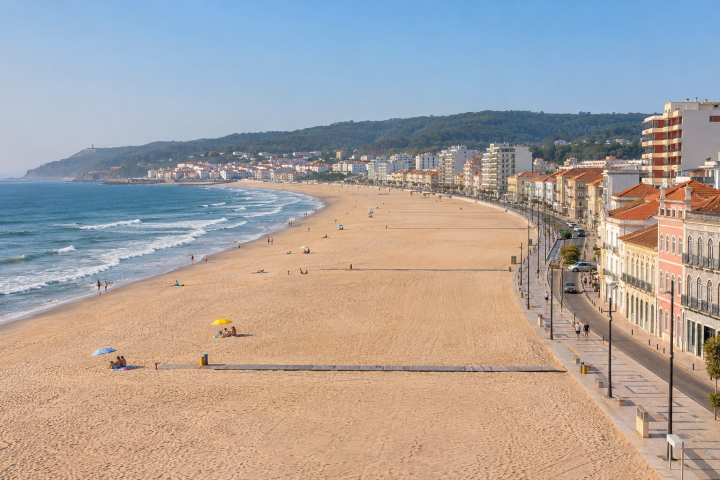
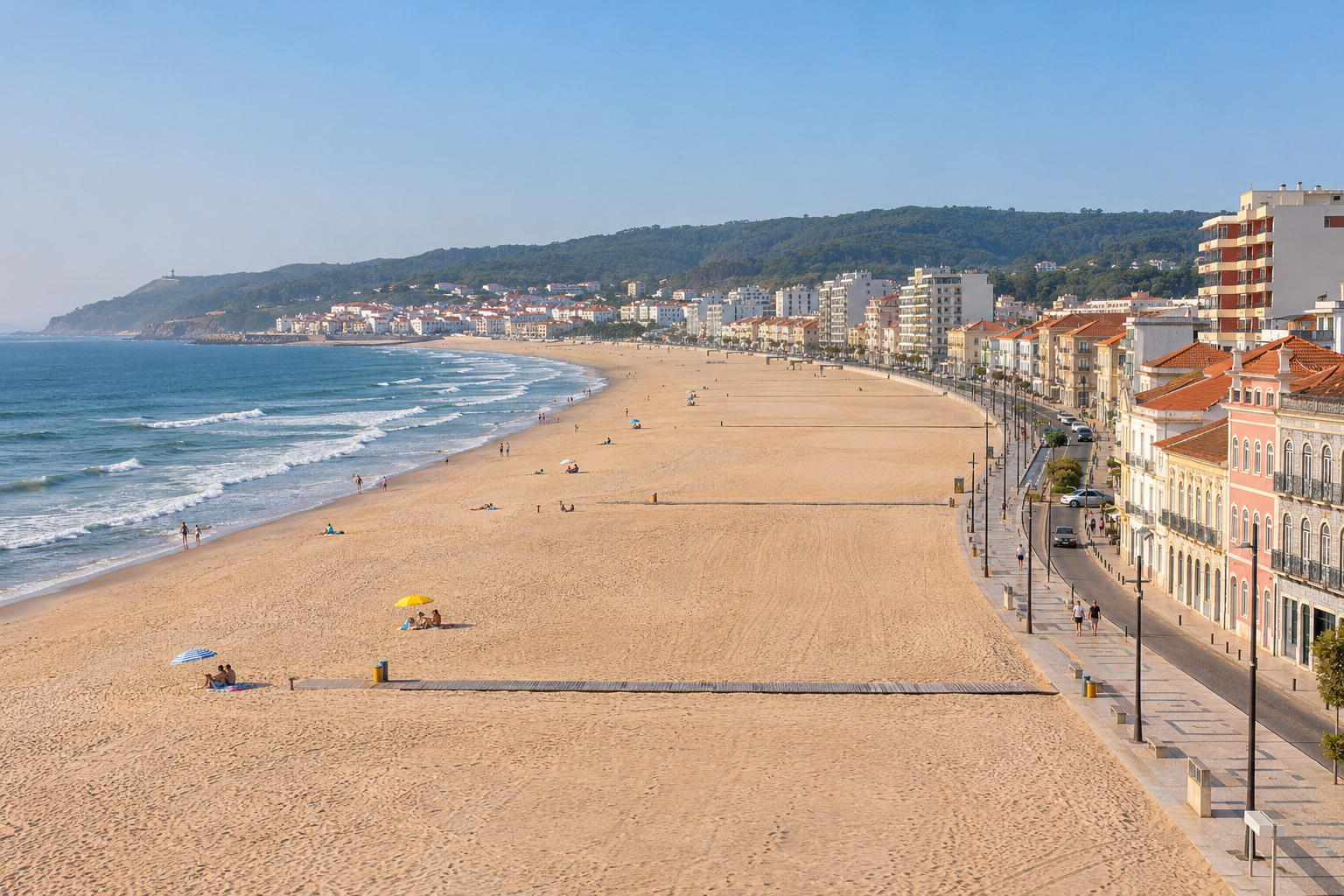
Today, beaches, waterfront promenades, cultural venues and nearby forest trails support complementary forms of seaside, cultural and nature tourism alongside the working port. The unusually broad sandy waterfront is also a changing coastal environment: research links sand accumulation along Buarcos–Figueira da Foz to harbour engineering, alongside erosion farther south. Its conservation therefore involves both historic-building protection and coastal management.
References
Amorim, I. (1995). Figueira da Foz: Da memória à história da cidade. Câmara Municipal da Figueira da Foz; Cardoso, J. L. (2004). O património arqueológico e geológico da Serra da Boa Viagem. Academia das Ciências de Lisboa; Netto, V. (2010). Buarcos: História, tradição e mar. Edições Grupo Caras Corentes; Silva, A. (2001). Arquitectura de veraneio na Figueira da Foz (1870–1930). Edições Almedina.
See Also:
Map