Thermal Baths of São Pedro do Sul / Termas de São Pedro do Sul (São Pedro do Sul, Viseu District, Portugal)
Complementary and Alternative Health Tourism Health Tourism COUNTRIES AND TERRITORIES Portugal Health Tourism Destinations Occupational Health and Safety
São Pedro do Sul, Viseu District, Portugal
-
2026

The hot springs at São Pedro do Sul rise through fractures in the granite of the Vouga Valley. At the traditional spring, the water emerges at approximately 68.7 °C. It is alkaline and sulfurous, with sodium and bicarbonate as its principal dissolved ions. The Romans built a bathhouse on the river’s left bank in the first half of the first century CE. Excavations indicate that a second building replaced it early in the second century. Its entrance faced the river, and an indoor pool occupied the central hall. To the east, steps led down into an outdoor pool measuring about 20.5 by 9 meters. Surviving water conduits and drainage channels show how the builders supplied the baths and discharged water into the Vouga.
In 1152, Afonso Henriques, the first king of Portugal, granted a municipal charter to the settlement then known as Vila do Banho. According to local tradition, he later took the waters there while recovering from a leg injury sustained at Badajoz in 1169. His association with the baths survives in the name Piscina de D. Afonso Henriques. In the early 16th century, King Manuel I financed the conversion of the old bathhouse into the Hospital Real das Caldas de Lafões and granted the settlement a new charter in 1515.
In 1884, the municipality decided to replace the royal hospital with a new bathhouse. Queen Amélia first took the waters in the new building in 1894, and the resort was named Caldas da Rainha D. Amélia the following year. It adopted its present name after Portugal became a republic in 1910. The ancient bathhouse, meanwhile, ceased to serve bathers and was later used as a primary school and for storage. The Vouga floods of 1995 caused part of the structure to collapse.
The restored Balneário Romano opened to visitors in 2019. Architect João Mendes Ribeiro used marks left by the original vault on the surviving walls to establish the profile of a new brick vault. A skylight above the indoor pool brings daylight onto the water. An interpretation center, opened in 2023, uses archaeological evidence and audiovisual displays to explain how the building changed from Roman baths to royal hospital.
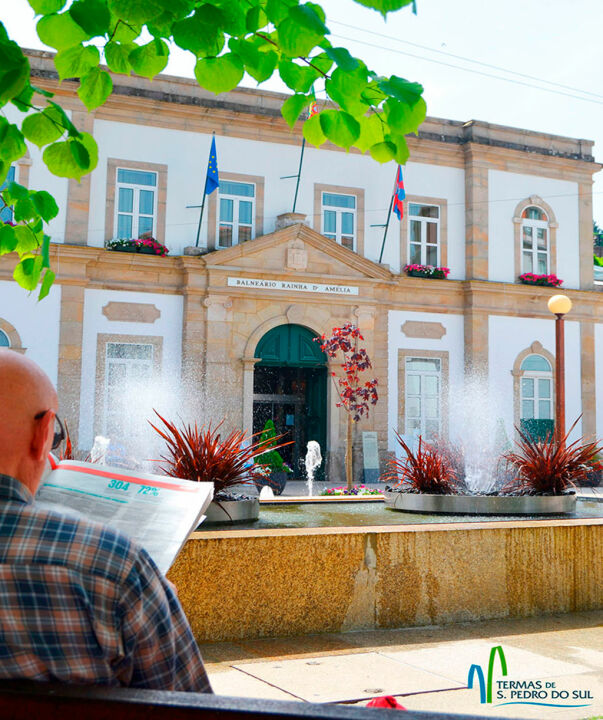
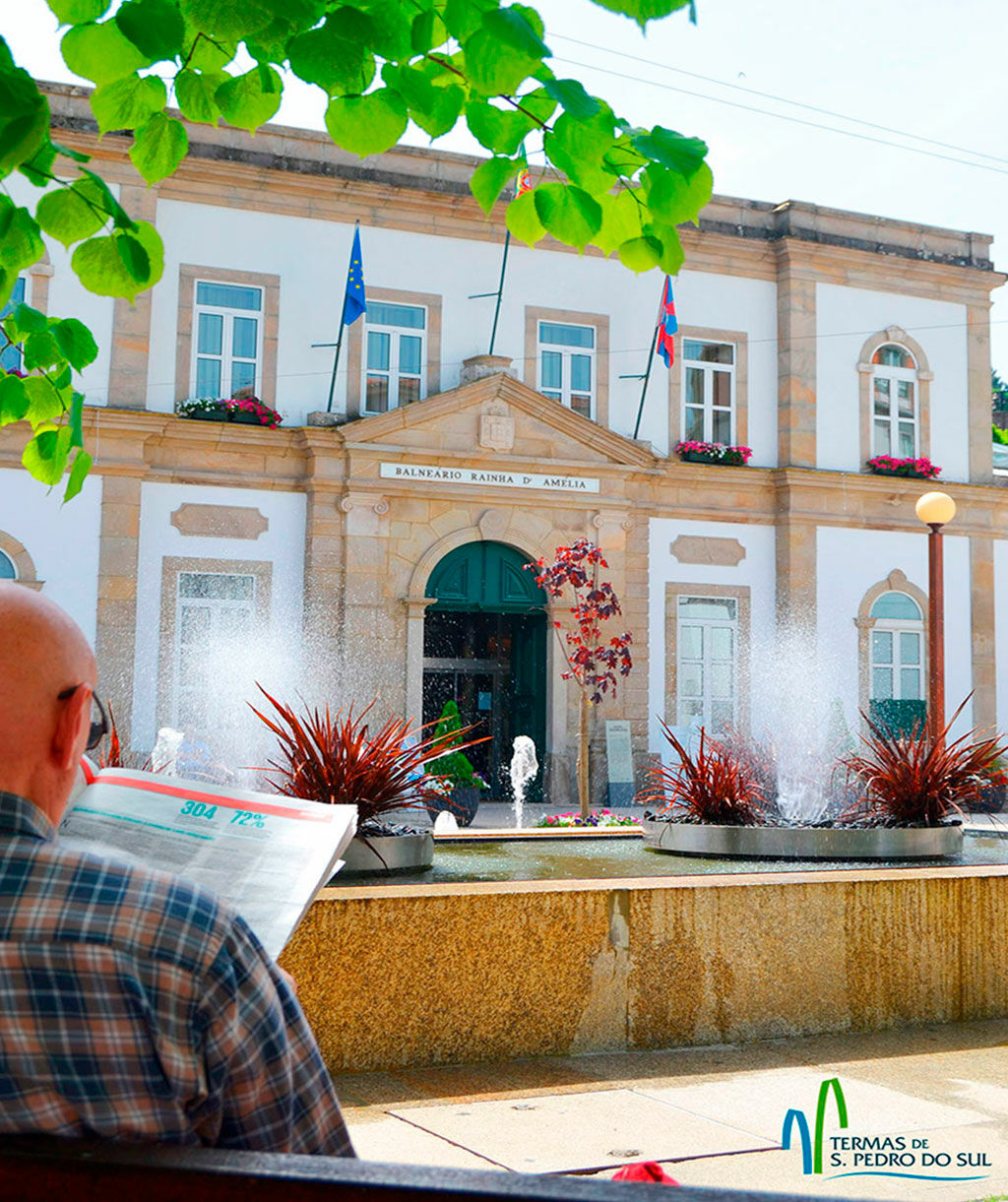
Today, bathing takes place in two facilities operated by the municipal company Termalistur. The Balneário Rainha D. Amélia specializes in wellness bathing and houses a collection of historic tubs, showers, and treatment equipment. The Balneário D. Afonso Henriques, opened as a thermal center in 1987 and remodeled in 2007, provides medical consultations, physiotherapy, and thermal treatments for rheumatic, musculoskeletal, and respiratory conditions. Geothermal heat also supplies local buildings and swimming pools through a district heating network. In 2025, the resort recorded 23,714 clients across its therapeutic and wellness services; this figure excludes visits to the archaeological site.
References
Cavaleiro, V. M., & Martins, J. M. (2009). As termas de São Pedro do Sul: História, geologia e património termal. Câmara Municipal de São Pedro do Sul; Correia, V. (1924). O balneário romano de São Pedro do Sul. Imprensa da Universidade; Frade, H., & Moreira, J. B. (1992). A arquitectura das termas romanas de S. Pedro do Sul. Espacio, Tiempo y Forma. Serie II, Historia Antigua, 5, 515–544. https://doi.org/10.5944/etfii.5.1992.4205; Mangorrinha, J. (2000). O lugar das termas: Património e desenvolvimento regional: As estâncias termais da Região Oeste. Livros Horizonte.
See Also
Map