Alheira de Mirandela (Mirandela, Trás-os-Montes, Portugal)
Traditional Food Resources COUNTRIES AND TERRITORIES Portugal
Mirandela, Trás-os-Montes, Portuga
-
2026

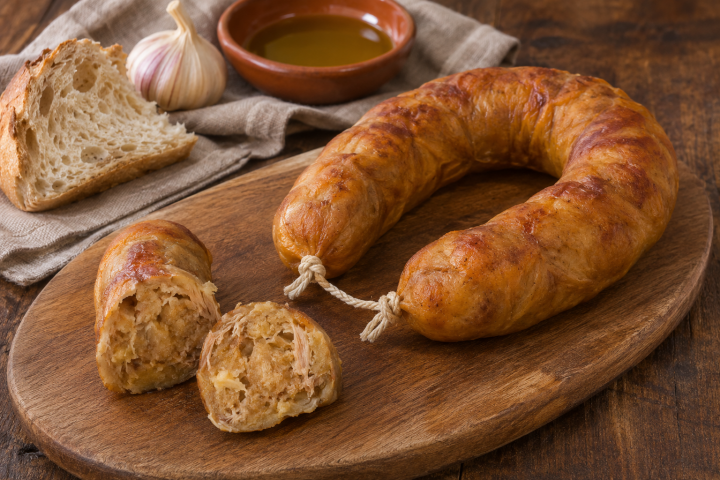
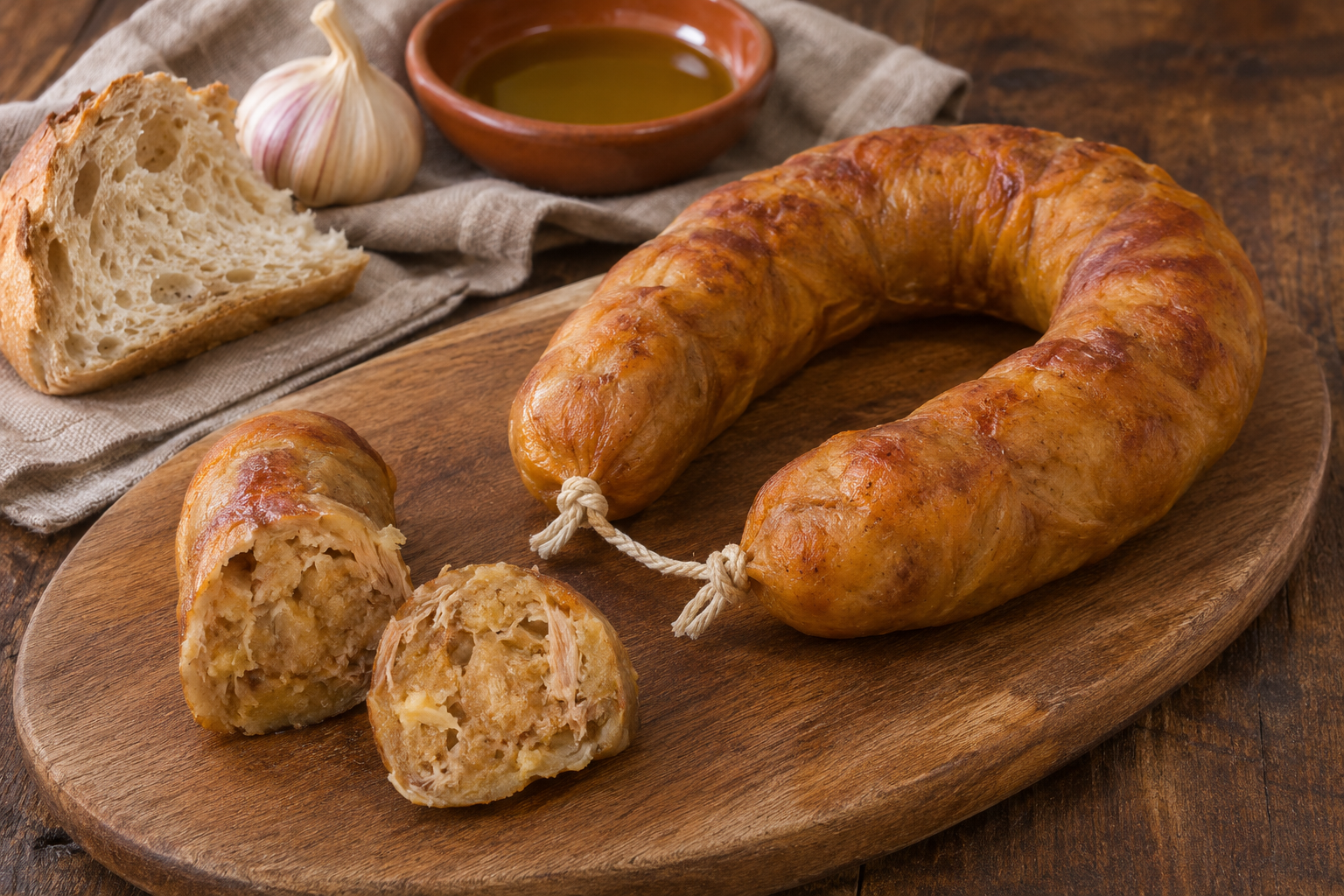
Associated with the municipality of Mirandela in the historical region of Trás-os-Montes, this speciality belongs to northern Portugal’s tradition of fumeiro, the preparation of smoked meat products. Its distinctive character comes from combining shredded meat with bread soaked in cooking stock. The resulting filling is moist and uneven in texture, with visible meat fibres, a pronounced garlic flavour and a lightly smoky aroma. The exterior is typically yellowish-brown.
A widely repeated origin story connects alheira with New Christians of Jewish ancestry who secretly maintained Jewish religious practices during periods of persecution. According to this account, sausages containing poultry and bread were hung in household chimneys to resemble pork sausages and discourage suspicion. This explanation remains debated and should be understood as a popular origin narrative rather than a conclusively documented invention. The modern protected product contains pork. More securely documented evidence includes local newspaper references from 1957 and a 1960 complaint about producers elsewhere using Mirandela’s name for imitations.
The protected recipe includes pork from Bísaro pigs or specified crosses containing at least 50 per cent Bísaro ancestry, together with chicken, regional wheat bread, olive oil, lard, garlic, salt and sweet or hot paprika. Certain additional meats, including game, are permitted. The olive oil must be Azeite de Trás-os-Montes DOP or have comparable sensory characteristics. Under the published specification, meat constitutes at least 60 per cent of the mixture, bread accounts for 15–25 per cent, and olive oil for 4–8 per cent. The casing is natural salted cattle intestine, tied with cotton thread.
Preparation begins by cooking the seasoned meats in water to produce an aromatic stock, locally called calda. The meat is removed, deboned and shredded, while thinly sliced bread absorbs the stock. The ingredients are mixed with the fats and seasonings before being stuffed into casings and formed into horseshoes. Smoking takes place over a gentle fire using regional woods, particularly oak and olive, for approximately eight days. The method depends on balancing moisture, seasoning and smoke while retaining the characteristic soft filling.
Before consumption, the sausage is cooked, commonly by grilling, roasting or gentle pan cooking. Boiled potatoes and grelos, leafy brassica shoots, are characteristic regional accompaniments. Fried eggs, chips and rice also appear in restaurant presentations. It may be served whole as a main course or divided into portions as a petisco. Cooking times depend on the product and method; storage and preparation should follow the producer’s instructions. Its nutritional composition reflects the combination of meat, bread and fats, and the wheat bread contributes gluten.
European Protected Geographical Indication registration dates from 2016. The defined production area is the municipality of Mirandela, where the specified preparation, stuffing and smoking stages must occur. The designation protects a particular regional product rather than every sausage sold as alheira. Other separately recognised specialities include Alheira de Vinhais IGP and Alheira de Barroso-Montalegre IGP, each with its own specification.
Production supports local food businesses, restaurants and gastronomic tourism. The annual Feira da Alheira de Mirandela brings together producers and visitors, presenting the sausage alongside regional olive oils, wines, cheeses and other products. Its selection in the 2011 public competition Seven Wonders of Portuguese Gastronomy further increased national visibility; that distinction is separate from geographical-indication protection. Available through specialist shops and wider retail distribution, it remains closely associated with Mirandela’s culinary identity and domestic smoking traditions.
References
Associação de Produtores de Alheira de Mirandela. (2020). Caderno de especificações da indicação geográfica protegida Alheira de Mirandela; Carvalho, M. (2018). Os enchidos tradicionais de Portugal: História e sabores. Editorial Verbo; Davidson, A. (2006). The Oxford companion to food (T. Jaine, Ed.; 2nd ed.). Oxford University Press. https://doi.org/10.1093/acref/9780192806819.001.0001; Freitas, J. (2015). A cozinha tradicional de Trás-os-Montes. Verbo.
See Also:
See Also
Map