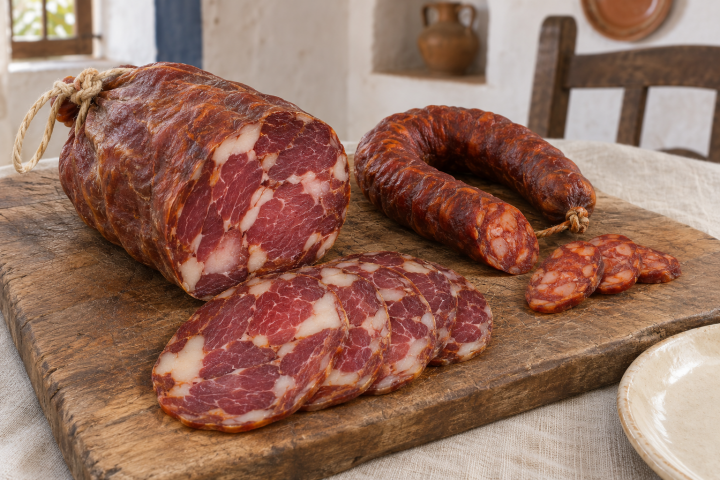
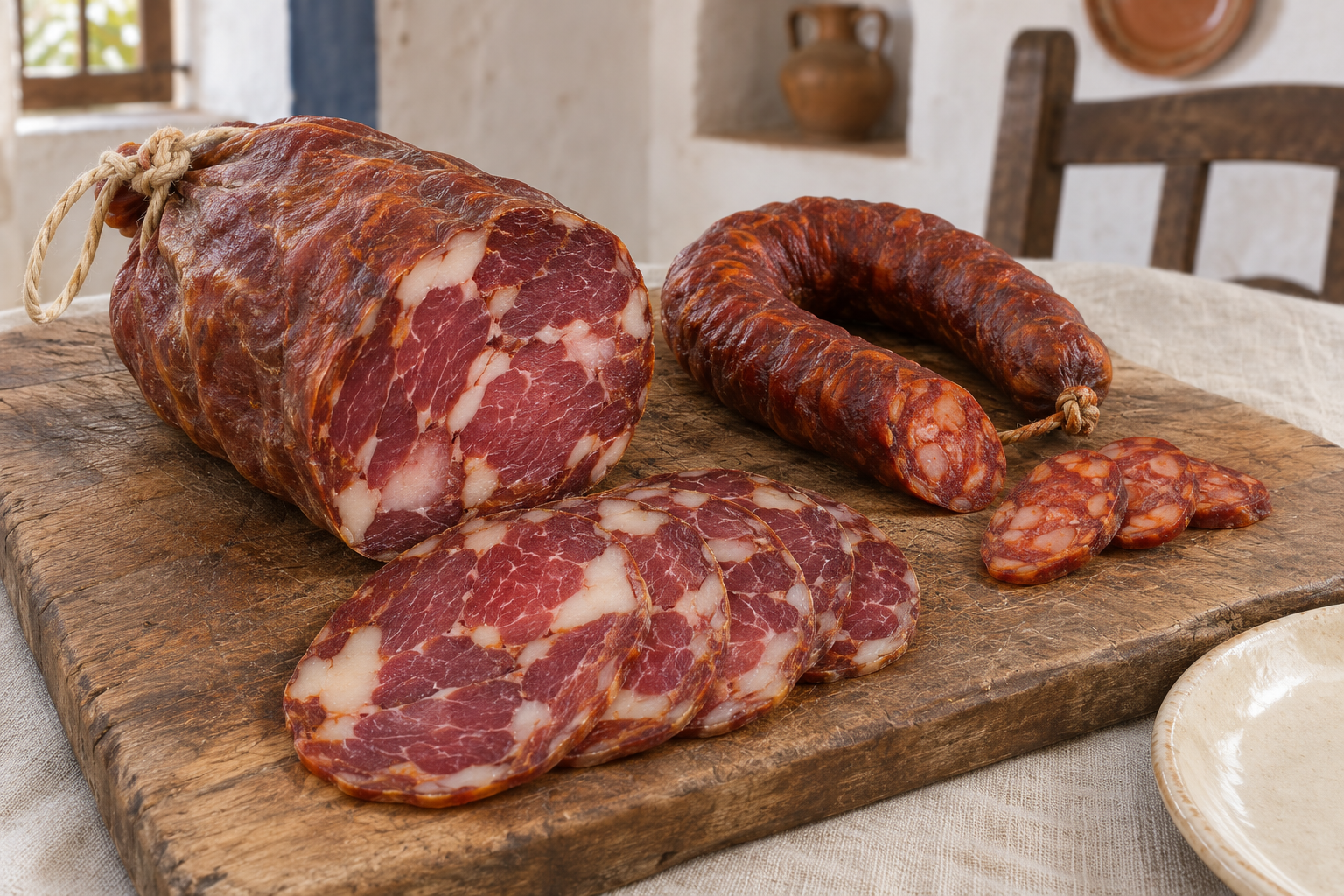
Enchidos de Porco Preto / Ibérico do Alentejo (Alentejo, Portugal)
Traditional Food Resources COUNTRIES AND TERRITORIES Portugal
Alentejo, Portugal
-
2026

These products belong to the charcuterie traditions of the Alentejo, particularly those associated with Portalegre, Évora, Beja and neighbouring production areas. The Portuguese term enchidos refers to preparations enclosed in casings, including chopped-meat sausages and certain products made from larger cuts. Presunto, a cured hind leg, belongs to the broader category of preserved pork products rather than to enchidos.
Production is closely connected with the Alentejana pig and the montado, an agricultural landscape combining grazing, pasture and cork or holm oak trees. During montanheira, the seasonal finishing period, pigs consume acorns and pasture resources. Feeding at other stages may include cereals and legumes. Breed, crossbreeding, diet and husbandry influence meat characteristics; the general description porco preto should not alone be taken as proof of exclusive acorn feeding or a particular certification.
Historically, household pig slaughter, known as matança do porco, concentrated the availability of fresh meat during the cooler months. Salting, seasoning, smoking and drying enabled families to preserve different parts of the animal. These practices also involved shared labour and the transmission of knowledge between generations. Although pig husbandry has a long regional history, the present range of sausages cannot be assigned a single ancient origin or an unchanged medieval recipe.
Ingredients and textures differ substantially between products. Chouriço and linguiça generally contain pieces of pork and fat, while paio and painho may use larger pieces or different combinations of cuts. Paia de Lombo de Estremoz e Borba is based on pork loin. Farinheira combines pork fat with flour, commonly wheat flour, and seasonings; morcela commonly incorporates blood. Garlic, salt, sweet paprika and massa de pimentão, a red-pepper paste, are characteristic flavourings. Wine, cumin and other seasonings depend on the recipe. Natural casings may come from pigs or cattle.
Preparation normally involves selecting and cutting the ingredients, adding seasonings, allowing a controlled resting period, filling the casings and applying the appropriate smoking or drying process. Holm oak and cork oak wood are documented in several regional specifications. Processing times vary considerably: the specification for Chouriço de Portalegre describes smoking for three to ten days, rather than a universal period of several months. Smoking time and total maturation time are distinct.
Mature products intended for direct consumption are served sliced, often with Alentejo bread, olives and regional wine. Other varieties are cooked in stews, grilled or roasted. Farinheira is normally eaten cooked, and preparation requirements depend on the particular product. Enchidos also contribute flavour to regional dishes such as chickpea stews. Their nutritional composition varies: meat-based varieties provide protein and fat, while farinheira additionally contains starch from flour. Fat, energy and salt contents depend on formulation and processing.
Geographical protection applies to individual registered names, rather than to this entire category. Examples include Chouriço de Portalegre IGP, Farinheira de Portalegre IGP, Paio de Beja IGP and Paia de Lombo de Estremoz e Borba IGP. Each has its own geographical area and production requirements. Presunto de Barrancos/Paleta de Barrancos DOP represents a separate protected tradition of salted, dried and matured ham and shoulder without smoking.
Today, regional producers, butcher shops, restaurants and specialist retailers maintain these products’ commercial presence. Events such as the Feira do Porco Alentejano in Ourique connect livestock breeding, processing and regional cuisine with tourism. Their cultural importance lies in the relationship between local husbandry, household preservation skills and the varied culinary identities of Alentejo communities.
References
Almeida, J. (2018). O porco preto e a charcutaria tradicional do Alentejo. Edições Alentejanas; Câmara Municipal de Portalegre. (2019). Sabores e tradições do enchido alentejano; Direção-Geral de Agricultura e Desenvolvimento Rural. (2020). Produtos tradicionais com DOP e IGP de porco preto; Mayson, R. (2018). The food and wine of Portugal. Infinite Ideas.
See Also:
See Also
Map