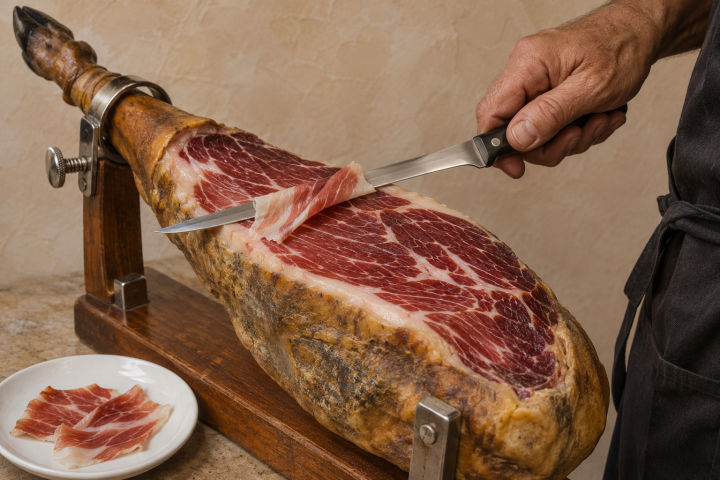
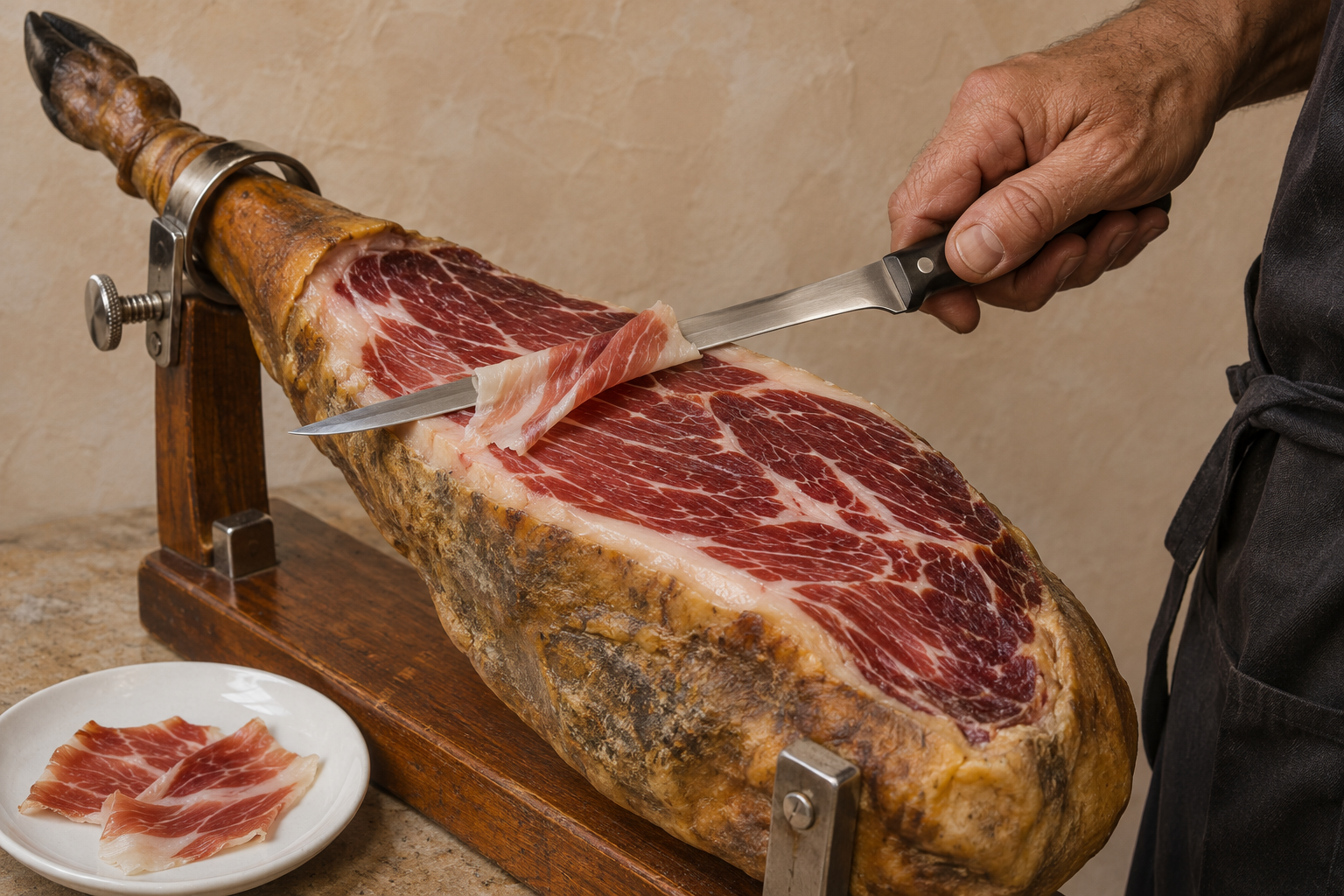
Presunto de Porco Preto / Jamón Ibérico (Alentejo, Portugal, and Spain)
Traditional Food Resources COUNTRIES AND TERRITORIES Spain Portugal
Alentejo & Iberian Peninsula, Portugal, Spain
-
2026

In the Alentejo, farmers traditionally raise pigs of the native Alentejana breed in the montado, a landscape of open pasture dotted with holm oaks and cork oaks. Across the Spanish border, a similar landscape is known as the dehesa. As acorns fall in autumn and winter, pigs range beneath the trees, feeding on acorns and fresh grass. Farmers call this final fattening season the montanheira in Portuguese and the montanera in Spanish.
Barrancos, a Portuguese town on the Spanish border, gives its name to one of the region’s protected hams. To make Presunto de Barrancos, producers salt the hind leg, wash it and leave it to rest while the salt spreads through the meat. They then hang the ham to dry and mature without smoking. The process generally takes 12 to 24 months and produces tender, deep red meat threaded with glossy fat. In local households, a whole cured ham once served both as a reserve of meat and as an item of barter.
In Spain, the label distinguishes the pig’s ancestry from its feeding regime. De bellota identifies acorn-finished ham; de cebo de campo indicates that the pigs were raised outdoors with supplementary feed; and de cebo indicates that they were raised on feed. On a whole ham, a black seal identifies de bellota 100% ibérico. A red seal also identifies acorn-finished ham, but from pigs of 50 or 75 per cent Iberian ancestry.
In Alentejo taverns, thin slices are served at room temperature as a petisco, often with local bread, olives and a glass of wine. The Feira do Presunto e dos Enchidos de Barrancos gives visitors an opportunity to taste the local ham alongside the cured sausages of the border region and to meet the producers who make them
References
Almeida, J. (2018). O porco preto e a charcutaria tradicional do Alentejo. Edições Alentejanas; Câmara Municipal de Barrancos. (2019). Presunto de Barrancos: Património e tradição; Direção-Geral de Agricultura e Desenvolvimento Rural. (2020). Produtos tradicionais com DOP: Presunto de Barrancos; Mayson, R. (2018). The food and wine of Portugal. Infinite Ideas.
See Also:
See Also
Map