Chanfana (Central Portugal)
Traditional Food Resources COUNTRIES AND TERRITORIES Portugal
Coimbra Region, Portugal
-
2026

Chanfana is particularly associated with the Coimbra region and the municipalities of Miranda do Corvo, Vila Nova de Poiares, Lousã, and Penela, which jointly promote the territory known as Terras da Chanfana. Its preparation brings together goat husbandry, wine production, pottery, and wood-fired cooking. Although closely identified with these municipalities, the dish is also prepared elsewhere in the historical Beiras region.
Its precise origins remain uncertain. A local legend associates the dish with the Monastery of Santa Maria de Semide, where nuns reportedly received goats and sheep as rent payments and cooked their meat using wine and seasonings supplied by the surrounding estates. Other narratives connect its development or dissemination with the French invasions during the early nineteenth century. These accounts form part of local culinary memory but do not establish a securely documented date of invention. The use of older animals reflects a rural economy in which goats supplied milk and offspring before being used for meat.
The principal ingredients are mature goat meat, red wine, garlic, bay leaves, and salt. Paprika, known as colorau, is common, while pepper, cloves, chilli, olive oil, or other fats appear in different recipes. Some preparations rely primarily on the animal’s natural fat. The wine provides the main cooking liquid and contributes to the sauce’s color and flavor. Regional recipes differ in their seasoning and use of added fat, while retaining the characteristic combination of goat meat, wine, and prolonged oven cooking.
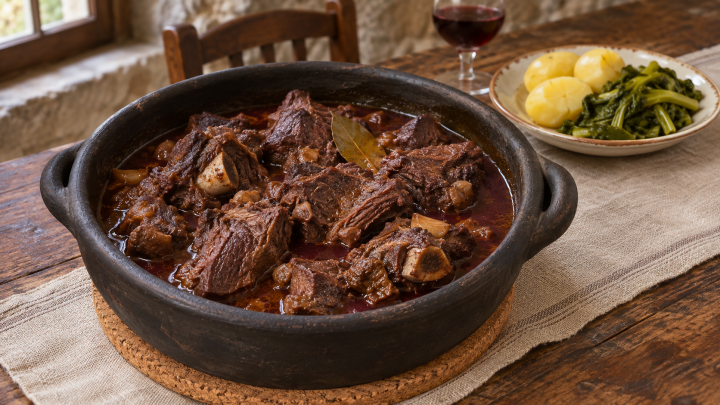
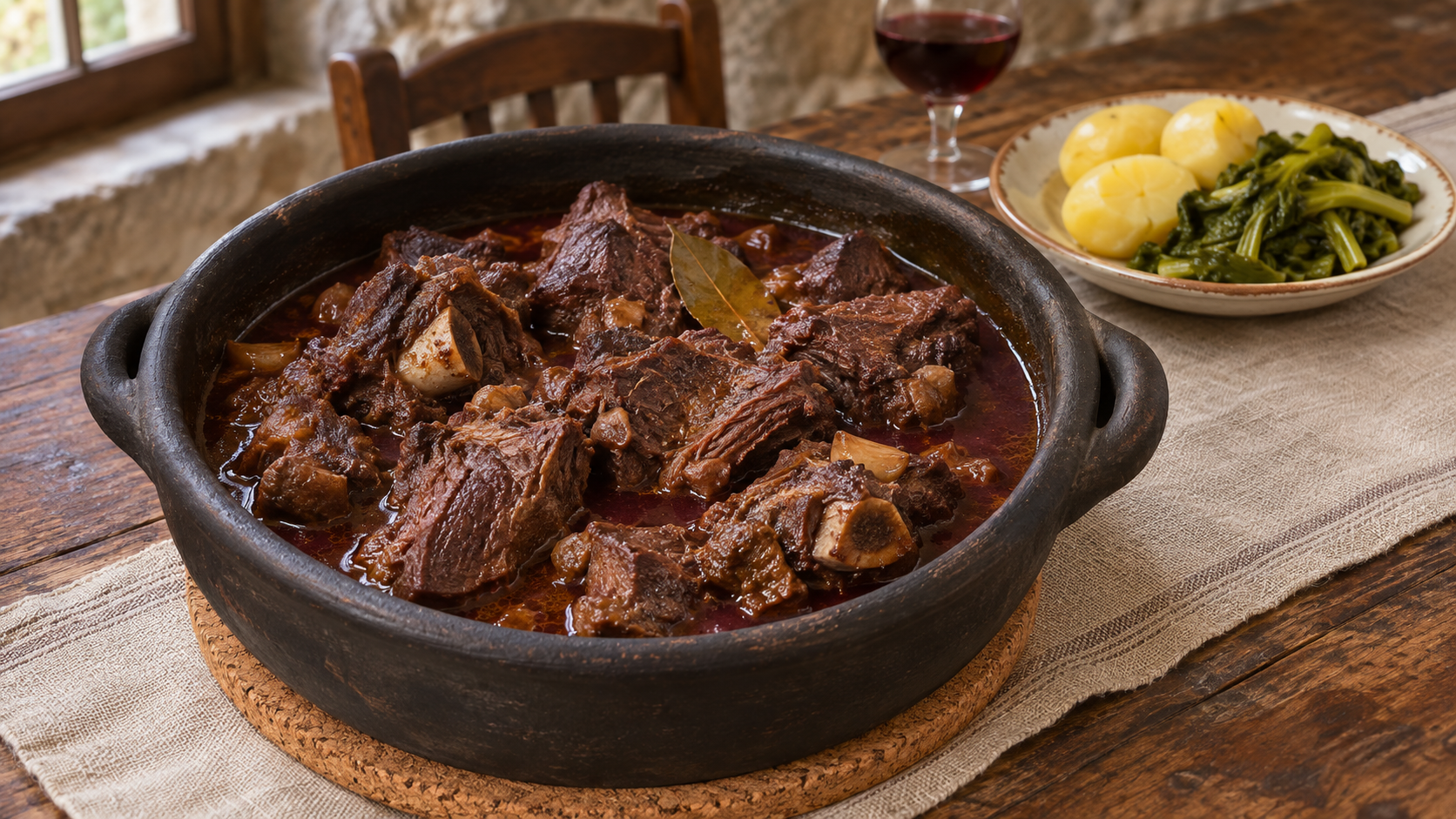
The cooking vessel, generally called a caçoila or caçoilo, is an important element of the dish’s identity. Both black and red earthenware vessels are documented. Vila Nova de Poiares is particularly associated with the black pottery of Olho Marinho, whereas Miranda do Corvo also has a tradition of red pottery. This connection between food preparation and local craftsmanship contributes to the dish’s cultural significance.
Preparation generally involves cutting the meat into pieces, arranging it with the seasonings in the earthenware vessel, and covering it with red wine. Some versions include overnight marination. The vessel is placed in a heated wood-fired oven, traditionally also used for bread. Documented methods include sealing the oven opening to retain heat and allowing the meat to cook slowly as the temperature declines. Local recipes commonly specify approximately three to four hours, although cooking time varies with the oven and the meat. The finished dish has tender meat and a dark, concentrated sauce.
Chanfana is commonly served hot in its cooking vessel, accompanied by boiled potatoes and grelos, or leafy vegetable shoots. It is associated with weddings, religious festivities, and family gatherings; in Miranda do Corvo, its connection with wedding meals is reflected in the alternative designation carne de casamento. Related preparations demonstrate the economical use of ingredients. Sopa de casamento combines the remaining sauce with bread and cabbage, while negalhos use goat offal.
Local gastronomic associations, including the Confraria da Chanfana in Vila Nova de Poiares and the Real Confraria da Cabra Velha in Miranda do Corvo, contribute to its promotion. Formal recognition has also been sought through an application for Traditional Speciality Guaranteed status for “Chanfana de Vila Nova de Poiares.” Qualifica Portugal records submission in 2016 and European Commission assessment from 11 May 2020, but its published record does not show a final registration decision.
The dish plays an established role in regional tourism through specialist restaurants, gastronomic festivals, and partnerships with accommodation and activity providers. In 2018, the joint Mesa das Terras da Chanfana entry became one of the winners of the 7 Maravilhas de Portugal à Mesa competition. The entry combined chanfana with regional products, the Monastery of Semide, and nature trails in the Serra da Lousã. Contemporary festivals continue this connection between culinary traditions, local businesses, and visits to the surrounding cultural landscape.
References
Confraria da Chanfana. (2018). Caderno de especificações da chanfana da Serra da Lousã; European Commission. (2020). Traditional specialities guaranteed (TSG) register: Portuguese regional heritage foods. EU Publications Office; Fernandes, D. (2016). A cozinha tradicional portuguesa: História, sabores e tradição. Editorial Verbo; Modesto, M. L. (2012). Cozinha tradicional portuguesa. Verbo. (Original work published 1982); Sobral, J. M. (2007a). Nacionalismo, gastronomia e identidade nacional em Portugal. Etnográfica, 11(1), 193–216. https://doi.org/10.4000/etnografica.1002; Sobral, J. M. (2007b). Obras e sabores: A alimentação e a identidade nacional portuguesa. Etnográfica, 11(1), 145–168; Sobral, V. (2018). Petiscos e pratos típicos de Portugal. Quetzal Editores.
See Also
Map