Buddhist pilgrimage travel from Thailand to India gains momentum
-
27 Sep, 2026
India’s decision to extend its free 30-day, double-entry e-Tourist visa for Thai citizens until the end of 2027 is creating new opportunities for tourism between the two countries. Destinations of major significance to Buddhism, particularly Bodh Gaya, Sarnath and Kushinagar, remain at the heart of pilgrimage programmes for the Thai market, while tour operators are increasingly combining these routes with culture, gastronomy, wellness and other travel experiences.
India has extended the free 30-day, double-entry e-Tourist visa available to Thai citizens until 31 December 2027.
Under the arrangement announced by the Embassy of India in Bangkok, Thai passport holders are not required to pay a visa fee for the e-Tourist visa. Travellers must, however, still apply online and obtain the visa before travelling to India. The measure therefore represents a visa-fee waiver rather than visa-free entry.
The extension is expected to provide additional support for Buddhist pilgrimage travel from Thailand to India.
Thailand is an important source market for India
According to figures from India’s Ministry of Tourism, the number of Thai visitors to India increased from 54,367 in 2022 to 116,060 in 2023 and 140,489 in 2024.
Thailand consequently ranked among India’s 15 largest international source markets in 2024. Before the pandemic, India received 169,956 visitors from Thailand in 2019.
A further 57,056 Thai visitors travelled to India between January and April 2025.
Buddhist pilgrimage routes remain at the centre of demand
For the Thai market, India’s Buddhist heritage remains one of the country’s strongest tourism attractions.
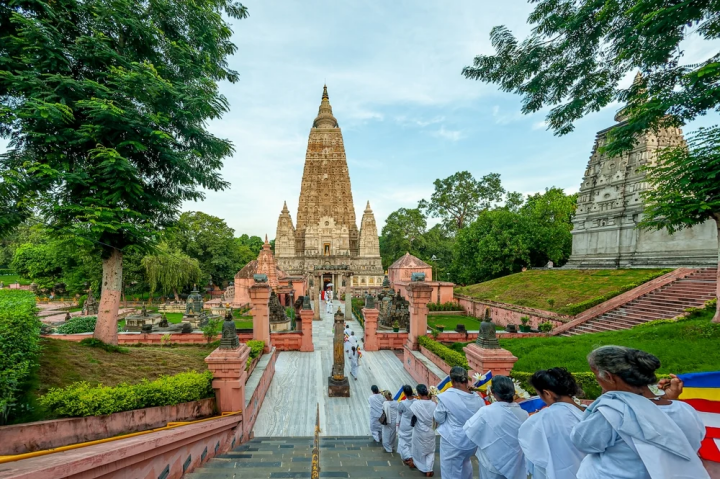
Bodh Gaya, where Buddha is believed to have attained enlightenment, is a central destination on most Buddhist pilgrimage itineraries. Sarnath, associated with Buddha’s first sermon, and Kushinagar, connected with his Mahaparinirvana, are also major pilgrimage centres.
Rajgir, Nalanda and Shravasti can be incorporated into longer itineraries, allowing specialist operators to develop multi-destination journeys rather than selling Bodh Gaya as a stand-alone destination.
Tour operators can develop longer itineraries
Extending the visa-fee waiver through the end of 2027 gives tour operators and destination management companies a longer planning horizon for the Thai market.
Buddhist pilgrimage can serve as the core of more extensive travel programmes incorporating cultural heritage, yoga, wellness, gastronomy and shopping experiences.
Such combinations can be particularly attractive to repeat visitors and family members accompanying pilgrims, while also potentially encouraging longer stays and greater visitor spending in India.
From Bodh Gaya to Kushinagar: a wider pilgrimage circuit
India’s Buddhist tourism product is built around a network of sacred and historic destinations.
Bodh Gaya, Rajgir, Nalanda, Sarnath, Kushinagar and Shravasti can be combined within the same itinerary, enabling visitors to experience several locations associated with the life and teachings of Buddha.
This structure gives operators greater scope to design longer tours for Thai pilgrims while spreading tourism activity across several destinations.
Air connectivity is also expanding
Growing air connectivity between Thailand and India is another factor supporting travel demand.
Direct services between the two countries now connect a growing number of city pairs, giving tour operators greater flexibility to offer both shorter pilgrimage journeys and longer programmes combining religious sites with other Indian destinations.
Improved connectivity also makes it easier to design itineraries around different entry and departure points.
Pilgrimage tourism is evolving into a broader travel experience
Although religious motivation remains central to Buddhist travel from Thailand to India, the tourism industry is increasingly looking beyond visits to sacred sites alone.
Combining Bodh Gaya, Sarnath and Kushinagar with Rajgir, Nalanda and Shravasti, while adding cultural heritage, gastronomy, yoga and wellness experiences, offers the potential to develop longer-stay and higher-spending Buddhist tourism products.
The extension of the e-Tourist visa fee waiver until the end of 2027 also provides the travel industry with a longer period in which to develop and market these programmes to the Thai market.