Cultural Heritage Tourism Market Expected to Reach $888 Billion by 2031
-
10 Jun, 2026
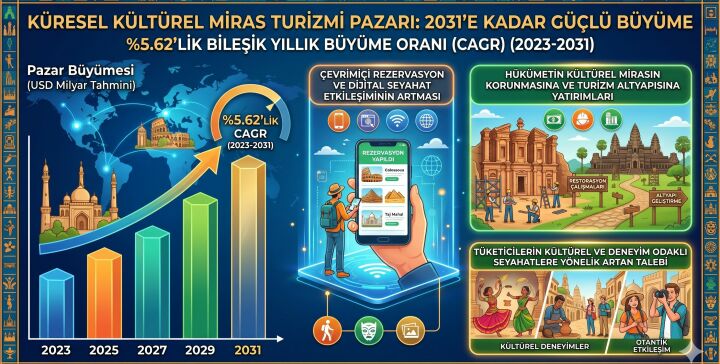
As experience-driven travel continues to gain momentum across the global tourism industry, cultural heritage tourism is emerging as one of the fastest-growing segments of the sector. According to data compiled by the Tourism Encyclopedia of Türkiye from Mordor Intelligence, the global cultural heritage tourism market, which is expected to reach $675 billion in 2026, is projected to grow at an average annual rate of 5.6 percent and reach $888 billion by 2031.
The transformation is being accelerated by measures introduced in leading European destinations to combat overtourism. Efforts to redistribute visitor flows are directing travelers toward alternative destinations, while smaller cities and rural regions offering authentic local lifestyles, historic environments, and unique cultural experiences are attracting increasing attention.
Industry experts note that this trend is helping tourism revenues spread across wider geographical areas while contributing significantly to the economic development of local communities. Through community-based tourism initiatives, local accommodation projects, and digital marketing campaigns, destinations that previously had limited international recognition are gaining greater visibility in the global tourism market.
Diaspora and Ancestry Tourism on the Rise
One of the most notable trends supporting cultural heritage tourism is the growing demand for ancestry and diaspora tourism. The increasing popularity of DNA testing and family history research is encouraging millions of people to travel to regions connected to their ancestral roots.
In response, many countries are developing tourism strategies specifically targeting diaspora communities. Local accommodation options, cultural events, archival and genealogical research services, and traditional lifestyle experiences are providing visitors with more personalized travel opportunities. Experts emphasize that this trend also supports multigenerational family travel and higher-value tourism spending.
Technology and Sustainability Driving Growth
Technological innovation is another key factor behind the sector’s expansion. Artificial intelligence-powered travel planning tools, virtual preview applications, and augmented reality technologies enable travelers to explore destinations more deeply and enhance their overall travel experiences.
At the same time, a new generation of environmentally and socially conscious travelers is encouraging tourism businesses to adopt more responsible models. Community-based approaches that increase local participation in tourism benefits, together with environmentally friendly practices, are among the key forces shaping the future of the industry.
According to Mordor Intelligence, cultural heritage tourism is expected to maintain strong growth over the next five years. The market’s projected value of $888 billion by 2031 demonstrates that cultural heritage is no longer viewed solely as an asset to be preserved, but also as one of the strategic growth areas of the global tourism economy.