Egypt’s 30 Million Tourist Target Puts Airline Capacity Planning in Focus
-
02 Sep, 2026
Seasonal demand, fleet expansion and aircraft delivery delays are increasing the importance of flexible capacity strategies
Egypt’s ambition to welcome 30 million tourists annually by 2030 is expected to place growing pressure on airline capacity. As visitor numbers rise, carriers will need to balance permanent fleet expansion with more flexible solutions that can respond to seasonal peaks, route launches and unexpected aircraft shortages.
Egypt welcomed nearly 19 million tourists in 2025, according to the country’s Ministry of Tourism and Antiquities. With the government now targeting 30 million annual visitors by 2030, the aviation sector is preparing for a substantial increase in passenger demand.
For airlines, however, the challenge is not simply to acquire more aircraft. Carriers must determine how much capacity will be required on a permanent basis, how much will only be needed during peak travel periods and how they can react when market conditions change more quickly than fleet plans.
Permanent aircraft purchases and long-term leases are typically planned years in advance, while passenger demand can shift significantly within a single season. One option increasingly used to bridge this gap is ACMI leasing, under which an airline leases an aircraft together with crew, maintenance and insurance for a defined period.
Justinas Bulka, CEO of KlasJet, an ACMI and charter operator within Avia Solutions Group, says flexibility should form an integral part of Egyptian airlines’ fleet strategies.
“Egypt’s airlines have strong reasons to grow, but not every increase in demand requires a permanent aircraft,” Bulka said. “Fleet ownership and long-term leases provide the foundation for sustained growth, while ACMI gives airlines the flexibility to respond to seasonal peaks, launch new routes or cover short-term capacity gaps.”
Fleet growth must reflect seasonal demand
Egypt is already investing heavily in aviation infrastructure to accommodate future passenger growth.
A planned fourth terminal at Cairo International Airport is expected to increase the airport’s annual handling capacity to 70 million passengers, while Sphinx International Airport has recently completed an upgrade.
Airlines are also preparing to expand their fleets. EgyptAir has announced plans to grow to 125 aircraft by adding 34 aircraft and doubling passenger numbers. Air Cairo, a subsidiary of EgyptAir, plans to increase its fleet from 42 to 82 aircraft over the next four years.
These investments address long-term growth, but demand is not evenly distributed throughout the year or across the network.
More than 10.2 million European tourists accounted for 65 percent of Egypt’s international arrivals in 2024, according to OECD data, while charter flights to Egyptian tourism destinations increased by 32 percent in 2025.
Although Egypt attracts visitors throughout the year, different source markets and destinations create their own seasonal peaks.
Maintaining enough permanent aircraft to cover every peak can leave parts of a fleet underutilised when demand falls. Building capacity around average annual demand, on the other hand, can leave airlines short of aircraft precisely when revenue opportunities are at their highest.
ACMI leasing enables airlines to introduce additional aircraft on selected routes for specific periods and release that capacity once demand declines.
Air Cairo cooperation demonstrates rapid deployment
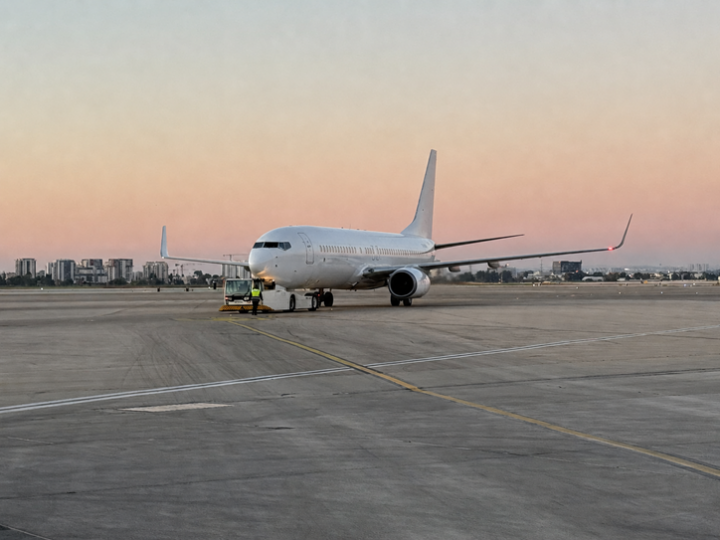
KlasJet points to its cooperation with Air Cairo in 2025 as an example of how quickly additional capacity can be introduced.
Under the agreement, an aircraft was ferried to Cairo within three days of the contract being signed, demonstrating the potential speed of ACMI deployment even across different regulatory environments.
Such flexibility can be particularly important during periods of unexpectedly strong tourism demand or when airlines need to introduce capacity without committing immediately to long-term fleet expansion.
Aircraft delivery delays create another challenge
Seasonality is not the only factor that can create temporary capacity shortages.
Aircraft delivery delays, scheduled maintenance and unexpected technical problems can also leave airlines without sufficient aircraft to operate planned schedules.
EgyptAir has begun receiving the 16 Airbus A350-900s and 18 Boeing 737 MAX aircraft included in its fleet development programme. However, production and supply-chain pressures continue to affect the global aircraft manufacturing industry.
According to the release, Airbus and Boeing together have an estimated 12-year backlog of aircraft orders, meaning that even carefully planned fleet expansion programmes can be exposed to delays outside an airline’s control.
“When a delivery moves, the commercial plan does not move with it,” Bulka said. “The airline may already have schedules, crews, airport slots and passenger commitments in place. ACMI can bridge that gap until the permanent aircraft arrives, allowing the airline to continue operating and protecting the wider growth plan.”
Flexible capacity could support profitability
Permanent fleet expansion will remain essential if Egypt is to achieve its tourism ambitions, but the key question for airlines is how much of their future capacity should be fixed and how much should remain flexible.
Used strategically, ACMI can allow carriers to increase capacity when revenue potential is strongest and reduce it when demand falls.
According to KlasJet, this approach can potentially improve overall airline profitability by an estimated 2–3 percent.
“Airlines need a stable core fleet, but they also need the flexibility to respond as conditions change,” Bulka said. “ACMI provides that variable layer of capacity: aircraft can be introduced when demand rises, redeployed across routes as priorities shift and released once the requirement ends.”
Tourism growth and aviation planning increasingly interconnected
Egypt’s tourism growth ambitions highlight the increasingly close relationship between destination development and airline fleet planning.
As the country works toward its target of 30 million annual tourists by 2030, airlines will need to expand their permanent fleets while retaining enough flexibility to manage seasonal fluctuations, aircraft delivery delays and short-term changes in market demand.
For Egyptian carriers, the coming years are therefore likely to involve not only adding more aircraft, but developing fleet strategies capable of combining long-term expansion with short-term operational flexibility.