Procurement Strategies Are Becoming a Key Competitive Factor in Dental Tourism
-
23 Jun, 2026
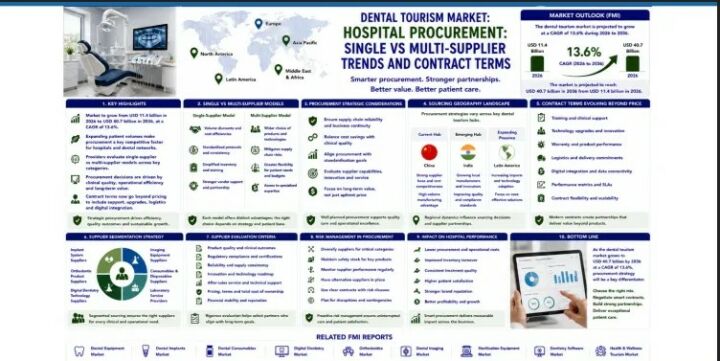
According to the industry analysis “Dental Tourism Market: Hospital Procurement: Single vs Multi-Supplier Trends and Contract Terms,” published on June 18, 2026, by researcher Sabyasachi Ghosh, procurement management is emerging as a strategic differentiator for hospitals operating in the dental tourism market. The study finds that, as international patient volumes continue to rise, healthcare providers are increasingly evaluating procurement models not only on cost considerations but also on clinical quality, technological integration, and long-term partnership value.
The report estimates that the global dental tourism market will reach USD 11.4 billion in 2026 and expand to USD 40.7 billion by 2036, registering a compound annual growth rate (CAGR) of 13.6%. Growth is being driven by improved treatment quality in emerging destinations, expanding international travel infrastructure, and rising healthcare costs in developed economies.
According to Ghosh, large dental hospitals and healthcare networks are seeking the optimal balance between single-supplier and multi-supplier procurement models for implants, orthodontic systems, imaging technologies, and laboratory services. While single-supplier arrangements offer standardization, simplified inventory management, and cost efficiencies, multi-supplier strategies provide greater flexibility and help mitigate supply chain risks.
Single-Supplier Model Supports Standardization
High-volume dental hospitals and clinic chains are increasingly exploring the benefits of working with a single supplier across key product categories. The report highlights advantages such as volume discounts, streamlined inventory management, standardized staff training, and greater consistency in treatment protocols.
Single-supplier agreements can also provide enhanced technical support, maintenance services, financing options, and dedicated account management. However, the analysis warns that dependence on a single vendor may increase operational risks in the event of supply disruptions, product recalls, or manufacturing delays.
Multi-Supplier Approach Offers Greater Flexibility
Many healthcare providers continue to favor multi-supplier procurement strategies to diversify risk and gain access to a broader range of technologies. Through this approach, hospitals can source products from premium implant manufacturers, digital scanning providers, CAD/CAM restoration specialists, and suppliers of cosmetic dentistry materials.
The report notes that patient expectations and budgets vary significantly across international markets, making flexibility a critical factor in dental tourism. Multi-supplier procurement enables providers to cater to both premium and cost-conscious patient segments while maintaining access to specialized technologies.
Digitalization Is Reshaping Procurement Decisions
The rapid adoption of digital dentistry technologies is also influencing procurement strategies. Hospitals are investing in intraoral scanners, 3D imaging systems, AI-powered treatment planning tools, and digital workflow platforms, prompting many providers to build supplier portfolios that offer access to multiple technology ecosystems.
Procurement Decisions Go Beyond Price
According to the analysis, procurement decisions are no longer based solely on product pricing. Contract negotiations increasingly include training programs, software upgrades, equipment maintenance, technical support, warranty coverage, and digital integration capabilities.
Healthcare providers are also evaluating suppliers based on clinical performance, patient satisfaction outcomes, regulatory compliance, scalability, and long-term partnership potential. The report concludes that as the dental tourism market continues to mature, strategic sourcing and procurement management will play an increasingly important role in determining provider competitiveness, patient satisfaction, and financial performance.