Traces of Ancient Viticulture Discovered in Aspendos
-
16 Jun, 2026
ANTALYA – Academics from Yozgat Bozok University have investigated the traces of ancient viticulture in Aspendos, one of Türkiye’s most important archaeological sites, located in Belkıs village of Antalya’s Serik district and renowned worldwide for its remarkably preserved ancient theater.
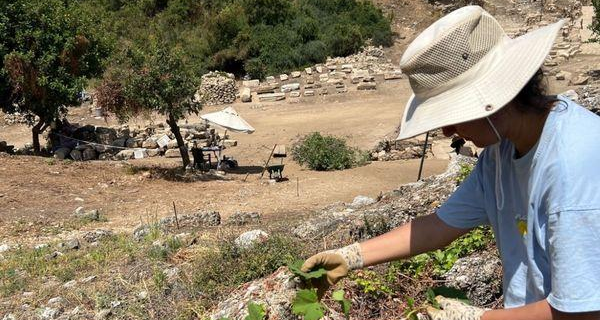
As part of archaeobotanical studies conducted within the framework of the Aspendos excavation and research project, Dr. Aysun Şehit from the Department of Horticulture at Yozgat Bozok University’s Faculty of Agriculture and Dr. Ertan Şehit from the Department of Architecture and Urban Planning at Boğazlıyan Vocational School examined evidence of grape cultivation during antiquity through their study titled “Tracing Ancient Viticulture at the Aspendos Archaeological Site: Vines as Cultural Heritage.”
Speaking to HİBYA, Dr. Ertan Şehit emphasized that viticulture has a history stretching back as far as human civilization itself and has played a particularly significant role in the Mediterranean basin from ancient times to the present day.
He noted that grapes have long been an essential component not only of nutrition but also of religious and cultural rituals. According to Şehit, the abandonment or neglect of vineyards within the Aspendos archaeological site may have allowed grape seeds to germinate naturally over time, creating cultivated vine forms that continued to reproduce without direct human intervention.
The findings contribute to a better understanding of agricultural practices in ancient Aspendos and highlight the importance of preserving historic vine varieties as part of Türkiye’s cultural and agricultural heritage. Researchers believe that studying these surviving vines could provide valuable insights into the region’s long-standing relationship with grape cultivation and wine production.