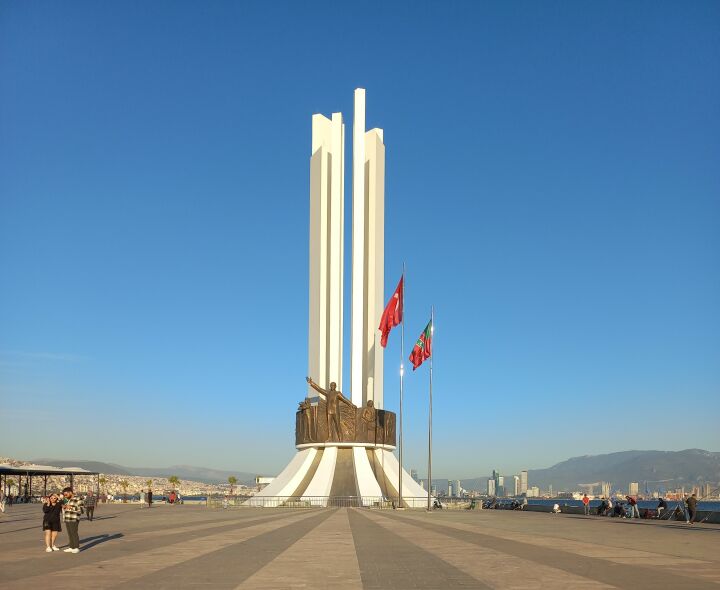
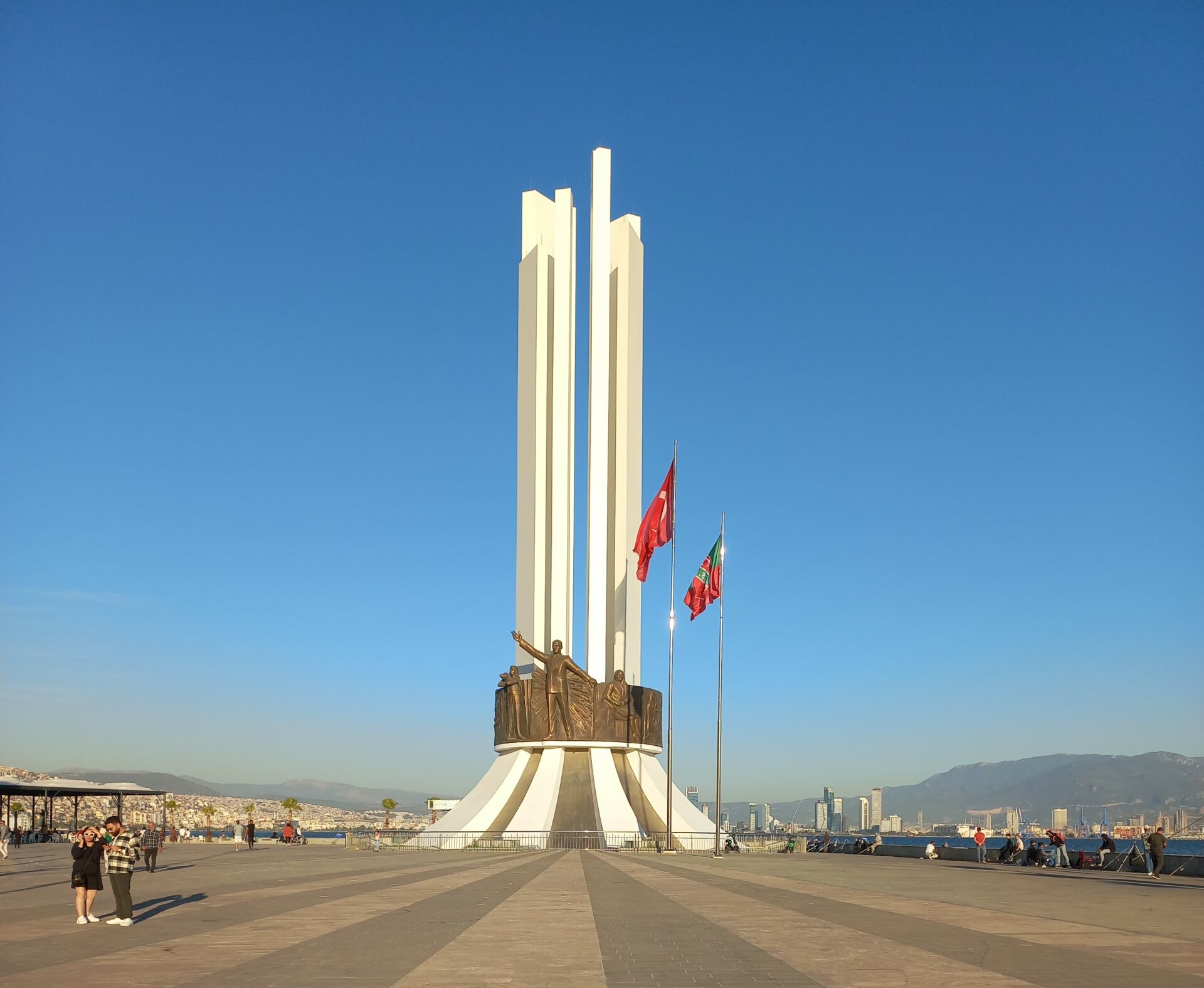
Monument
Monumental and Historic Structures Monument

In its oldest and most original sense, the concept of a monument refers to a structure constructed to symbolise an action, a religious belief, or a form of power and to preserve its memory for future generations. Etymologically, the word monument, used as the equivalent of the concept in Western languages, derives from the Latin monumentum, which in turn originates from the verb monere, meaning “to remind,” “to warn,” or “to guide.” In essence, the monument represents the embodiment of collective memory in physical space. Similarly, in Turkish, the concept corresponds to the functions of remembrance and leaving a trace and may be characterised as a form of defence against humanity’s existential anxiety and an effort to leave an imprint upon the world. This fundamental function of the monument addresses collective memory and seeks to keep the past alive as though it were present, standing against the relentless passage of time.
Humanity’s ontological anxiety in the face of transience has produced a mechanism of resistance against time by fixing significant events or figures in the permanence of stone. The earliest examples of monuments, represented by prehistoric megalithic structures such as Göbekli Tepe and Stonehenge, aimed to stabilise cosmic cycles and systems of belief rather than to consecrate individual achievements. However, with the development of civilisation, monuments transcended religious ritual and became instruments for legitimising political authority and social hierarchy. The pyramids of ancient Egypt, symbolising the eternity of the pharaohs, and the stelae of Mesopotamia, proclaiming royal laws, epitomise the inseparable relationship established between monuments and power. During the Roman period, works such as Trajan’s Column were constructed as “intentional monuments” to document the grandeur of the empire. In the Central Asian Turkic tradition, the Orkhon Inscriptions—referred to as Bengü Taş (“Eternal Stone”)—gave this tradition a different dimension by imbuing the concept of the monument not only with commemoration but also with political counsel and historical documentation.
The most significant turning point in monument theory was the work of the Austrian art historian Alois Riegl, published in 1903. Riegl defined the modern cult of monuments by dividing them into two categories: “intentional monuments,” created from the outset to convey a message, and “historical monuments,” which acquired this status over time through a cultural process. According to Riegl, the value of a monument consists of a combination of sometimes conflicting elements, including age value, historical value, commemorative value, use value, and artistic value. In particular, age value strengthens the spiritual bond that modern society establishes with a monument by consecrating its deterioration and the traces left upon it by time.
With the transition to the modern era, the concept of the monument underwent a significant transformation. Modern architecture, which emerged partly as a reaction to the pseudo-monumentality of the nineteenth century, ceased to treat the monument as a singular and untouchable object and instead integrated it into the urban environment and everyday life. In the information age of the twenty-first century, monuments have evolved into interactive and topographical spaces—such as the Memorial to the Murdered Jews of Europe in Berlin—through which visitors may walk and with which they may physically engage, in contrast to the distant scale of traditional monuments. In this postmodern approach, as exemplified by the National September 11 Memorial, large voids representing absence and collapse, together with metaphors of water flowing towards infinity, are preferred to an obelisk rising into the sky. This transformation has enabled the monument to become a human-scale “space of commemoration” rather than an inaccessible shrine.
In their manifestation in architectural works, monuments appear as monumental public buildings symbolising the ideology, power, and desire for modernisation of the new state, particularly in early Republican Türkiye. Constructed during this period, Anıtkabir stands as the most important symbolic monument, rising at a dominant point in the city as an expression of the Turkish nation’s respect and devotion. Similarly, structures such as the Adana Community Centre (Halkevi) Building and the Kanara Slaughterhouse are not merely functional buildings but monumental works inscribed in urban memory and representing the period’s ideals of social enlightenment and modern production. By combining local materials with modern techniques, these monumental structures serve as historical documents that transmit the spiritual atmosphere and struggles of their period to future generations.
Beyond being merely physical masses, monumental structures are symbolic works that embody the economic, social, and cultural characteristics of the societies to which they belong and document the architectural aesthetics of a particular period. The fundamental values possessed by these structures are commemorative and memory values (Erinnerungswerte), which, according to the theorist Alois Riegl, relate to the past and activate collective memory. Within this framework, historical value refers to a monument’s representation of a process that once existed but is now irreversible or of a significant historical event. The fact that buildings from the Republican period are more recent than Seljuk structures does not diminish their historical value, since each work is evaluated according to its intrinsic qualities and the events it has witnessed.
Age value emerges through the perception of wear, deterioration, and the physical traces left upon a monument by time. Extending beyond the communication of historical information, this value appeals directly to the emotions and generates a reverential interest in the monument, even when the destructive effects of nature are visible. Deliberate commemorative value, or the value of the intentional monument, is consciously created for the purpose of preserving the memory of an event, a victory, or a significant individual in the minds of future generations.
Among the cultural and qualitative values that enable a structure to be registered as cultural property is documentary value, which refers to its capacity to serve as a source of information about the educational level, way of life, and aesthetic concerns of the society that built and used it. Aesthetic and artistic value (Kunstwert) refers to the structure’s status as a high-quality work of art, its embodiment of an original technique, or its representation of the architectural style of its period. In the modern understanding, the artistic value of a monument is also determined by the extent to which it fulfils the artistic aspirations, or Kunstwollen, of its age.
Symbolic and identity value, which defines the ability of a structure to represent the identity of the city or region in which it is located and to serve as a focal point within urban space, also belongs to this group. Structures such as Anıtkabir stand among the most powerful symbols of national identity. Among contemporary or present-day values (Gegenwartswerte), which concern the relevance of the structure to present-day society, use value (Gebrauchswert) relates to the functional continuity of the monument. It makes the preservation of the structure’s original function, or its revitalisation through a new function compatible with contemporary standards through adaptive reuse, a critical practical requirement for its conservation.
Newness value (Neuheitswert), meanwhile, represents the integrity, perfection, and unworn appearance of the work as though it were in its original condition. Although it reflects the aesthetic preferences of the broader public, it frequently conflicts with age value. In summary, monumental structures resemble biographies reflecting the spirit of a society: every mark of wear upon their pages represents age value, while every sentence represents historical and documentary value. Together, they constitute silent yet powerful witnesses that remind us of where a society has come from and who its members are.
References
Atay, R. F. (2016). Aloïs Riegl’in Tarihi Anıtlar Kuramı ve Modern Kült Olarak Anıtlar, Restorasyon ve Konservasyon Çalışmaları Dergisi, (16): 21-26; Bostancı, E. E. (2023). Anıtın genişlemiş alanı: Arkitekt ve Mimarlık dergileri üzerinden modern Türk mimarlığında anıtın izini sürmek (Basılmamış Yüksek Lisans Tezi). İstanbul: Mimar Sinan Güzel Sanatlar Üniversitesi; Halaman, M. A. (2022). Adana erken Cumhuriyet dönemi anıtsal yapılarını korumada yerelliğin önemi açısından incelenmesi ve değerlendirilmesine yönelik yeni bir yaklaşım ile model önerisi (Basılmamış Doktora Tezi). İstanbul: Haliç Üniversitesi; Okumuş, G. (2021). Kentsel arayüz–heykel kurgusu: Atatürk anıtları (Basılmamış Yüksek Lisans Tezi). Bursa: Bursa Uludağ Üniversitesi; Polat, M. (2019). Anıtlar ve anma mekânlarının dönüşümü üzerine değerlendirmeler, MEGARON, 14 (1): 51-62
See Also: