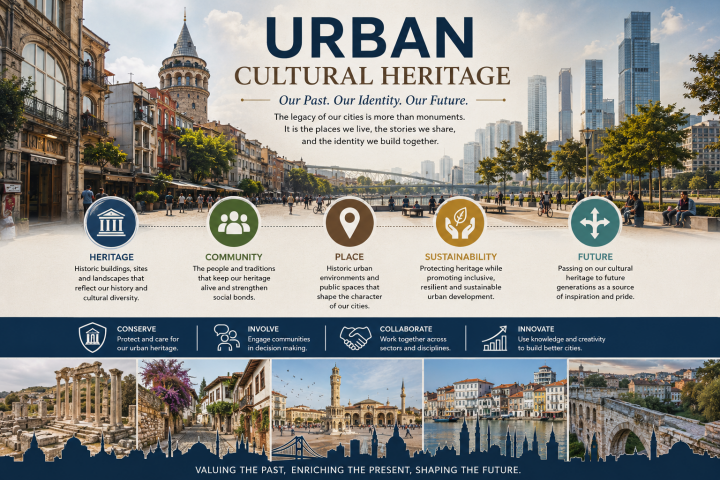
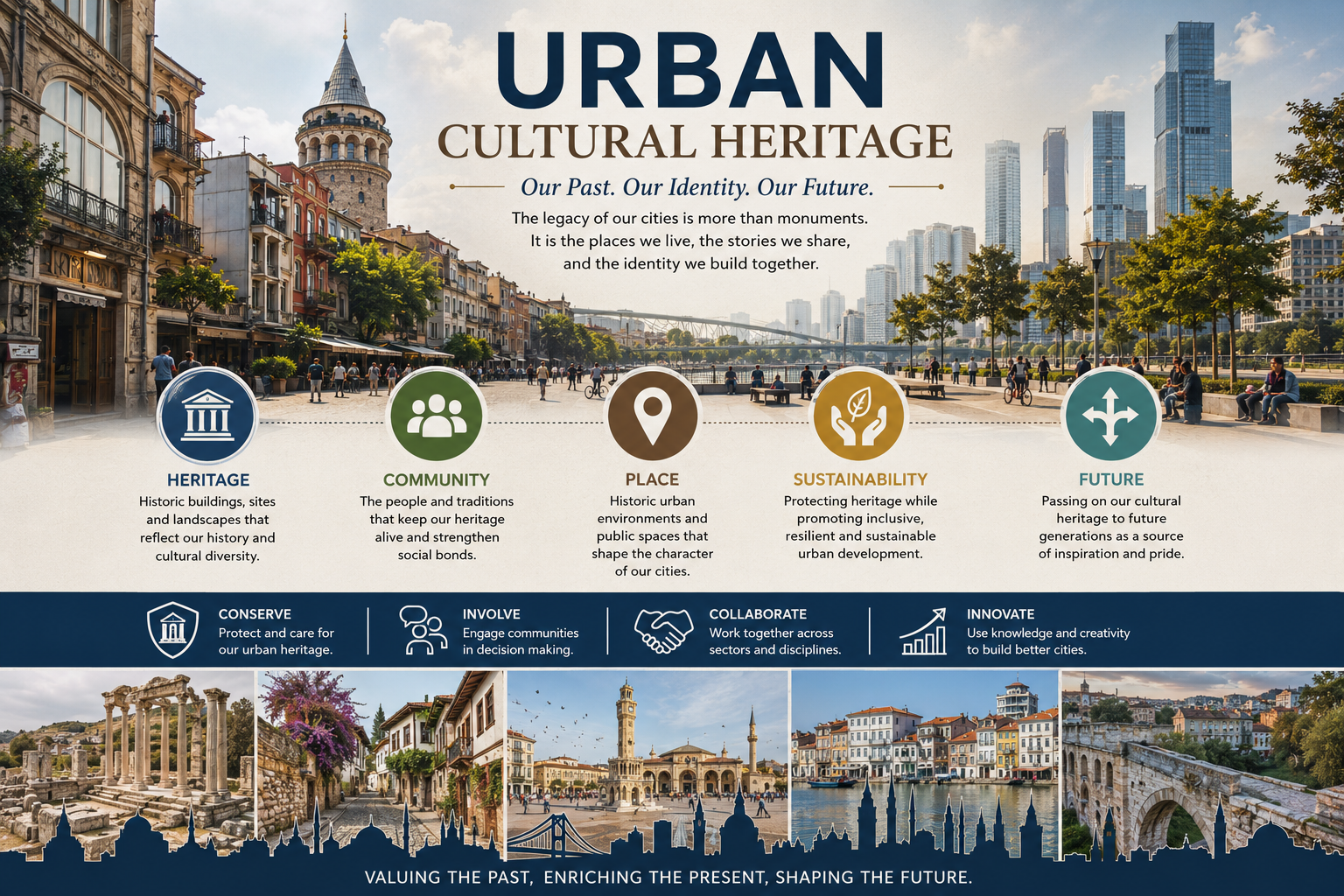
Urban Cultural Heritage
Heritage, Culture, and Museum Studies Heritage Management Cultural Heritage Management Cultural Heritage Protection Conventions
-
2026

The expansion of European-centred conservation approaches to the urban scale coincided particularly with the post-World War II period. In many settlements devastated by the war, the reconstruction of historic city centres (often carried out under the guise of urban renewal) became a controversial issue. While the 1931 Athens Charter drew attention to the importance of a monument's immediate setting, the transition from the monument scale to the urban environment scale was advanced by the Venice Charter (International Charter for the Conservation and Restoration of Monuments and Sites, 1964), which extended the concepts of monument conservation and restoration to protected areas such as historic city centres. Thus, the Venice Charter promoted a holistic approach by shifting the focus from individual monuments to broader historic urban environments and advocating expanded legal protection at the international level. However, despite its importance, the Venice Charter did not address several issues, including the concept of the site as applied to historic landscapes and gardens, the principle of reversibility in restoration, and the social and financial dimensions of conservation. In 1965, the International Council on Monuments and Sites (ICOMOS) was established to cooperate with UNESCO in the conservation and restoration of historic monuments and settlements. In response to the growing need for an international framework for the conservation of historic towns and urban heritage, ICOMOS adopted the Washington Charter (Charter for the Conservation of Historic Towns and Urban Areas) in 1987. By the 1990s, the concept of urban archaeology had gained prominence, particularly in relation to the preservation of archaeological heritage located within inhabited urban areas. During the 2000s, pressures on historic urban areas increased as a result of climate change, uncontrolled urban growth, and overtourism. To address these environmental, social, and cultural challenges, it became essential to approach urban planning and design through collaboration with local authorities in order to balance heritage conservation, economic development, urban functionality, and overall liveability. Within this context, the concept of the Historic Urban Landscape (HUL) was adopted, extending beyond the historic city centre to encompass a broader urban and territorial context. The HUL approach provides a participatory governance model that promotes inclusive, multi-stakeholder management of urban heritage by integrating both tangible and intangible values within the framework of sustainable urban development.
Today, the term urban cultural heritage is preferred to urban cultural property or urban cultural assets and is more widely used in contemporary academic, urban planning, and international policy contexts. This preference reflects a broader conceptual shift in international heritage discourse. While cultural property is rooted in legal instruments such as the 1954 Hague Convention for the Protection of Cultural Property in the Event of Armed Conflict and primarily denotes legally protected tangible objects, heritage has evolved into a broader and more inclusive concept encompassing both tangible and intangible dimensions. The term cultural assets generally refers to the tangible and intangible elements identified within UNESCO's definition of cultural heritage. Heritage, however, functions as an overarching framework, fully articulated through the Historic Urban Landscape approach, embracing the understanding that cities are dynamic and continuously evolving environments. It values living traditions, local practices, and cultural diversity rather than treating historic districts as static museum exhibits frozen in time.
Industrial heritage, including former factories, warehouses, transport infrastructure, and workers' housing, has gained increasing importance during the twenty-first century as it has attracted growing attention from governments, private investors, and local communities in response to changing social dynamics characterised by functional, formal, and symbolic transformations. Former industrial and post-industrial sites are increasingly being adapted as cultural and leisure venues, attracting new residents and visitors. However, this process of heritagisation also presents significant challenges, particularly in fostering community participation through inclusive identity narratives, engaging migrant communities and ethnic minorities, encouraging civic participation, and developing effective participatory governance mechanisms.
While heritage generates important resources for tourism, tourism revenues must, in turn, be reinvested in conservation to ensure long-term sustainability. Excessive tourism, however, poses serious threats to historic cities, as demonstrated by the experiences of Barcelona and Venice. The preservation of urban cultural heritage is governed by a combination of international, national, and local legal frameworks designed to balance urban development with conservation objectives. Although many countries incorporate heritage protection into their urban planning legislation, gaps and overlaps in legal frameworks often create inefficiencies and inconsistencies that undermine conservation efforts. Consequently, a multidimensional and multidisciplinary approach integrating sustainable urban planning, effective governance, and community participation is essential to overcome institutional inefficiencies, secure adequate financial resources, and strengthen collaboration among all stakeholders.
References
Cunha Ferreira, T., Rey Pérez, J., Pereira Roders, A., Tarrafa Silva, A., Coimbra, I., & Breda Vázquez, I. (2023). The historic urban landscape approach and the governance of World Heritage in urban contexts: Reflections from three European cities. Land, 12(5), 1020. https://doi.org/10.3390/land12051020; Rambhakta, P. B. (2020). Urban cultural heritage: A conceptual framework. Geographical Analysis, 9(1), 9–18. https://doi.org/10.53989/bu.ga.v9i1.3; Ripp, M., & Rodwell, D. (2016). The governance of urban heritage. The Historic Environment: Policy & Practice, 7(1), 81–108. https://doi.org/10.1080/17567505.2016.1142699; UNESCO. (2016). The HUL guidebook: Managing heritage in dynamic and constantly changing urban environments: A practical guide to UNESCO’s Recommendation on the Historic Urban Landscape. UNESCO.