Queijadas de Pereira (Pereira, Montemor-o-Velho, Portugal)
Traditional Food Resources
Pereira, Montemor-o-Velho, Portugal

The earliest known reference to queijadas in Pereira appears in the town charter granted by King Manuel I on 1 December 1513. The charter lists them alongside bread, biscuits, eggs and milk among goods exempt from tolls. It records their place in local trade but gives no recipe. Local accounts credit the Royal College of the Ursulines of Pereira, founded in 1748, with helping the pastries become more widely known.
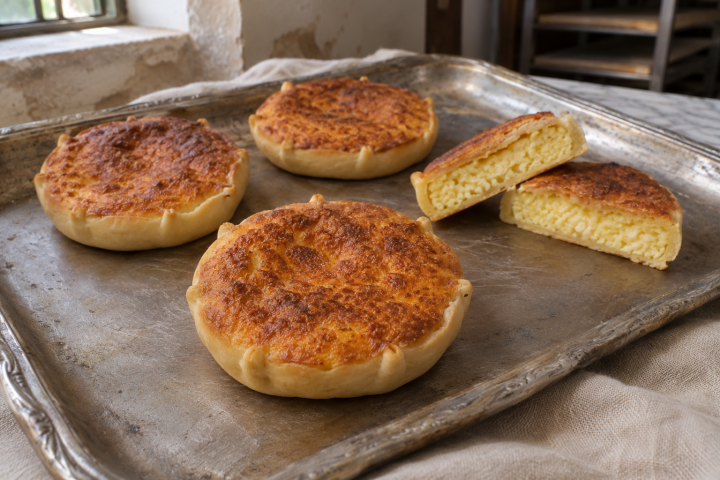
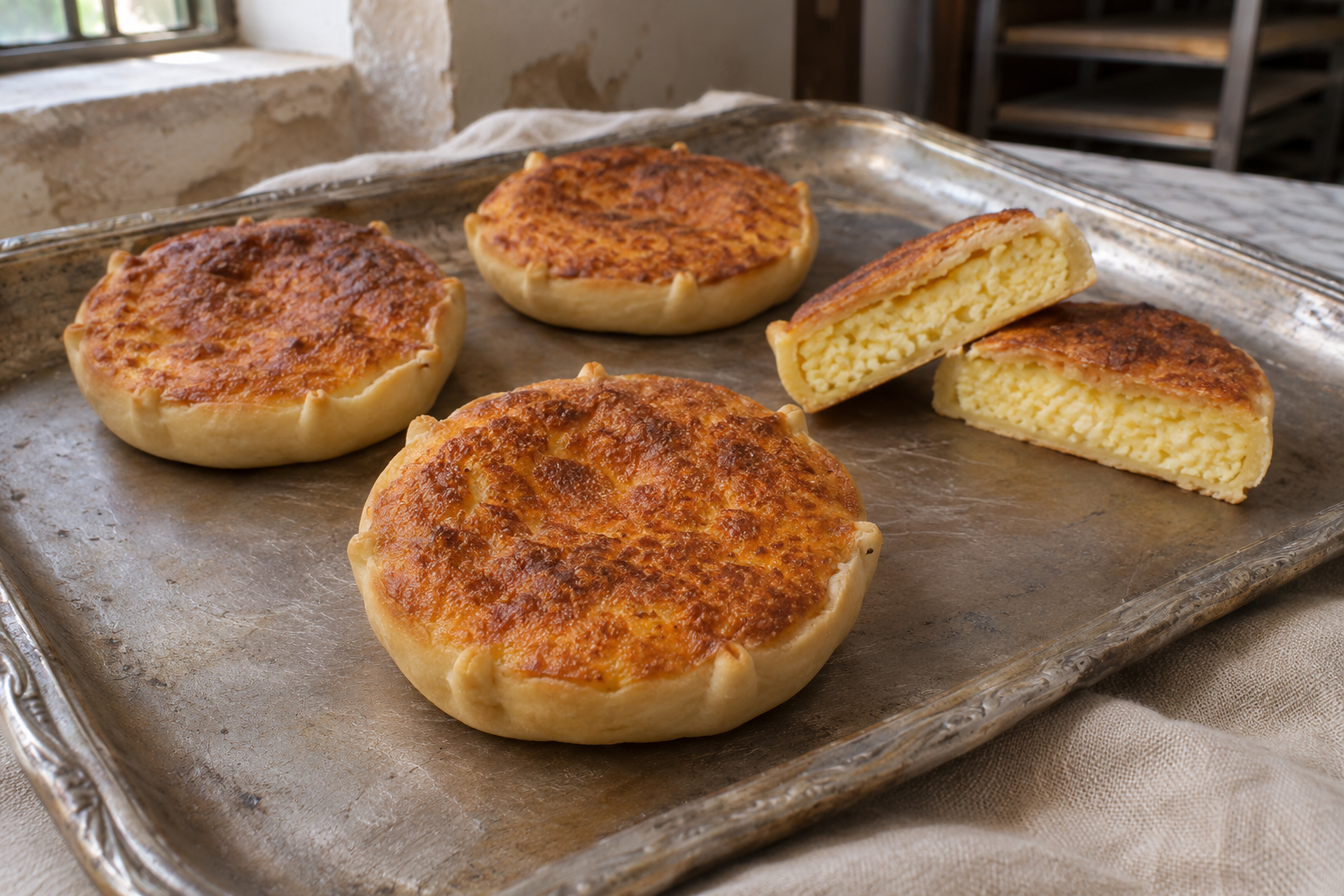
Bakers roll out a dough of wheat flour and warm water and shape each thin case by hand. Seven pinches around the rim hold the sides upright and the filling in place. The filling combines fresh ewe’s milk cheese, egg yolks, sugar and a little flour. It remains exposed during baking, so the top browns as the centre sets. The rim distinguishes Pereira’s tart from the queijada of nearby Tentúgal, which takes its star shape from an individual mould.
Pereira’s railway stop helped introduce the tarts to travellers. Bakers could stack them in groups of six or twelve and wrap them in paper for the journey. By 1925, a pastry counter was advertising Queijadas de Pereira by name in the Gazeta de Coimbra, alongside sweets from Aveiro and Portuguese sponge cake.
Local pastry shops sell the tarts year-round. At the entrance to Pereira, a steel sculpture about 3.5 metres across reproduces the familiar shape. The town’s folk ensemble, the Rancho Folclórico da Vila de Pereira, preserves another part of the trade in its performances: the street vendors’ call inviting customers to buy the tarts.
References
Câmara Municipal de Montemor-o-Velho. (2020). Sabores e tradições do concelho de Montemor-o-Velho; Carvalho, M. (2018). Os bolos e doces tradicionais de Portugal. Editorial Verbo; Freitas, J. (2015). A doçaria do Centro de Portugal. Verbo; Rodrigues, A. (2018). Tesouros da pastelaria tradicional portuguesa. QuidNovi.
See Also:
See Also
Map