Queijo Rabaçal (Rabaçal, Penela, Portugal)
Traditional Food Resources COUNTRIES AND TERRITORIES Portugal
Rabaçal, Penela, Portugal
-
2026

The cheese takes its name from the village of Rabaçal in the municipality of Penela. Its protected production area extends across parts of the Coimbra and Leiria districts, including Penela, Ansião and neighbouring communities. Sheep and goats browse on aromatic plants that grow on the limestone slopes. Local cheesemakers associate the cheese’s herbal character particularly with a wild thyme known as erva-de-santa-maria.
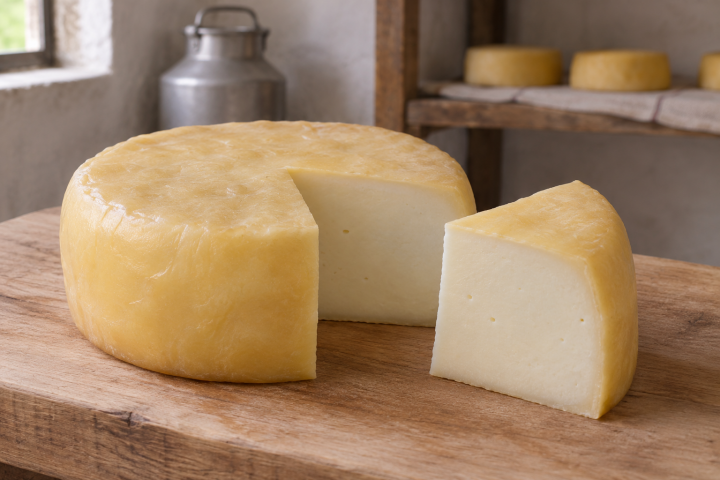
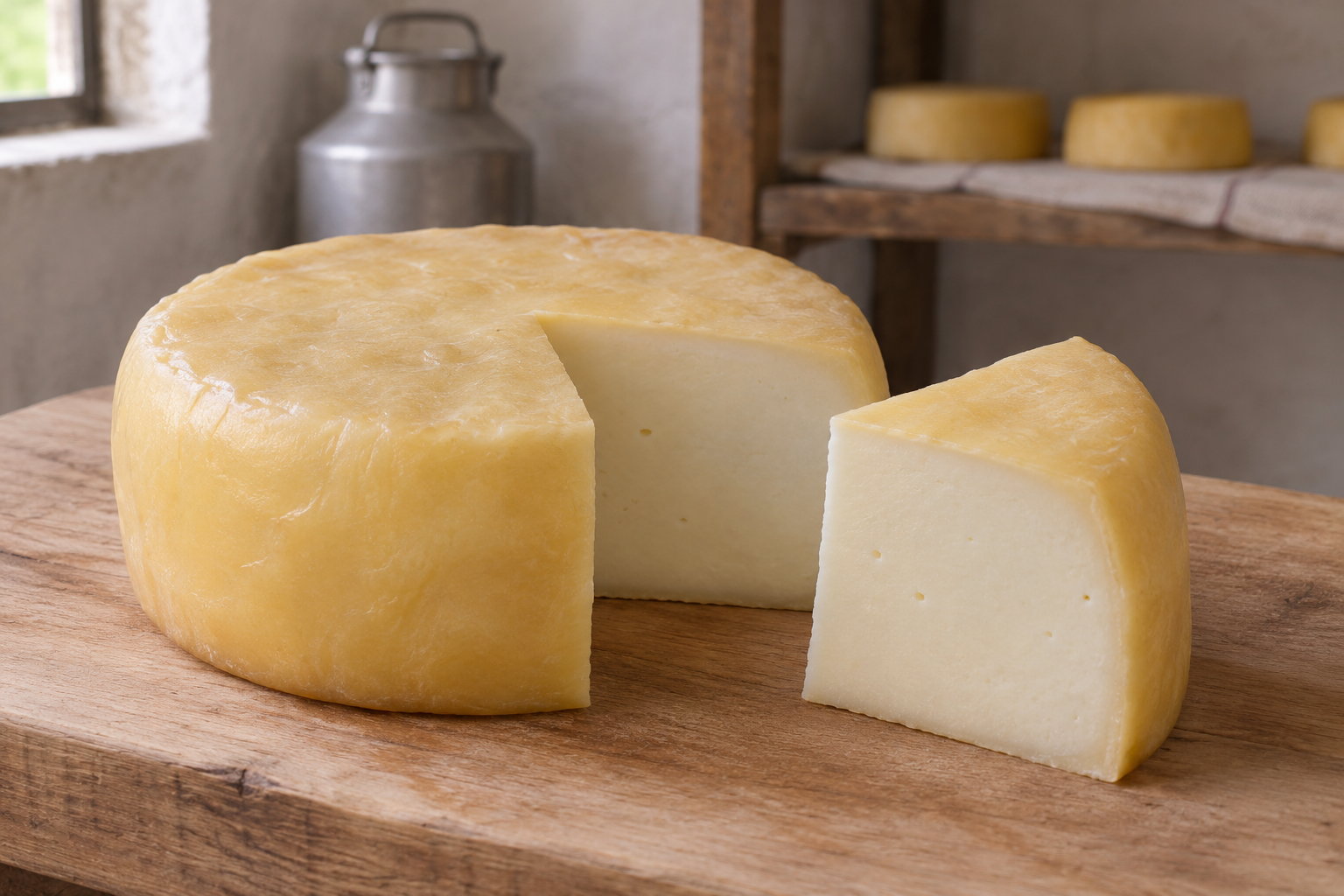
To make the cheese, producers blend two to three parts ewe’s milk with one part goat’s milk and add animal rennet. They let the curd drain slowly, shape it by hand in cylindrical moulds and salt the small wheels. After at least 20 days of ripening, each wheel weighs about 300–500 grams. Beneath its smooth, pale straw-coloured rind, the cheese is white to pale yellow, semi-hard to hard, with few or no visible openings.
Rabaçal is served in wedges as a starter or at the end of a meal, often with bread and a regional wine. Its reputation beyond the Sicó hills predates its European protection: in his novel A Cidade e as Serras, Eça de Queirós mentions Rabaçal alongside Camembert as a familiar example of a small, round cheese.
The village’s Mercado do Queijo e dos Romanos brings cheesemakers and visitors together at the archaeological site of the Roman villa of Rabaçal. The market gives visitors an opportunity to meet local producers and taste the cheese in the landscape where the milk is produced.
References
Carvalho, M. (2018). Os queijos tradicionais de Portugal: História e sabores. Editorial Verbo; Cooperativa COPRORABAÇAL. (n.d.). Pedido de registo de denominação de origem: Queijo Rabaçal. https://tradicional.dgadr.gov.pt/images/prod_imagens/queijos/doc_qr.pdf; Donnelly, C. (Ed.). (2016). The Oxford companion to cheese. Oxford University Press; Mayson, R. (2018). The wines and gastronomy of central Portugal. Infinite Ideas.
See Also:
See Also
Map