Queijadas de Tentúgal (Tentúgal, Montemor-o-Velho, Portugal)
Traditional Food Resources COUNTRIES AND TERRITORIES Portugal
Tentúgal, Montemor-o-Velho, Portuga
-
2026

The tarts take their name from Tentúgal, a town in the municipality of Montemor-o-Velho, west of Coimbra. Local tradition traces them to the Convent of Nossa Senhora da Natividade, where Carmelite nuns took up residence in 1572. The date of the recipe itself is uncertain. Its ingredients reflect two features of the region’s culinary history: the use of egg yolks and sugar in Portuguese convent sweets and the availability of fresh cheese in a valley with a long tradition of dairy farming.
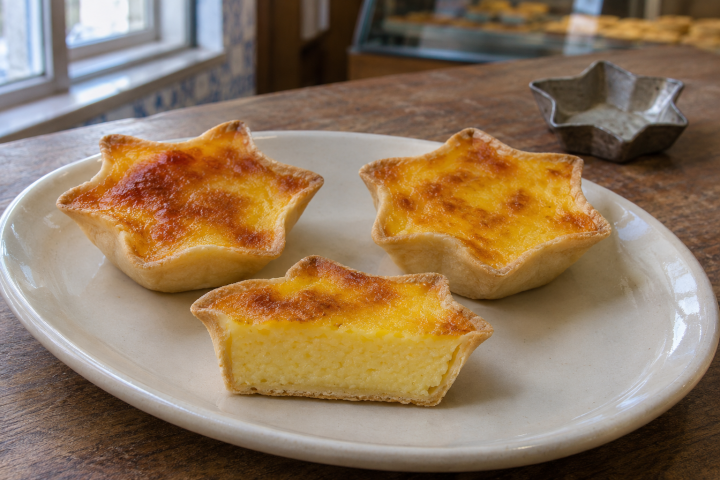
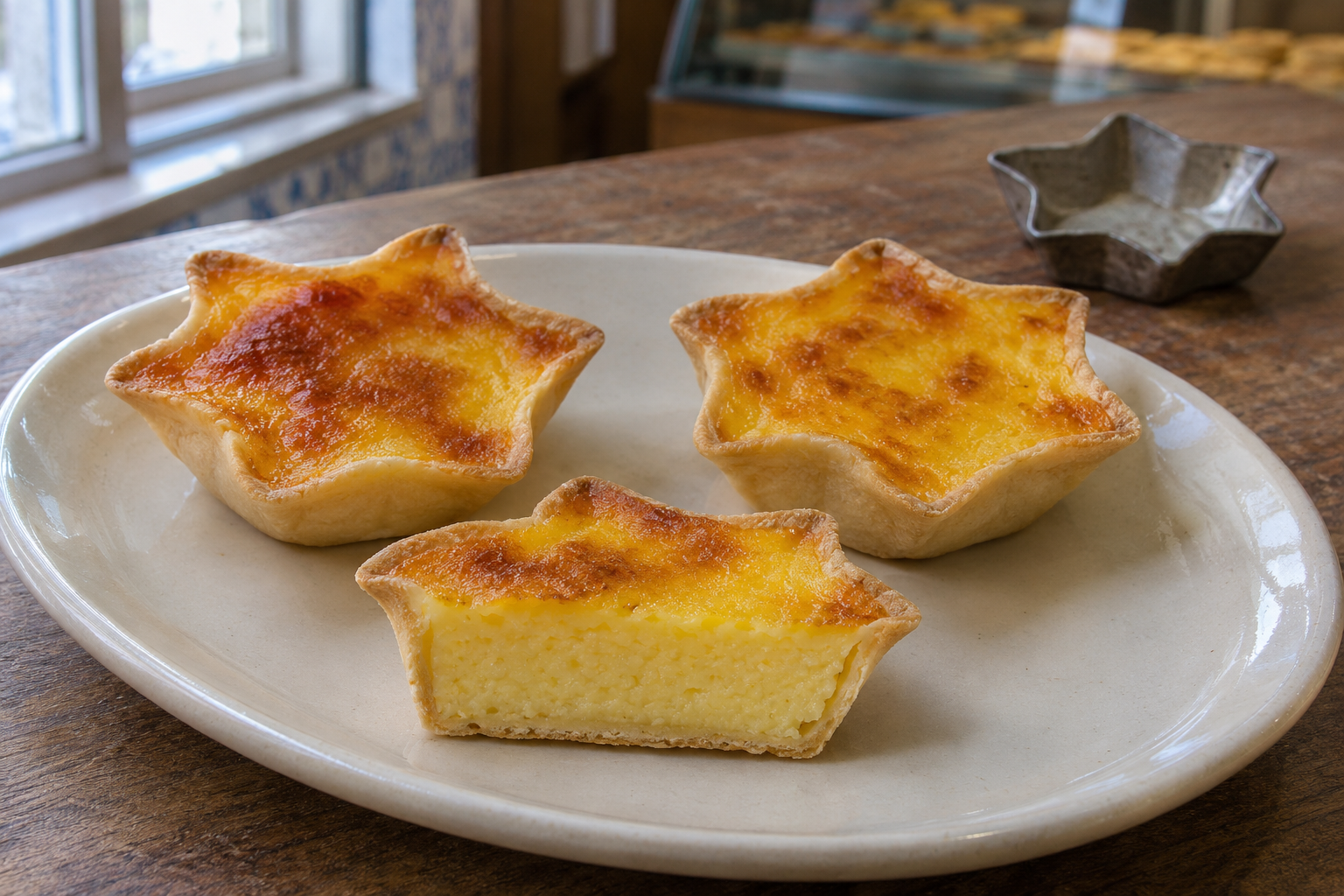
Bakers mix wheat flour, butter and water to make a firm dough, then use it to line individual star-shaped moulds. For the filling, they combine fresh cheese with egg yolks, sugar and butter, adding milk last. The tarts bake with the filling exposed. The thin shell crisps at the points of the star, while the centre stays moist and slightly grainy from the curd.
Tentúgal’s pastry shops sell the queijadas throughout the year, often alongside pastéis de Tentúgal. The difference is visible at the counter: the queijada has an open centre and a pointed rim, while the pastel encloses its egg filling in layers of hand-stretched pastry folded into a roll or crescent. The distinction also features in regional culinary tourism. At Coimbra’s 2025 exhibition of convent and contemporary confectionery, the Tentúgal pastry makers’ association listed the cheese tart, the pastel and an almond queijada as three separate sweets.
References
Bandeira, A. (2014). Doçaria conventual de Coimbra e sua região. Coimbra Editora; Direção-Geral de Agricultura e Desenvolvimento Rural. (n.d.). Queijada de Tentúgal. Produtos Tradicionais Portugueses. https://tradicional.dgadr.gov.pt/pt/cat/doces-e-produtos-de-pastelaria/725-queijadas-de-tentugal; Freire, M. (2017). Tentúgal: História, doçaria e património. Edições Convento; Rodrigues, J. (2019). Tesouros da gastronomia portuguesa: Doçaria. Âmbar.
See Also:
See Also
Map