Bariatric Surgery Tourism
TOURISM TYPES AND FORMS Health and Wellness Sciences Health Tourism
-
2026

Bariatrics, a term originating from Ancient Greek, is derived from the words baros (weight) and iatrikos (treatment). It is concerned with the treatment of obesity, dietary disorders, and diseases associated with excessive weight gain. The first documented attempt to treat obesity was made by Kremen and colleagues in 1954. A major milestone in the development of bariatric surgery was the introduction of gastric banding, first performed by Wilkinson and Peloso, who placed a non-adjustable band around the upper part of the stomach during open surgery. Consequently, gastric banding procedures were introduced in 1978. Although the technique became widespread in the early 1980s, the inability to accurately determine or adjust the stoma diameter during surgery resulted in high failure rates and numerous complications. In 1985, the system now known as the Swedish Adjustable Gastric Band (SAGB) was developed in Sweden. This band must be surgically removed after a certain period. However, once removed, the stomach returns to its original size, and the procedure may leave permanent tissue damage. Another bariatric procedure, gastric bypass surgery, was first performed laparoscopically (minimally invasively) in 1994. In this operation, a small gastric pouch is created, and a portion of the small intestine is connected to it, making the procedure technically more complex than gastric banding. Around the early 2000s, sleeve gastrectomy (gastric sleeve surgery), also known as the tube stomach procedure, became increasingly popular because it was considered safer and more effective. Since then, bariatric surgery has developed rapidly, particularly over the past 15–20 years.
Advances in surgical technology and the growing clinical experience of bariatric surgeons have made these procedures considerably safer. Patients who wish to undergo sleeve gastrectomy are generally required to have a body mass index (BMI) of 35 kg/m² or higher. In addition to surgical procedures, non-surgical interventions such as intragastric balloons (endoscopic and swallowable) and gastric injections are also widely performed. These procedures require specialized expertise in bariatric surgery, which constitutes an advanced subspecialty within general surgery.
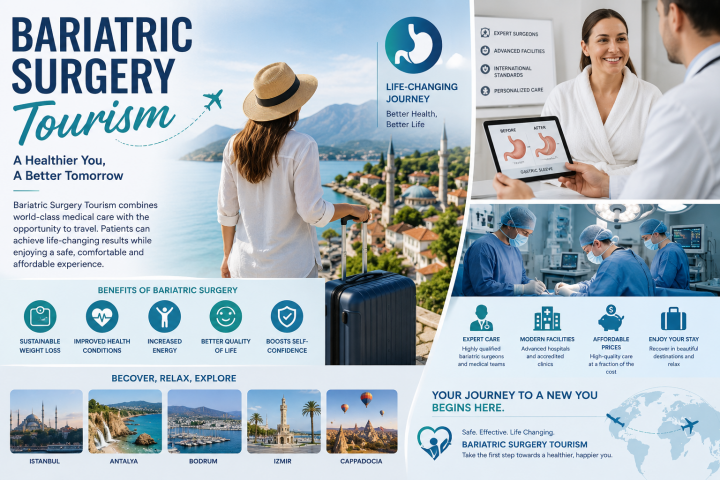
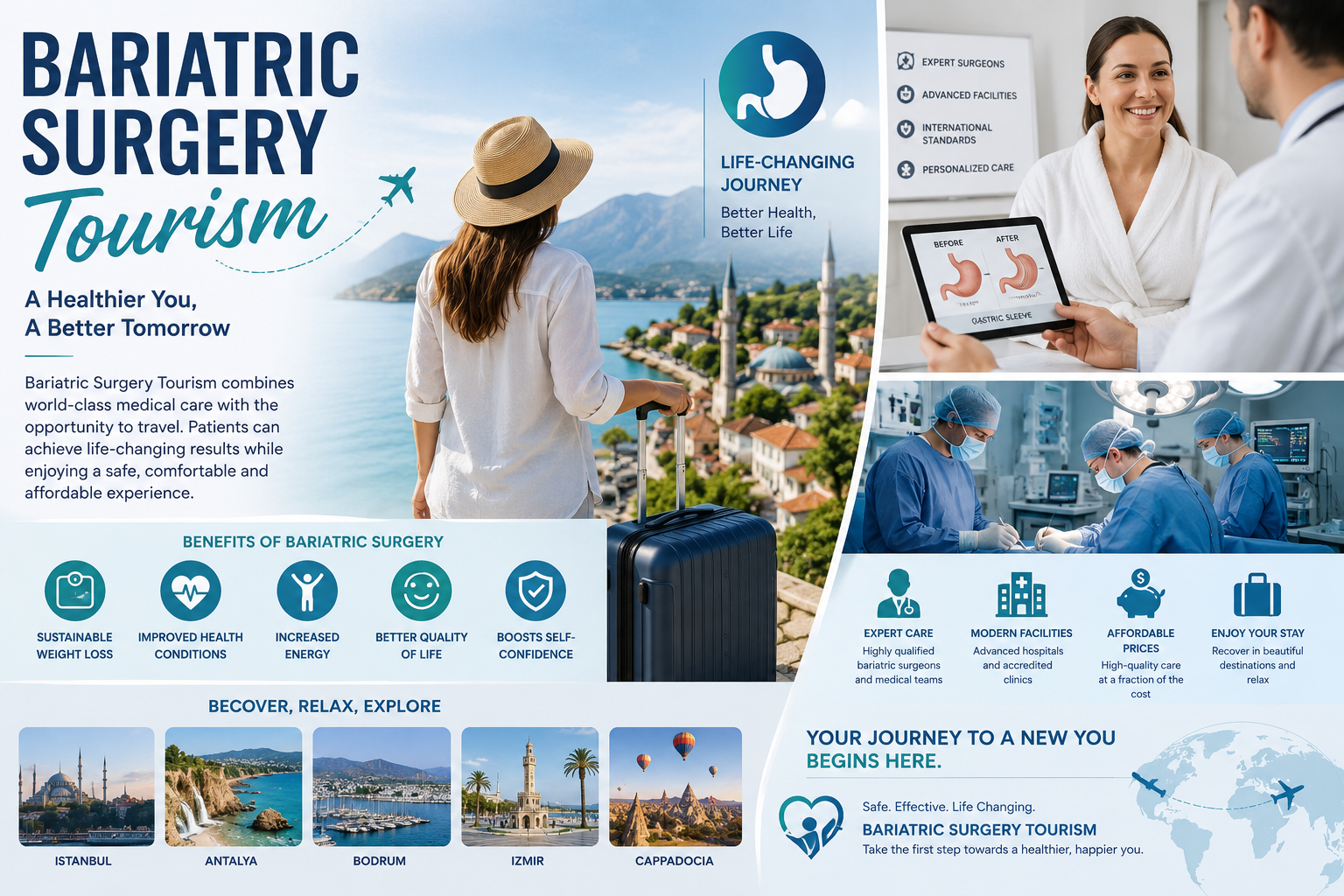
Patients from the United Kingdom, particularly those on National Health Service (NHS) waiting lists who require timely intervention because of prolonged waiting periods, frequently choose Türkiye for bariatric treatment. The average cost of sleeve gastrectomy in the United Kingdom ranges from approximately GBP 7,000 to GBP 10,000, whereas the same procedure in Türkiye, including accommodation and airport transfers, generally costs between GBP 2,500 and GBP 3,000. Research involving international health tourists visiting Türkiye has identified several factors influencing their choice of destination, including highly qualified healthcare professionals, short waiting times, advanced medical technology, and modern surgical techniques. Türkiye is home to numerous experienced general surgeons and bariatric specialists who successfully perform a wide range of bariatric procedures. The substantially higher costs of obesity surgery in countries such as the United Kingdom and Germany have encouraged many international patients to seek treatment in Türkiye because of its combination of high-quality healthcare services and competitive pricing.
Globally, Türkiye, Mexico, and Poland are among the leading destinations for bariatric surgery, based on the number of specialized clinics and international patient volume. Within Türkiye, İstanbul, İzmir, and Antalya are the principal destinations for bariatric health tourism. Consequently, international patients seeking bariatric surgery generally prefer internationally accredited hospitals and experienced bariatric surgeons holding International Health Tourism Authorization Certificates, which provide assurance regarding the quality and safety of healthcare services.
References
Altun, H., Karip, A. B., & Çelik, H. K. (2014). Bariatric surgery. Bosphorus Medical Journal, 1(3), 122–126; Faria, G. R. (2017). A brief history of bariatric surgery. Porto Biomedical Journal, 2(3), 90–92. https://doi.org/10.1016/j.pbj.2017.01.008; Güngör, Ş. (2019). Obezitenin tedavisinde geçmiş ve güncel bariatrik cerrahi uygulamaları [Past and current bariatric surgery practices in the treatment of obesity]. Muş Alparslan Üniversitesi Fen Bilimleri Dergisi, 7(2), 697–705. https://doi.org/10.18586/msufbd.604568; McGirr, J., Gregg, E. W., McNamara, D. A., et al. (2025). Bariatric and metabolic surgery medical tourism: The compelling need for regulation through transnational collaboration. BMJ Global Health, 10, e019546. https://doi.org/10.1136/bmjgh-2025-019546; Seyran, F. (2023, June 15–16). Obez sağlık turistleri Türkiye'yi neden tercih ediyor? [Why do obese health tourists prefer Türkiye?] [Conference presentation]. 2nd International Eurasia Congress of Health Sciences, Trabzon, Türkiye; Steffen, R. (2008). The history and role of gastric banding. Surgery for Obesity and Related Diseases, 4(3, Suppl.), S7–S13. https://doi.org/10.1016/j.soard.2008.04.002; Türkiye Endokrinoloji ve Metabolizma Derneği. (2019). Bariatrik cerrahi kılavuzu. https://file.temd.org.tr/Uploads/publications/guides/documents/20190527160325-2019tbl_kilavuza1dab037d3.pdf
See Also