Castle
NATURAL AND CULTURAL HERITAGE
-
2026

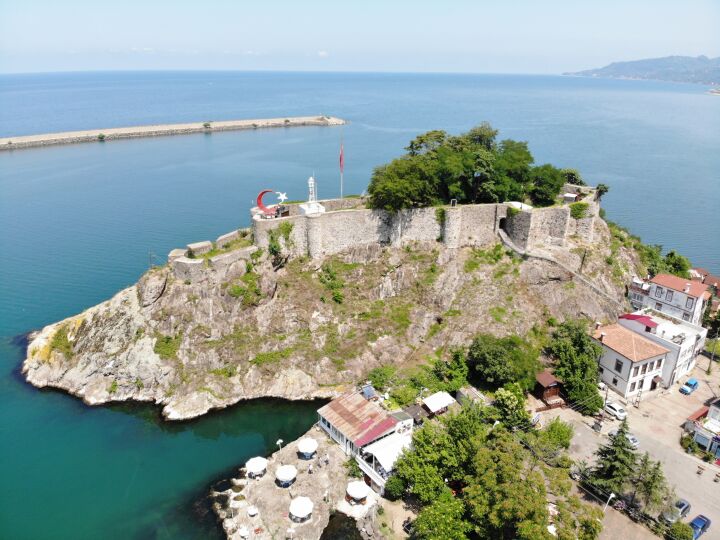
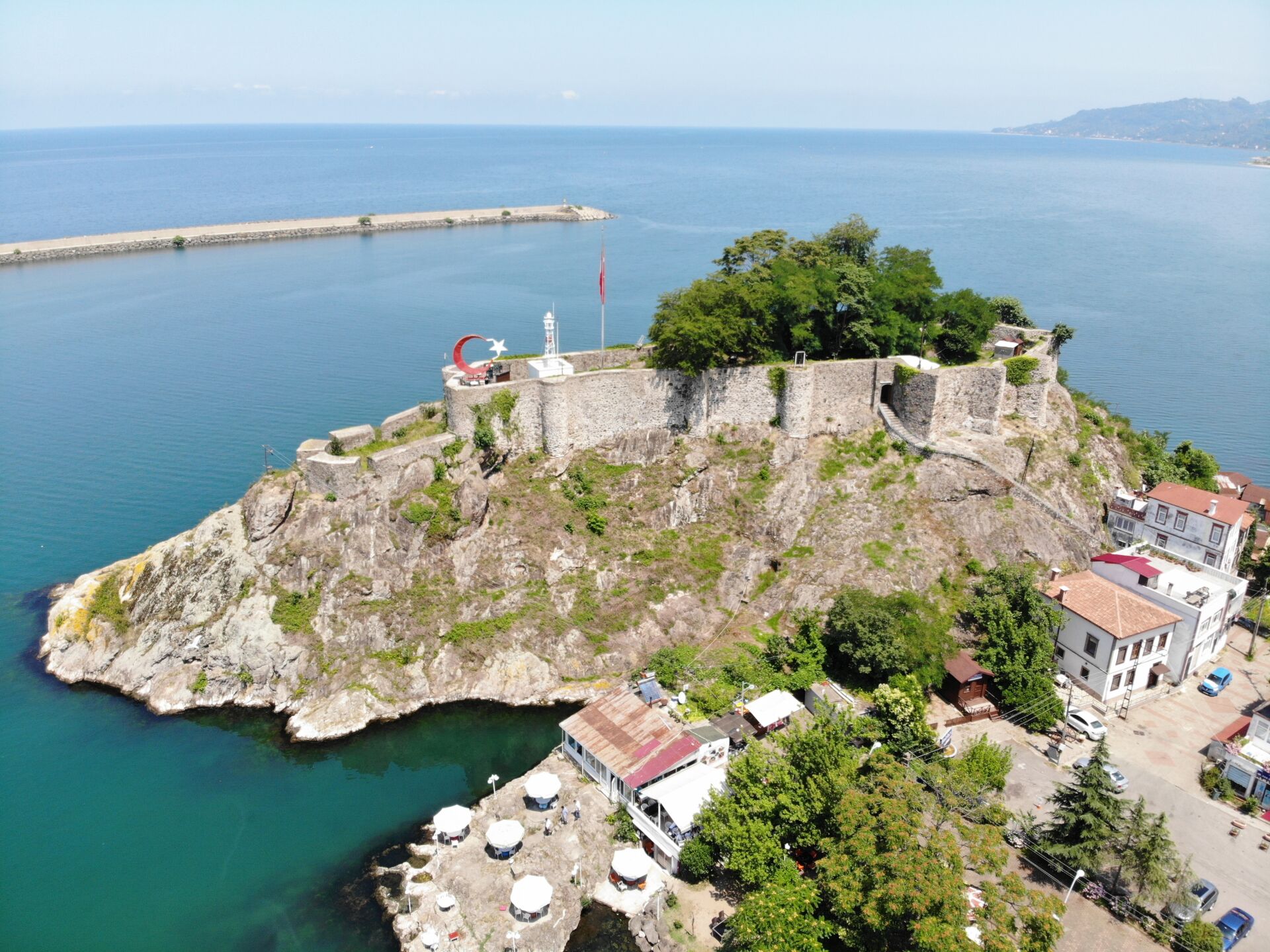
A castle is a defensive structure constructed to protect a strategically important region, pass, or settlement against external threats. Surrounded by high and thick walls, castles are reinforced with systematically positioned bastions and embrasures, while their internal layout is designed to accommodate the necessary military forces. Castles differ significantly from similar defensive structures such as city walls, fortresses, and châteaux. For instance, city walls (sur) are extensive defensive ramparts intended to protect a broad area or an entire city, whereas fortresses (hisar) and châteaux are generally smaller structures designed to defend private estates or specific strongholds. In contrast, castles are larger in scale and are strategically constructed on naturally defensible locations, including mountain passes, crossroads, narrow defiles, coastal promontories, and islands.
Topographical conditions played a decisive role in castle construction. Consequently, preference was given to locations that were easily defensible, allowed the defenders to launch sorties during a siege, contained independent water sources capable of sustaining prolonged resistance, and benefited from natural obstacles. Prior to the advent of artillery technology, most castles were erected in rugged and inaccessible terrain, with access deliberately restricted to a single approach.
Castle architecture varied across different regions and civilizations, evolving progressively in parallel with advances in military technology. Fundamentally, castles consist of thick stone or brick walls reinforced by bastions. The advanced examples found throughout Anatolia generally comprise several principal components: the citadel (inner castle), curtain walls, moats, bastions (towers), embrasures and merlons, the chemin de ronde (rampart walk), castle gates, barbicans (hisarpeçe), watchtowers, and auxiliary structures such as baths, palaces, and wells.
Citadel: The citadel represents the most heavily fortified section of the castle, serving as the final defensive stronghold should the enemy penetrate the outer fortifications. Generally constructed at the highest point of the castle or city, it functioned as the residence of the ruler, military commanders, or the governing elite while simultaneously serving as the political and administrative center.
Curtain Walls / Ramparts: Curtain walls are defensive ramparts that have surrounded cities and castles since antiquity. They were generally constructed using a double-wall system, consisting of inner and outer defensive walls.
Moat: Moats are defensive ditches located in front of the curtain walls and were typically filled with water. They were designed specifically to impede the advance of enemy forces and prevent siege engines from approaching the walls.
Bastions (Towers): Bastions constitute one of the most important elements of castle defense. Usually projecting outward from the curtain walls at intervals of approximately 50 meters, they may have square, circular, or polygonal plans. In addition, projecting wooden or stone structures incorporated into the upper sections of the walls enabled defenders to pour boiling liquids, hurl stones, or throw incendiary materials onto attacking forces.
Embrasures and Merlons: These are narrow openings located along the upper sections of curtain walls and bastions, enabling defenders to attack the enemy while remaining protected. They were specifically designed for the discharge of arrows, stones, firearms, and flammable materials.
Chemin de Ronde (Rampart Walk): The chemin de ronde consists of narrow walkways situated along the upper sections of curtain walls and bastions, immediately behind the merlons, allowing soldiers to move freely and maneuver efficiently along the defensive line.
Castle Gates: Castle gates served as points of entry and exit during peacetime while functioning as critical defensive elements during warfare. Constructed of heavy timber reinforced with iron plates, these gates were conventionally named after the direction or destination they faced (e.g., the Edirne Gate, the Tabriz Gate, or the Lefke Gate).
Hisarpeçe (Barbican / Faussebraye): The hisarpeçe refers to the lower defensive wall constructed in front of the main castle gate, positioned between the moat and the principal curtain wall.
Other Sections and Auxiliary Structures: Additional components, including the castle square (kale meydanı), the areas surrounding the castle (kale dibi / kale önü), battlements (kale korkuluğu), suburban settlements (varoş), casemates (kazamat), and palisades (şarampol), played important roles in both military defense and everyday life. Castles also contained structures such as the commander's residence, places of worship, garrison quarters, granaries or storehouses, and wells or cisterns. In some castles, underground water tunnels were constructed to ensure access to water during prolonged sieges. Notable examples of such systems can be found in the castles of Kemah, Hasankeyf, Urfa, and Bayburt in Türkiye.
Throughout history, castle architecture evolved alongside advances in military technology and changing strategies of warfare. Although architectural forms varied among the Hittite, Urartian, Roman, Byzantine, and Ottoman periods, fundamental defensive elements—such as moats, double-layered curtain wall systems, and bastion-protected gates—remained common features. In this respect, castles are not merely military fortifications but also architectural monuments that reflect the social, political, and technological sophistication of the civilizations that constructed them.
References
Arseven, C. E. (1993). Kale. İçinde Sanat Ansiklopedisi (Cilt 2, s. 908). Millî Eğitim Basımevi; Eyice, S. (2001). Kale. İçinde Türkiye Diyanet Vakfı İslâm Ansiklopedisi (Cilt 24, ss. 234–242). Türkiye Diyanet Vakfı Yayınları; Ödekan, A. (1997). Kale. İçinde Eczacıbaşı Sanat Ansiklopedisi (Cilt 2, s. 932). Yapı-Endüstri Merkezi Yayınları; Sevgen, N. (1959). Anadolu kaleleri. Doğuş Ltd. Şti. Matbaası; Yuka, A. (2023). Orta ve Doğu Karadeniz Bölgesi sahil kaleleri (Unpublished doctoral dissertation). Atatürk University.
See Also: