Creative Cities
Destination Management and Development

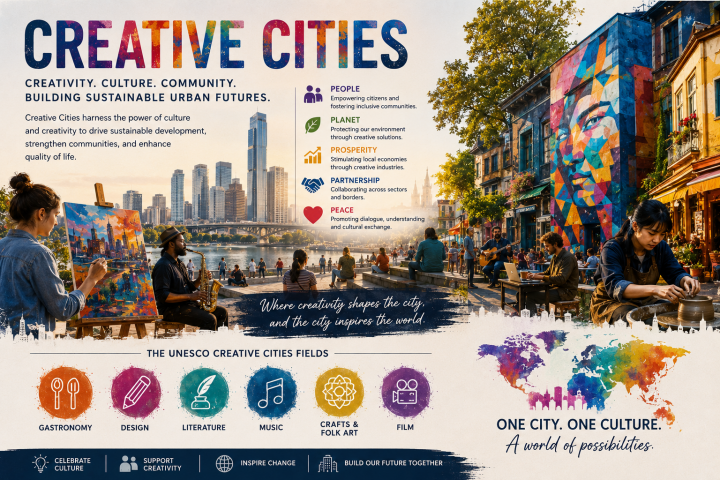
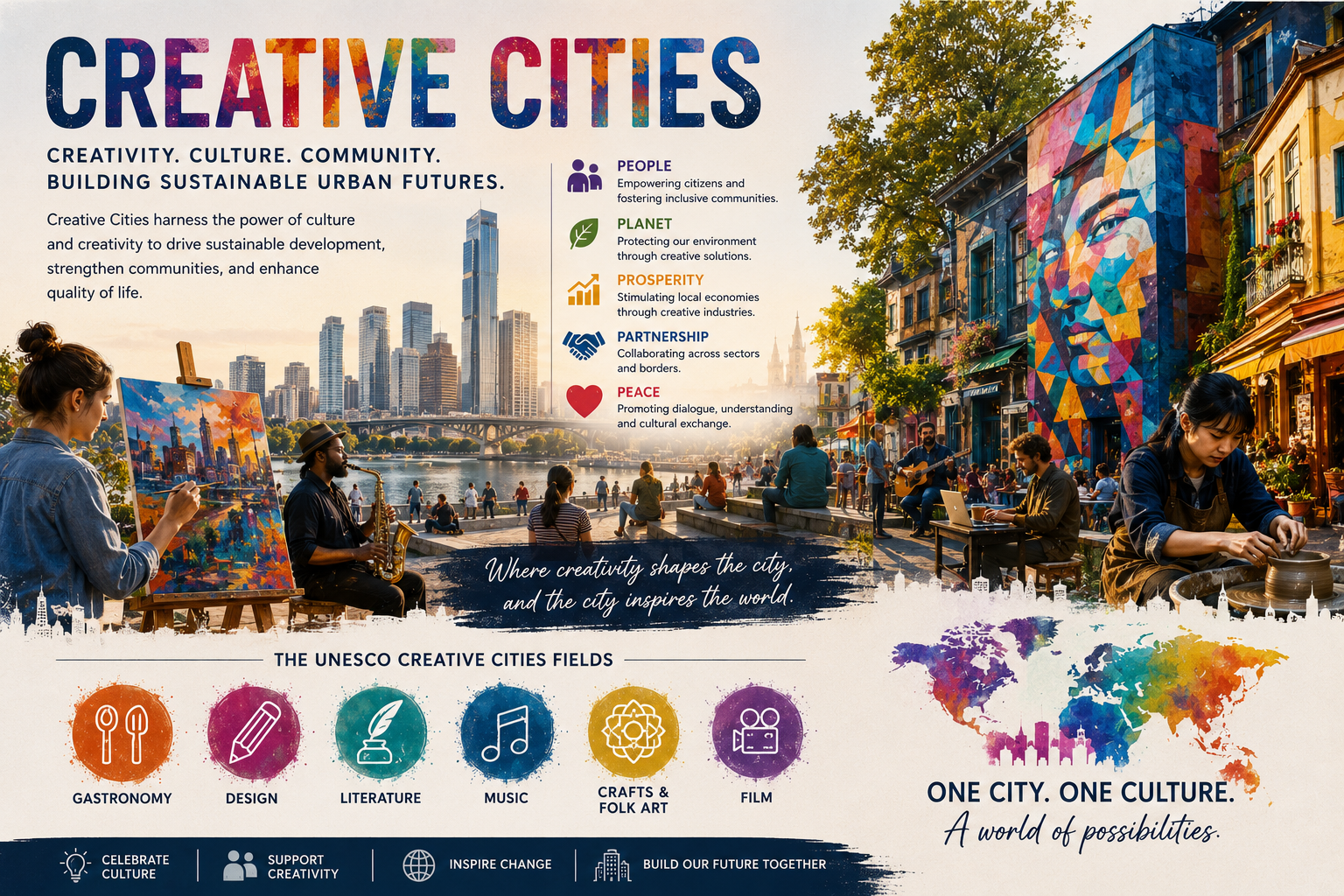
Since the 1970s, UNESCO and the Council of Europe have developed policies encouraging investment in cultural industries to revitalise the creative economy. In line with the United Nations (UN) 2030 Agenda for Sustainable Development, the importance of culture and creativity has been emphasised by repositioning culture from a soft social asset to a driver of socio-economic development and empowerment. Consequently, the UNESCO Creative Cities Network (UCCN) was established in 2004 to strengthen cooperation among cities that recognise creativity as a strategic resource for sustainable urban development.
The network is organised around distinct thematic fields, including Gastronomy, Design, Literature, Music, Crafts and Folk Art, Film, and Media Arts. Edinburgh became the first UNESCO City of Literature in 2004, recognised for leveraging its rich literary heritage. It was subsequently joined by cities such as Buenos Aires (Design), Berlin (Design), Santa Fe (Crafts and Folk Art), Aswan (Crafts and Folk Art), and Popayán (Gastronomy). Within the network, Türkiye has been particularly successful in the gastronomy category, making it the country's most prominent area of representation. Gaziantep became the first Turkish city to join the UCCN, followed by Hatay and Afyonkarahisar. İstanbul was designated a UNESCO City of Design and subsequently hosted the UNESCO Creative Cities Network Annual Conference. Expanding the network in 2025, UNESCO introduced Architecture as its eighth creative field. The inaugural Cities of Architecture were Bistrița (Romania), Kashan (Iran), Lusail (Qatar), Quito (Ecuador), and Rovaniemi (Finland), each recognised for employing architectural heritage and human-centred design to promote sustainable urban development.
The objectives of the programme include sharing experiences and best practices, implementing pilot projects, and promoting partnerships and collaborative initiatives among diverse stakeholders through professional and artistic exchange programmes. The network also seeks to develop policies and strategies for sustainable urban development, undertake research and evaluation on creative city practices, and carry out communication and public awareness activities.
Creativity has become an increasingly important component of the tourism sector, particularly as a key element of the visitor experience. The UCCN provides a platform through which cities can innovate and integrate creativity into tourism while fostering sustainable development and cultural vitality. Creative tourism has been closely linked to the Sustainable Development Goals (SDGs), with particular emphasis on community-based tourism, environmental stewardship, and cultural preservation. By building upon local identity and encouraging community participation, creative tourism can contribute to destination regeneration and foster more inclusive and vibrant cultural environments in which visitors become active co-creators rather than passive consumers. Nevertheless, challenges such as inter-city competition and the commodification of culture remain. In addition, the uneven distribution of resources may limit the capacity of some cities, particularly those in less accessible regions, to fully benefit from their UCCN designation. Effective collaboration among public authorities, local communities, cultural institutions, and the private sector is therefore essential to maximise the benefits of knowledge exchange and cooperation fostered by the UNESCO Creative Cities Network.
References
Cheraghi, E. (2026). Weaving the creative thread into the fabric of sustainable urban development: The case of the UNESCO Creative Cities Network. GeoJournal of Tourism and Geosites, 64(1), 250–264. https://doi.org/10.30892/gtg.64122-1673; Richards, G., & Raymond, C. (2000). Creative tourism. ATLAS News, 23, 16–20; UNESCO. (2018). UNESCO Creative Cities Programme for Sustainable Development (CLT-2018/WS/5). UNESCO.
See Also:
See Also