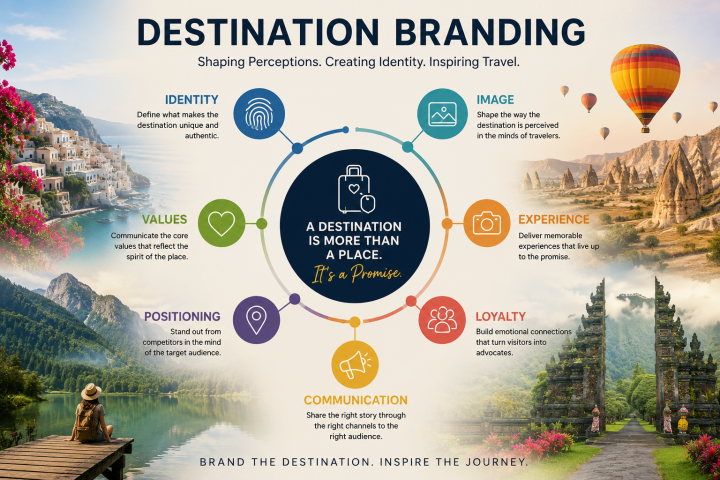
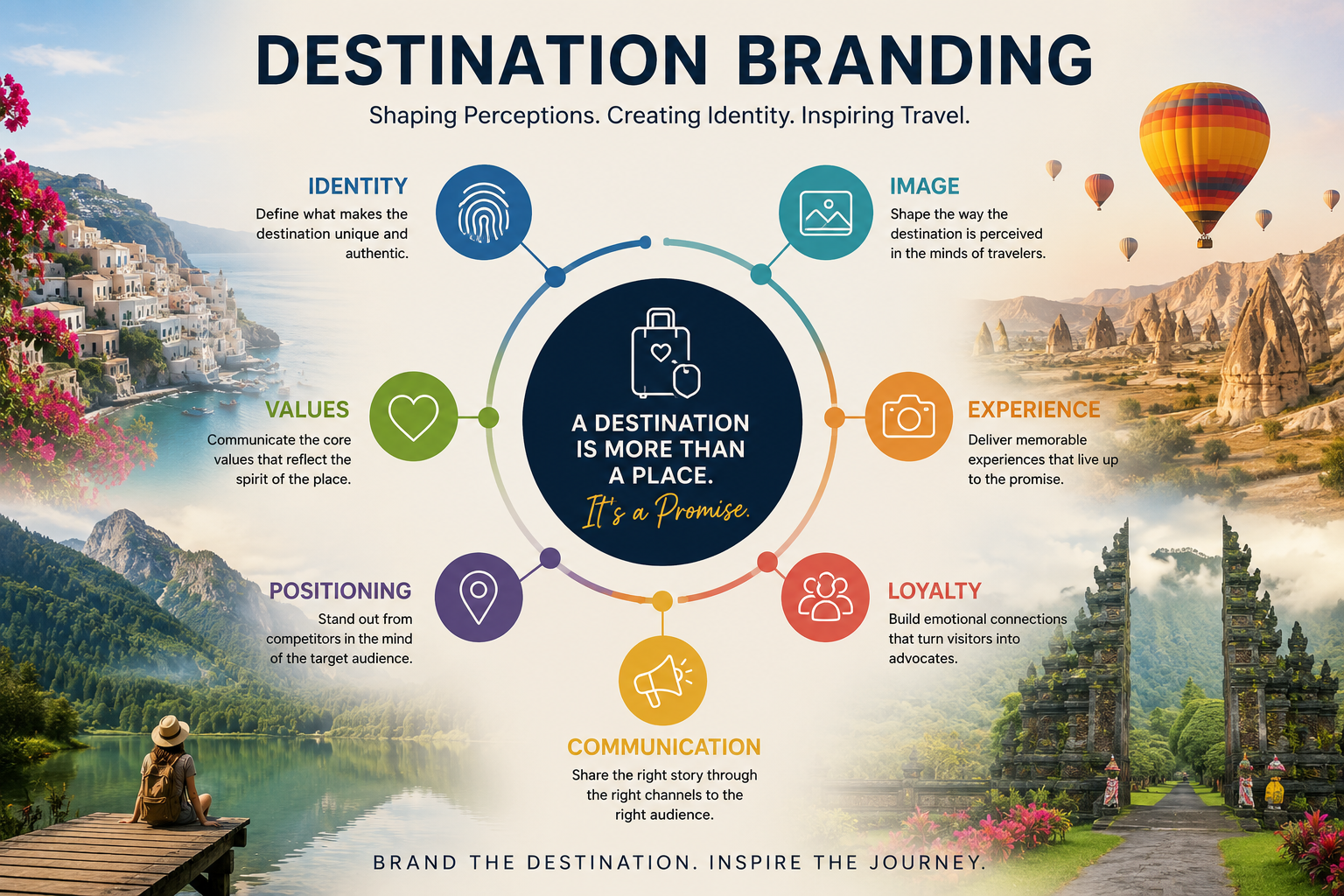
Destination Branding
DISCIPLINES, CONCEPTS, AND RESEARCH AREAS Business and Management Sciences Marketing
-
2026

The concept of destination branding first emerged in academic conferences and journal articles in the late 1990s and subsequently appeared in scholarly books in the early 2000s. The literature on destination branding emphasises that many destinations offer visitors similar attributes, such as high-quality accommodation, beautiful scenery, and friendly local communities. Consequently, scholars argue that destinations should be transformed into brands by highlighting their distinctive characteristics alongside their core attributes. It is further suggested that tourists are more likely to choose destinations with a strong and favourable brand image when making travel decisions.
Within this context, destination branding is commonly defined as the process of selecting a consistent set of brand elements (e.g., a name, symbol, logo, and slogan) to identify a destination, distinguish it from competing destinations, and develop a positive image. In other words, destination branding is a marketing tool used to differentiate a destination from its competitors and to communicate its unique identity to target markets and local residents. Accordingly, the primary functions of destination branding are identity creation and differentiation. While the tangible attributes of a destination (e.g., beaches and historical sites) and its intangible attributes (e.g., culture and history) constitute the foundation of its brand identity, a destination can be regarded as a strong brand when these attributes are perceived as distinctive, authentic, and capable of providing a competitive advantage.
At its core, destination branding refers to activities that emphasise a destination's unique characteristics that are likely to influence target markets and position it distinctly from its competitors. The ultimate objective is to create a destination image that positively shapes tourists' destination preferences. In doing so, destinations can attract more visitors while simultaneously increasing their appeal to investors. The international success and reputation of well-established destination brands have encouraged destination management and marketing organisations, as well as national tourism authorities, to allocate greater resources to branding strategies.
Dubai provides a notable example of successful destination branding. Once known primarily as a desert city, Dubai has undertaken substantial branding initiatives and has become a globally recognised destination through its luxury hospitality sector, world-famous shopping malls, diverse tourism products, and distinctive visitor experiences. Similarly, Las Vegas has established itself as a leading destination brand through significant investments in gambling and entertainment, and its destination image has become closely associated with these attributes. Cappadocia (Türkiye) has developed a strong destination brand based on its authentic accommodation experiences and iconic hot-air balloon tourism. Antalya (Türkiye), on the other hand, has successfully incorporated its “sun, sea, and sand” resources into its brand identity. Because Antalya's brand identity closely aligns with the destination image held by its primary target markets, particularly tourists from Northern Europe, it continues to attract increasing numbers of visitors each year. Efforts to strengthen Antalya's brand equity continue through initiatives to enhance hotel quality and improve the standards of its all-inclusive tourism services.
Destination branding can therefore be understood as an ongoing process rather than a one-time achievement. Becoming a destination brand does not signify the completion of this process. Given the intense competition among destinations, every branded destination must preserve its distinctive brand identity while continuously strengthening it in response to evolving market expectations by embracing contemporary trends such as smart destinations and sustainable tourism. Accordingly, the destination branding process requires the careful design of brand elements (e.g., logos and slogans), the identification of brand associations that reflect both the tangible and intangible characteristics of the destination, and the effective communication of these associations as components of the destination's brand identity through integrated marketing communication activities, including advertising, films, and digital media. Sustained marketing communication is essential for creating the desired destination image and establishing a strong position in consumers' minds. A destination that successfully completes this branding process may be described as one that possesses a distinctive identity through its name, symbol, slogan, logo, or other brand elements; clearly differentiates itself from competing destinations; promises visitors a memorable tourism experience closely associated with the destination; and consistently delivers this promise through the provision of high-quality services.
References
Blain, C., Levy, S. E., & Ritchie, J. R. B. (2005). Destination branding: Insights and practices from destination management organizations. Journal of Travel Research, 43(4), 328–338; Cai, L. A. (2002). Cooperative branding for rural destinations. Annals of Tourism Research, 29(3), 720–742; Dioko, L. D. A., & So, S. I. A. (2012). Branding destinations versus branding hotels in a gaming destination: Examining the nature and significance of co-branding effects in the case study of Macao. International Journal of Hospitality Management, 31(2), 554–563; Qu, H., Kim, L. H., & Im, H. H. (2011). A model of destination branding: Integrating the concepts of branding and destination image. Tourism Management, 32(3), 465–476; Zenker, S., Braun, E., & Petersen, S. (2017). Branding the destination versus the place: The effects of brand complexity and identification for residents and visitors. Tourism Management, 58, 15–27.
See Also
Morgan, N., Pritchard, A., & Pride, R. (Eds.). (2004). Destination branding: Creating the unique destination proposition (2nd ed.). India: Elsevier.
See Also