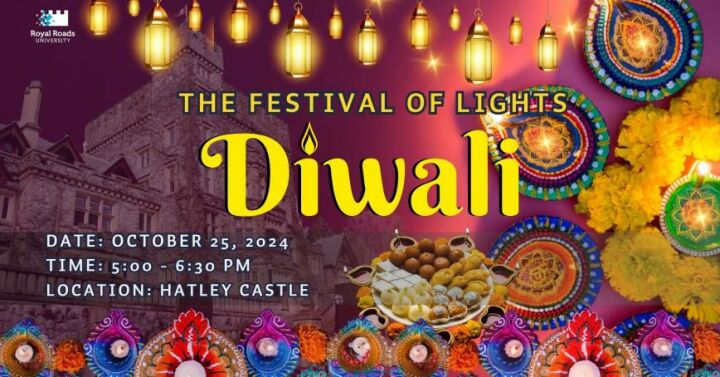
Diwali
Religious Festivals Historic and Heritage Accommodation COUNTRIES AND TERRITORIES India
-
2026

Diwali, also known as Dipavali, is the most widely celebrated Hindu Festival of Lights and one of the most important religious and cultural festivals observed across the Indian subcontinent. Symbolizing the triumph of light over darkness, knowledge over ignorance, and righteousness over evil, Diwali occupies a central place in Hindu religious life while also being celebrated in different forms by several other South Asian religious communities. Today, it is recognized not only as a religious festival but also as a major cultural event observed by millions of people around the world.
Among the four major Hindu festivals—Diwali, Holi, Dussehra, and Raksha Bandhan—each reflects a distinctive aspect of Indian civilization: light, colour, victory, and protection, respectively. Diwali represents joy, prosperity, hope, and spiritual illumination. Since the early Vedic period, the celebrated prayer tamaso mā jyotir gamaya ("Lead me from darkness to light") has expressed one of the enduring ideals of Indian religious thought and has become closely associated with the symbolism of the festival.
The name Dipavali literally means "a row of lamps," referring to the oil lamps (diyas) traditionally placed around homes, temples, and public spaces throughout the celebration. According to the most widespread Hindu tradition, the festival commemorates the return of Lord Rama to his kingdom of Ayodhya after fourteen years of exile and his victory over the demon king Ravana, as narrated in the Ramayana. The lighting of countless lamps symbolizes both the joyful welcome extended to Rama and the ultimate victory of virtue over evil. Although this narrative remains the best-known explanation of Diwali, different regions and Hindu traditions associate the festival with additional religious events and local legends.
Diwali is celebrated throughout India with considerable regional variation in rituals and customs. The festival begins on the fourteenth day of the lunar month of Ashwayuja and concludes on the second day of Kartika, generally falling between late October and early November according to the Hindu lunar calendar. Despite regional differences, the central themes of light, prosperity, family unity, and spiritual renewal remain common throughout the celebrations.
The precise historical origins of Diwali remain uncertain, although scholars generally agree that the festival has existed for well over a millennium and incorporates traditions that may be considerably older. Like many ancient seasonal festivals found throughout the world, Diwali appears to combine religious symbolism with agricultural, seasonal, and communal celebrations that gradually became integrated into Hindu religious practice.
The first day of the festival is associated with prayers and offerings dedicated to Yama, the god of death, seeking protection and forgiveness. Lamps are lit in his honour, while families prepare festive meals and begin decorating their homes. As evening approaches, rows of illuminated lamps are placed on windows, balconies, entrances, and rooftops, transforming both private homes and public spaces into displays of light.
The second day is devoted primarily to the worship of Lakshmi, the goddess of wealth, prosperity, and good fortune, whose blessings are believed to ensure abundance in the coming year. In the Bengal region, however, worship is directed instead towards the goddess Kali, reflecting regional religious traditions. Throughout the evening, lamps continue to burn, while the sounds of drums and other ceremonial noise are intended to drive away Alakshmi, the embodiment of misfortune and poverty.
The third day centres on several interconnected religious traditions. One aspect commemorates the demon king Bali, who was subdued by the god Vishnu, while another celebrates Krishna's protection of the inhabitants of Govardhana by lifting the sacred hill to shelter them from a devastating storm. Offerings of food arranged in symbolic mounds represent Govardhana Hill, emphasizing gratitude for divine protection and agricultural abundance. It is also customary to remain awake throughout the night, and games of chance are traditionally played in remembrance of the legendary dice game in which the goddess Parvati defeated her husband, Shiva. In many regions, cattle are blessed as symbols of prosperity and agricultural life, and rituals intended to ensure safe travel and future well-being are also performed.
The final day, often known as Brotherhood Day, emphasizes family relationships and social harmony. Brothers visit the homes of their sisters, where they receive blessings and share festive meals together. More broadly, Diwali serves as an occasion for family reunions, the exchange of gifts, charitable giving, and reconciliation among relatives and friends, reinforcing both kinship ties and community solidarity.
Fireworks and firecrackers have long formed an important part of Diwali celebrations, symbolizing joy and victory. However, growing environmental awareness has led to increased attention from both governments and researchers regarding their ecological consequences. Scientific studies have demonstrated that the extensive use of fireworks during the festival contributes to significant increases in airborne particulate matter and toxic gases, resulting in a temporary deterioration in air quality and potential risks to public health. Consequently, environmentally sustainable forms of celebration have become an important subject of contemporary discussion in India.
Diwali has spread far beyond the Indian subcontinent through the global Indian diaspora. Hindu communities in Africa continue to celebrate the festival largely in accordance with long-established traditions, while Diwali has also become a national public holiday in Trinidad and Tobago and Guyana. Significant public celebrations are likewise held in countries such as Fiji, Mauritius, South Africa, New Zealand, the United Kingdom, Canada, and the United States, where the festival serves as an important expression of religious identity, cultural continuity, and community cohesion. In many of these countries, Diwali has also become an occasion for intercultural exchange, attracting participation well beyond Hindu communities.
Today, Diwali remains one of the defining symbols of Hindu civilization. While its religious message continues to emphasize the victory of light over darkness, knowledge over ignorance, and good over evil, the festival also reflects broader themes of renewal, generosity, social solidarity, and cultural continuity. As both a sacred observance and an international cultural celebration, Diwali illustrates the enduring vitality of Hindu traditions in an increasingly interconnected world.
References
Garg, A., Sharma, P., Beig, G., & Ghosh, C. (2019). Temporal mount in air pollutants allied with religious fiesta: Diwali, Festival of Lights. İçinde T. Jindal (Ed.), Emerging issues in ecology and environmental science: Case studies from India (ss. 11–25). Springer International Publishing. https://doi.org/10.1007/978-3-319-99398-0_2; Jones, C. A., & Ryan, J. D. (2007). Divali (Dipavali). İçinde Encyclopedia of Hinduism (ss. 12, 135–136, 175). Facts On File; Rambachan, A., & Shukla, U. (2015). Hinduism in Fiji, Mauritius, South Africa, and Trinidad. İçinde Hinduism in the modern world. Routledge; Rothermund, D. (2006). Bihar. İçinde S. Wolpert (Ed.), Encyclopedia of India (Cilt 1, s. 153). Thomson Gale; Rao, P. S., Gajghate, D. G., Gavane, A. G., Suryawanshi, P., Chauhan, C., Mishra, S., Gupta, N., Rao, C. V. C., & Wate, S. R. (2012). Air quality status during Diwali Festival of India: A case study. Bulletin of Environmental Contamination and Toxicology, 89(2), 376–379. https://doi.org/10.1007/s00128-012-0669-9; Singh, R. P. (2021). Diwali (Dipavali). İçinde Hinduism and tribal religions (ss. 1–2). Springer. https://doi.org/10.1007/978-94-024-1036-5_69-1; Singha, R., & Singha, S. (2024). The symbolism of Diwali: A festival of light, hope, and renewal (SSRN Scholarly Paper No. 4983616). Social Science Research Network. https://doi.org/10.2139/ssrn.4983616
See Also:
Map