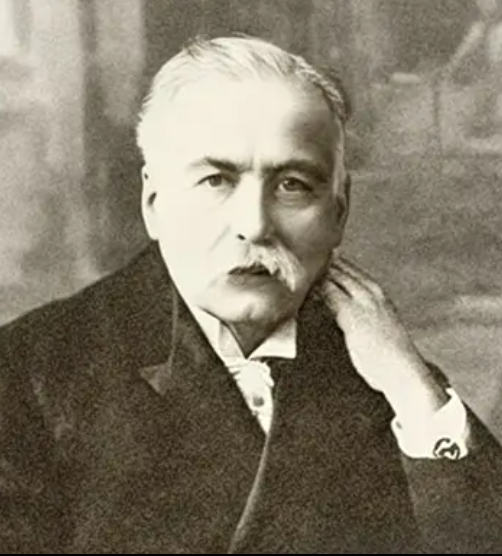
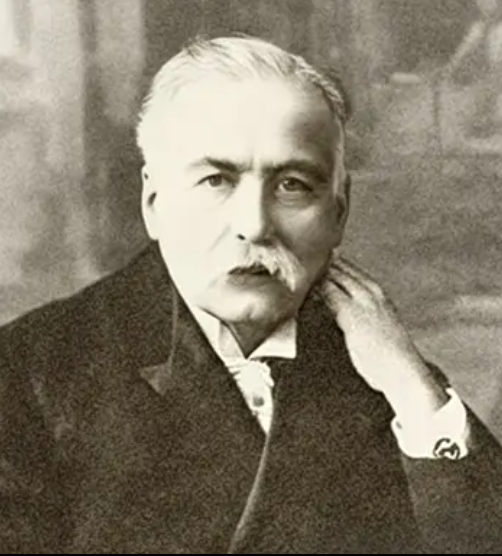
Georges Auguste Escoffier
Historical Figures in Tourism Gastronomy Pioneers
(1846–1935)

Georges Auguste Escoffier was a French chef, restaurateur, and culinary writer who systematized modern French cuisine and played a transformative role in integrating gastronomy into luxury hospitality, thereby influencing the development of tourism as an experience-oriented industry. He is widely regarded as one of the most influential figures in the history of professional cooking and hospitality management.
Introduction
Georges Auguste Escoffier (1846–1935) occupies a central position in the evolution of modern gastronomy, not only as a leading culinary practitioner but also as a system-builder who standardized professional kitchen operations and redefined the relationship between food, service, and hospitality. His contributions extend beyond culinary technique to encompass organizational innovation, menu engineering, and the integration of gastronomy into luxury tourism experiences. In this regard, Escoffier is recognized as a foundational figure in both culinary history and the institutionalization of modern hospitality systems [1][2].
Early Life and Background
Escoffier was born on October 28, 1846, in Villeneuve-Loubet, France, into a modest family; his father was a blacksmith. His introduction to gastronomy began at an early age when he entered an apprenticeship at his uncle’s restaurant in Nice. This formative experience exposed him to the practical and organizational dimensions of culinary work, shaping his lifelong emphasis on discipline, efficiency, and structured learning.
By his late teenage years, he had advanced to professional kitchens in Paris, where he worked in reputable establishments such as Le Petit Moulin Rouge. His career development was temporarily interrupted by the Franco-Prussian War (1870–1871), during which he served as an army chef. This period proved pivotal, as it stimulated his interest in food preservation techniques and mass catering—skills that later informed his approach to standardization and large-scale kitchen management [3].
Education and Professional Formation
Unlike contemporary chefs, who often receive formalized culinary education, Escoffier’s training followed a traditional apprenticeship model. His early education was strongly practice-oriented and grounded in experiential learning within professional kitchens.
Over time, Escoffier combined this practical knowledge with systematic intellectual engagement with culinary processes. His later works demonstrate a high degree of theoretical abstraction, suggesting that he transcended the conventional role of a cook to become a culinary theorist. His approach contributed to the transformation of cooking from a craft into a disciplined professional field supported by codified knowledge systems [4].
Career Development and Early Professional Experience
Escoffier’s early professional career was marked by progressive advancement through elite French kitchens. After his military service, he returned to Paris and eventually became head chef at Le Petit Moulin Rouge. His growing reputation attracted the attention of prominent figures in the hospitality sector.
A critical turning point occurred in the 1880s when he met César Ritz, a pioneering hotelier. Their collaboration led to a partnership that fundamentally reshaped modern luxury hospitality. Together, they worked at prestigious establishments such as the Savoy Hotel and later the Carlton Hotel in London, as well as the Ritz Hotel in Paris. This collaboration marked the beginning of a new paradigm in which gastronomy became an integral component of luxury hotel experiences [2][5].
Mentorship and Professional Influences
Escoffier’s work was deeply influenced by earlier figures in French haute cuisine, most notably Marie-Antoine Carême, who had previously codified elements of classical French culinary practice. While Carême emphasized elaborate presentation and complexity, Escoffier simplified and rationalized these traditions, adapting them to the operational realities of large-scale service environments [1].
His military experience also played a crucial role in shaping his organizational philosophy. The hierarchical structure and discipline characteristic of the military informed his later development of the brigade system, which mirrors chains of command and task specialization [6].
Fields of Expertise and Culinary Philosophy
Escoffier’s expertise spanned multiple domains, including culinary technique, kitchen management, menu planning, and hospitality design. His culinary philosophy was grounded in the principles of simplicity, balance, and efficiency.
He rejected the excessive ornamentation characteristic of earlier French cuisine in favor of lighter dishes that emphasized natural flavors and high-quality ingredients. His approach to menu design prioritized coherence, seasonality, and nutritional balance, reflecting a broader shift toward modern culinary sensibilities [3][5].
He also emphasized hygiene, discipline, and professionalism in the kitchen, introducing strict standards that transformed the working culture of culinary environments.
Professional Workplaces and Institutional Contributions
Throughout his career, Escoffier held leadership positions in some of the most prestigious hospitality establishments in Europe. His work at the Savoy Hotel in London in the 1890s is particularly notable, as it became a benchmark for luxury dining and service excellence.
Following his tenure at the Savoy, he continued his work at the Carlton Hotel and contributed to the success of the Ritz Hotel in Paris. These institutions served as laboratories for his innovations in kitchen organization, service efficiency, and menu standardization.
His influence extended internationally, as these establishments attracted elite clientele and set global standards for luxury hospitality operations [2][5].
Key Contributions and Impact
- The Brigade de Cuisine System: Escoffier’s most significant contribution to professional gastronomy is the development of the brigade de cuisine system. This organizational model divides kitchen operations into specialized sections, each managed by a designated chef responsible for specific tasks. This system introduced hierarchy, specialization, and coordination, significantly improving efficiency, consistency, and quality. The brigade system remains a foundational organizational structure in professional kitchens worldwide, although it has evolved in response to contemporary operational needs [6][7].
- Standardization of Culinary Practice: Escoffier played a central role in codifying French culinary techniques and recipes. His landmark publication, Le Guide Culinaire (1903), established a standardized framework for professional cooking. The work contains thousands of systematically organized recipes intended for professional use. It remains one of the most influential culinary texts, widely used in culinary education and professional practice [8].
- Innovation in Menu Planning and Service: Escoffier introduced significant innovations in menu design, including the popularization of the prix fixe, or fixed-price, menu. This approach facilitated efficient service and predictable customer experiences, making fine dining more accessible to a broader audience. He also streamlined service processes, reducing meal duration while maintaining quality and sophistication. These changes were instrumental in adapting haute cuisine to the rhythms of modern urban life [3].
- Integration of Gastronomy and Hospitality: Through his collaboration with César Ritz, Escoffier contributed to the transformation of hotels into comprehensive experiential environments where gastronomy played a central role. Their work established a model of luxury hospitality in which culinary excellence became a defining feature, influencing global tourism development by positioning fine dining as a key attraction within travel experiences [2][5].
Awards and Recognition
Escoffier received numerous accolades during his lifetime, including the Légion d’Honneur, awarded in 1919 in recognition of his contributions to French culture and gastronomy. This distinction marked a significant moment in the professionalization of the culinary field, elevating the status of chefs within society [3].
Published Works
Escoffier authored several important works, the most notable being:
- Le Guide Culinaire (1903)
- A Guide to Modern Cookery (English adaptation)
These publications function not only as recipe collections but also as instructional manuals and theoretical texts that have shaped culinary education for more than a century [8].
Legacy and Continuing Influence
Escoffier’s legacy extends far beyond his lifetime. His innovations in kitchen organization, culinary standardization, and hospitality design continue to shape contemporary practices in both gastronomy and tourism.
Modern culinary education institutions, restaurant management systems, and luxury hospitality frameworks all bear the imprint of his ideas. His work contributed to the globalization of French cuisine and established enduring standards that continue to define professional excellence in the culinary arts.
In contemporary scholarship, Escoffier is frequently described as the “father of modern cuisine,” a designation that reflects both the breadth and depth of his influence across multiple domains [1][4].
References
[1] Encyclopaedia Britannica. (2026). Auguste Escoffier.
[2] Harmon, A. (2024). Auguste Escoffier. EBSCO Research Starters.
[3] Wikipedia Contributors. (2026). Auguste Escoffier.
[4] Springer. (2024). Labour organisation in restaurant kitchens: The myth Escoffier.
[5] Disciples Escoffier. (2026). Biography of Auguste Escoffier.
[6] Chand, B., & Mattu, V. (2026). Transformation of classical kitchen hierarchies: Evaluating the brigade de cuisine. International Journal of Versatile Research and Analysis, 4(1), 765—776. https://ijpub.org/ijvra/papers/IJVRA2601105.pdf
[7] Britannica Editors. (2026). Brigade de cuisine.
[8] Escoffier, A. (1903). Le Guide Culinaire. Flammarion.
See Also