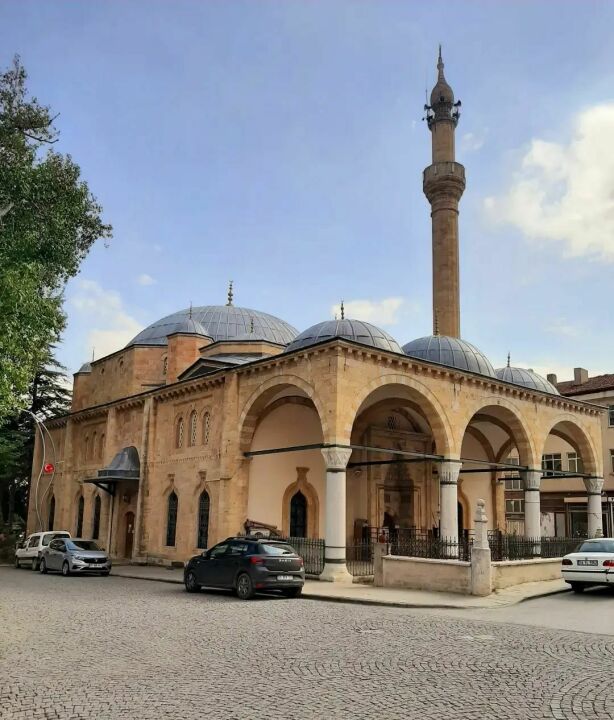
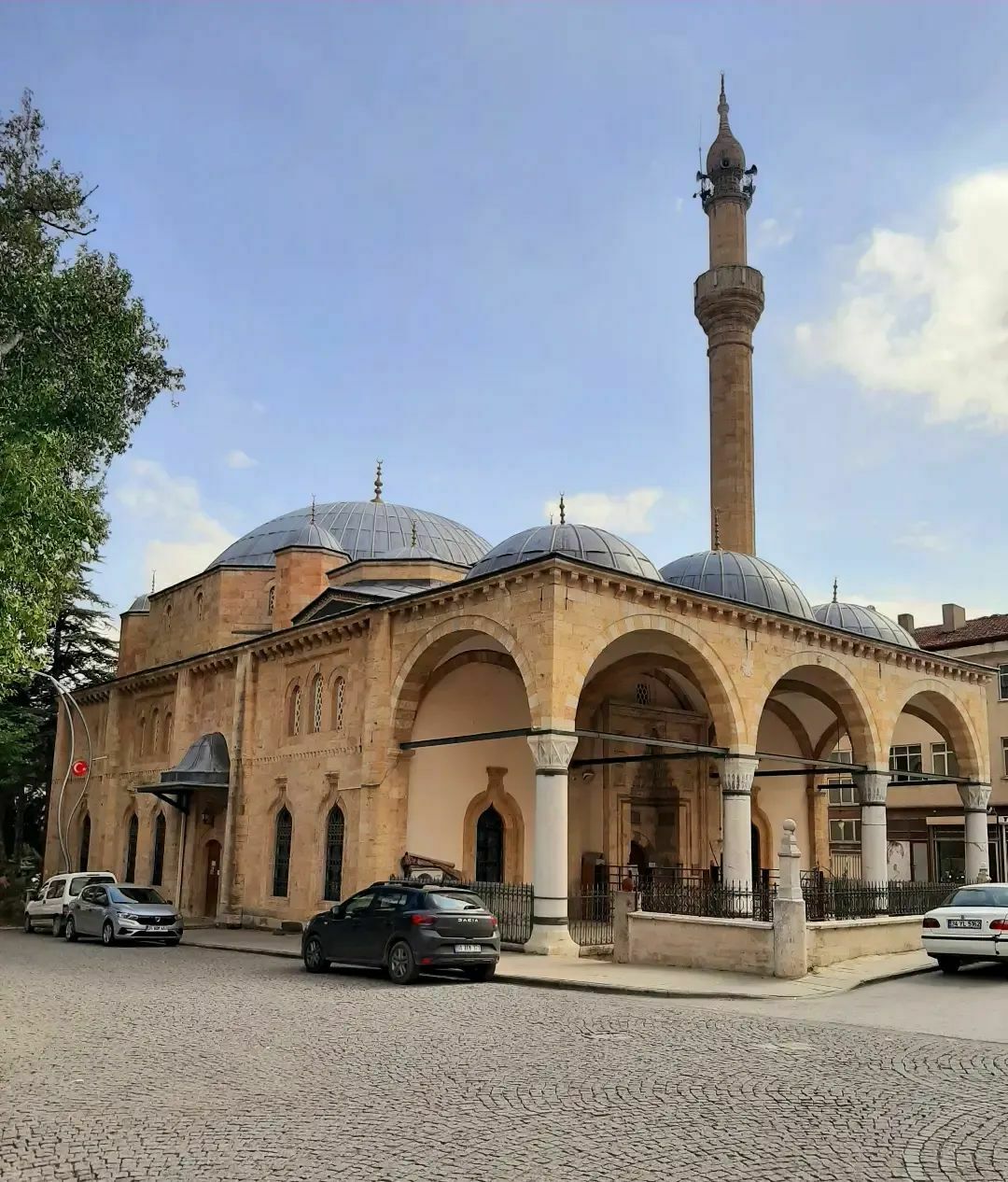
Great Mosque of Zile (Nasuh Paşa Mosque)
NATURAL AND CULTURAL HERITAGE Mosque Türkiye
(Zile, Tokat, Türkiye, 1267)

The Great Mosque of Zile, known in Turkish as Zile Ulu Camii or Nasuh Paşa Camii, is located on Amasya Street in the Zile district of Tokat Province, Türkiye. It is a prominent example of the town’s Turkish-Islamic architectural heritage. The present building occupies the site of an earlier Seljuk mosque and reflects successive phases of restoration and reconstruction.
According to the inscription preserved from the earlier building, the mosque was founded during the reign of the Seljuk sultan Ghiyath al-Din Kaykhusraw III, in the second half of the thirteenth century, around 1267. The inscription identifies its patron as Muhammad Zaluli ibn Abi Ali. Preserved on the northern façade within the entrance portico, this inscription documents the foundation of the earlier mosque.
In historical Turkish-Islamic towns, the designation ulu cami, meaning “great mosque,” generally referred to the principal congregational mosque of a settlement. These buildings accommodated Friday and religious festival prayers and served as gathering places for the Muslim community. The Great Mosque of Zile held a corresponding place in the town’s religious and social life.
The mosque underwent several repairs over time. A substantial restoration was carried out in 1591 under Nasuh Pasha, who served as the local Ottoman administrator, or voyvoda, of Zile. Following this intervention, the building also became known as the Nasuh Paşa Mosque.
By 1904, the earlier mosque had fallen into disrepair and was demolished to make way for a larger building. Reconstruction began that year under the leadership of Süleyman Necmi Bey, the district governor of Zile, with contributions from the local population. The work was completed in 1909. The existing mosque is therefore a late Ottoman reconstruction of a religious foundation with Seljuk origins. Its architecture combines traditional mosque planning with Neoclassical and Western-influenced decorative features.
Built of dressed stone, the mosque has a rectangular prayer hall extending along a north–south axis. A three-bay portico, covered by three domes and supported by four marble columns, stands along the northern façade. The monumental entrance portal incorporates molded stonework, muqarnas-like ornament, contrasting stone colors, and inscriptions recording the reconstruction. Additional entrances are situated on the eastern and western façades.
Inside, a three-domed northern section extends the principal prayer space. Staircases on either side of the entrance lead to an upper gallery. The main dome is supported by an octagonal arrangement of eight piers, two of which are freestanding, while the remaining six are incorporated into the surrounding walls. Squinches provide the transition to the dome, which rises above a tall octagonal drum. Sixteen windows in the drum supplement the light entering through two tiers of windows in the external walls.
Painted decoration and calligraphic panels embellish the dome and the spaces between the drum windows. The stone mihrab on the southern qibla wall has a muqarnas niche-head and carved vegetal ornament. Immediately to its west stands a marble minbar decorated with raised bosses, floral motifs, and geometric openwork. The minaret, situated at the northwestern corner, is distinguished by its cylindrical shaft and bulbous cap.
The Great Mosque of Zile remains in use as a place of worship and forms part of the religious and architectural heritage of Tokat and Zile. Its significance derives from the continuity of its religious function, the survival of inscriptions documenting its earlier history, and the architectural character of the late Ottoman building.
References
Altındal, B. (2024). Zela’dan Zile’ye tarihi yolculuk; Çal, H. (1994). Zile Ulu Camisi. Sanat Tarihi Dergisi, 7(7), 27–52; Demirbağ, U. (2022). Zile Ulu Camisi’nin yapı elemanlarındaki bozulmalar ve restorasyon çalışmaları. Turkish Studies – Social, 17(3), 305–330; Hanilçe, M. (2018). Saklı kalmış bir tarih: XV. ve XVI. yüzyıllarda Zile kazası; Uzunçarşılı, İ. H. (2003). Tokat kitabeleri (M. Mercan & M. E. Ulu, Haz.).
See Also
Demirbağ, U. (2022). Zile Ulu Camisinin yapı elemanlarındaki bozulmalar ve restorasyon çalışmaları. Turkish Studies – Social, 17(3), 305–330.
See Also:
Map