Third Wave Coffee Movement
Gastronomy Beverage Raw Materials Coffee
-
2026

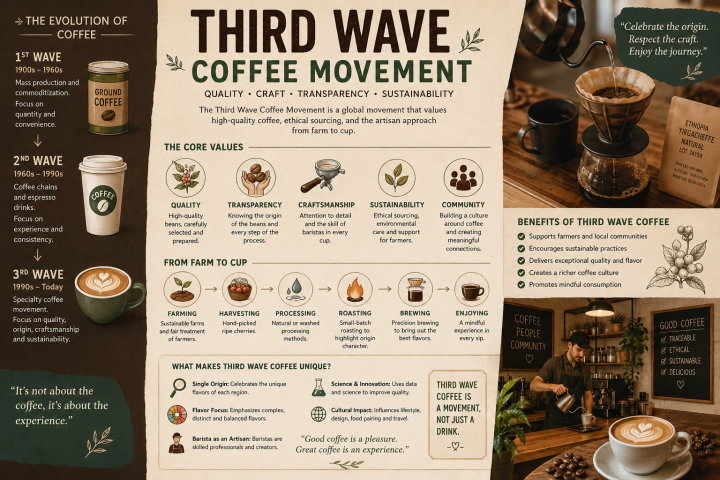
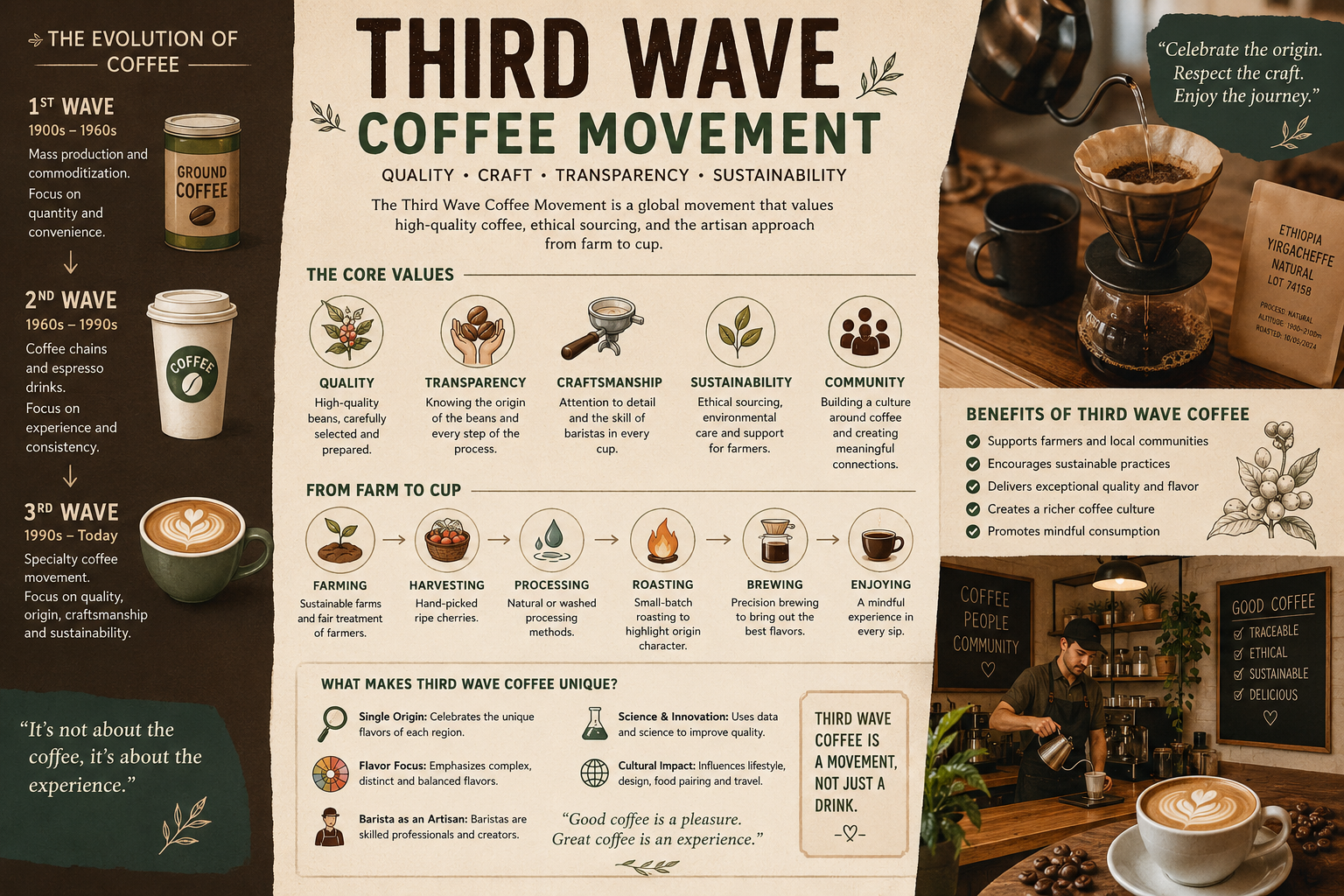
The concept of the “wave” was first introduced by Trish Rothgeb in the December 2002 issue of The Flamekeeper to describe the stages in the evolution of the coffee industry. Rothgeb employed this concept to explain the historical development and transformation of coffee culture. From the late nineteenth century to the present day, coffee has undergone continuous change through three major stages, commonly referred to as the first wave, second wave, and third wave.
The principal feature distinguishing the third wave coffee movement from the first and second waves is its emphasis on every stage of the coffee production process, from the cultivation of coffee plants to the equipment and techniques used in processing, roasting, and brewing. In addition to promoting the production of high-quality coffee, the movement emerged as a response to standardized, low-quality coffee. By attaching importance to every detail from production to preparation, the third wave coffee movement treats coffee as both an artisanal product and a cultural expression, with particular attention to its origin, processing methods, roasting profile, and presentation. Craftsmanship, small-batch roasting, the influence of the Antipodean and West Coast coffee traditions, appreciation of the brewing process, and transparency throughout the supply chain constitute its defining characteristics.
The primary objective of third wave coffee culture is to preserve the intrinsic characteristics of coffee while achieving the highest possible flavor quality. To this end, a variety of innovative brewing techniques have been adopted. Among the most widely used methods, the Chemex produces a clean and transparent cup through the use of thick paper filters. The AeroPress enables rapid and practical brewing by applying gentle air pressure, while the Japanese Hario V60 is distinguished by its pour-over technique, which requires careful control of the coffee-to-water ratio. These brewing methods are regarded as essential elements of third wave coffee culture, as they both enhance coffee quality and enrich the brewing experience.
Within third wave coffee culture, quality is prioritized throughout every stage, from production to presentation. Single-origin coffees are generally preferred, with beans sourced from specific regions or even individual farms in order to highlight their distinctive characteristics. Fresh roasting and grinding immediately before brewing help preserve the coffee's aromatic qualities, while the use of freshly roasted local beans further enhances flavor. Rather than masking the beverage with additional ingredients, this approach emphasizes the appreciation of coffee's natural flavor profile, thereby reshaping the sensory experience of consumption.
Although the principles of fair trade constitute an important component of the third wave coffee movement, in Türkiye greater emphasis has been placed on alternative brewing techniques and brewing culture. The movement also promotes the professionalization of baristas, encouraging greater interaction between baristas and customers, with barista expertise playing a significant role in shaping consumer experience. Furthermore, third wave coffee shops have evolved beyond being simple beverage-serving establishments to become social spaces characterized by distinctive architectural designs, aesthetic concepts, and cultural identities.
Although coffee may appear to be merely a material commodity, its historical development reveals that it embodies multiple symbolic, cultural, and social meanings. Likewise, coffee shops represent far more than venues for consuming coffee or tea; they function as spaces of social interaction, cultural expression, and identity formation.
References
Danışmaz, A. T. (2021). The impact of the third wave coffee movement on consumers’ coffee consumption habits. Kesit Akademi Dergisi, 7(27), 441–452. https://dergipark.org.tr; Kahve Gibi Kahve. (2025, May). What is third wave coffee? https://kahvegibikahve.com (Accessed May 11, 2025); Rou Coffee. (2025, May). What is third wave coffee culture? https://www.roucoffee.com (Accessed May 11, 2025); Sunar, L., & Türkyılmaz, G. (2023). Coffee, class and identity: Third wave coffee consumption of the new middle class in Istanbul. Güncel Sosyoloji, 1(1), 50–85. https://guncelsosyoloji.com (Accessed May 11, 2025); Şeker, G., & Özata, F. Z. (2022). Changing consumption perception of coffee and coffee shops: A phenomenological study on third wave coffee consumers. Journal of Tourism & Gastronomy Studies, 10(1), 193–224. https://doi.org/10.21325/jotags.2022.986
See Also: