Haydarpaşa Railway Station
TRANSPORT INFRASTRUCTURE, TRANSPORT TERMINALS AND PASSENGER CARRIERS Railway Transportation Infrastructure Central Railway Station Intermodal Rail Terminal Tourist Railway Terminal COUNTRIES AND TERRITORIES Türkiye Rail Transport
(Kadıköy, İstanbul, Türkiye, 1872)
-
2026

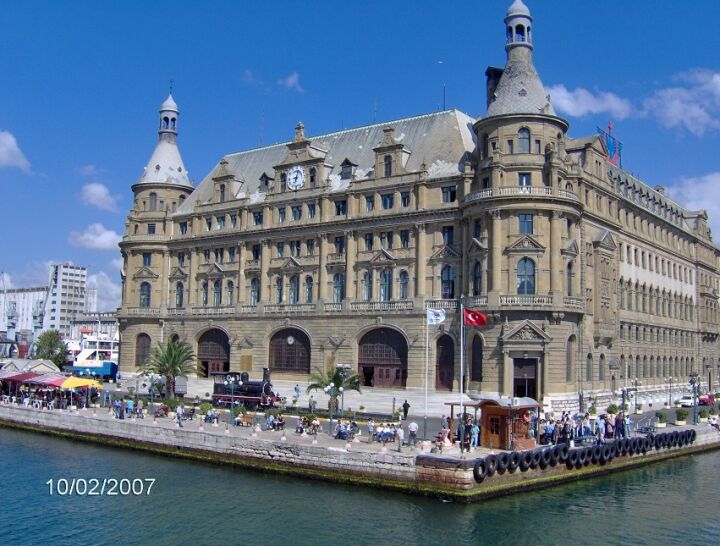
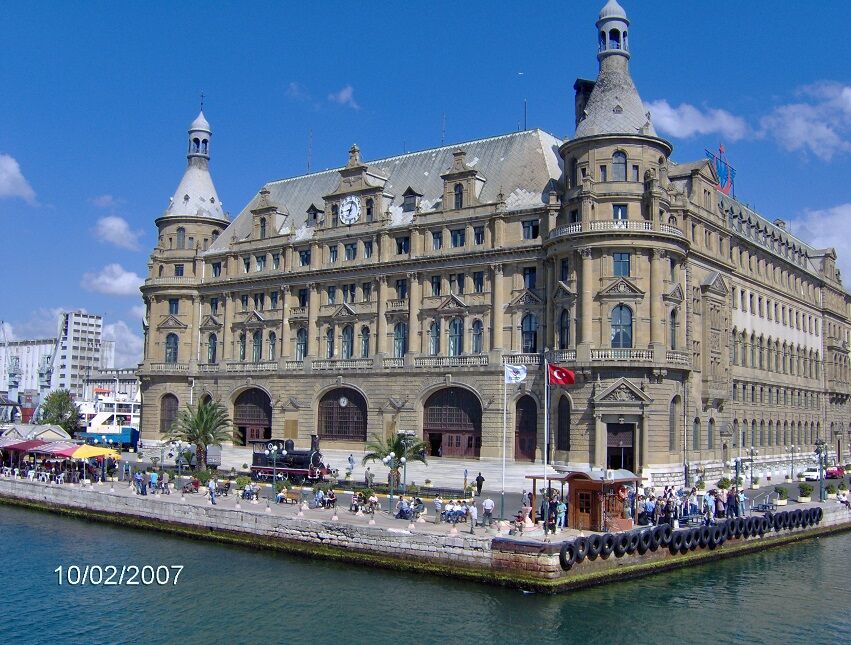
Haydarpaşa Railway Station is a historic railway terminus on the Asian side of Istanbul that played a central role in connecting the city with Anatolia and became an important component of Ottoman and Republican-era transportation infrastructure. The area on which the station stands, believed to have previously been used as a garden or meadow, served from the seventeenth century onward as a landing place frequently visited by Ottoman sultans.
Railway development in the Ottoman Empire gained momentum following the Tanzimat Edict of 1839, with one of the earliest major projects being the İzmir-Aydın railway, construction of which began in 1856. As the railway network expanded, Istanbul’s strategic and economic importance created a need for a major railway terminal on the Asian side of the city. Haydarpaşa Railway Station subsequently developed through two distinct phases. The foundations of the first station were laid by Sultan Abdülaziz on 11 March 1872. The original station was a two-storey wooden building from which suburban services operated between Haydarpaşa and Tuzla. With the expansion of commercial activity at Haydarpaşa Port, the railway line was later extended to İzmit.
Owing to financial difficulties and the Ottoman state’s inability to operate the Haydarpaşa-İzmit railway effectively, the line was leased in 1880 for a period of 20 years to Messrs Sfeelder, Hanson and Partners. The company, however, operated the line for only eight years. During this period, the increasingly close relations between the Ottoman Empire and Germany extended beyond political, military and commercial cooperation to include technology transfer and technical expertise. German interests subsequently became involved in the operation and development of the railway, proposing the construction of Haydarpaşa Port, the extension of the railway network and the construction of a larger station building.
Haydarpaşa Port was completed in 1903 through cooperation with German enterprises. The increase in passenger and freight traffic generated by the new port soon exceeded the capacity of the existing station. In response, Sultan Abdülhamid II commissioned the German company Philipp Holzmann to construct a new station building in 1906. Designed by the German architects Otto Ritter and Helmut Cuno, the building was constructed on approximately 1,100 piles driven into the seabed and was completed on 18 August 1908. Its architectural character reflects an eclectic combination of Central European Baroque, German Renaissance and Neoclassical influences.
From its opening, Haydarpaşa Railway Station was extensively used for both passenger and freight transportation. During the First World War, it also served as an important transfer point for military supplies and munitions. On 6 September 1917, a major explosion involving ammunition prepared for transport to Anatolia caused severe damage to the station. The building was subsequently restored largely in accordance with its original design, although alterations were made to the roof.
The station suffered further damage in 1979 when the Romanian-flagged tanker Independența collided with another vessel and exploded near Haydarpaşa. The resulting fire damaged the station, including its stained-glass windows. In 1983, the stained-glass windows were replaced in accordance with their original designs, and restoration work on the building’s two towers was completed.
Although the importance of Haydarpaşa Railway Station in intercity transportation gradually declined with the expansion of road and air transport, it continued to serve numerous intercity and suburban trains. Services of historical and touristic significance, including the Eastern Express, Lake Van Express and Anatolian Express, departed from or arrived at the station for many years. Haydarpaşa therefore remained an important element of Istanbul’s railway transportation system into the early XXI. century.
A major fire on 28 November 2010 destroyed much of the station’s roof and rendered its fourth floor unusable. Train services continued for a limited period, but operations from Haydarpaşa were suspended in 2012 as part of works associated with the development of the high-speed railway system. When Istanbul’s principal high-speed railway connections were completed on 21 February 2019, Haydarpaşa was not included in the active High-Speed Train route.
Restoration of Haydarpaşa Railway Station has included extensive structural, architectural and archaeological work. Deteriorated wooden foundation piles have been replaced, the foundations have been reinforced and significant portions of the structural and architectural restoration have been completed. Archaeological excavations conducted during the works have also revealed extensive remains beneath and around the station complex. These excavations, associated with the archaeological heritage of ancient Chalcedon and sometimes referred to in connection with the historical designation “City” or “Land of the Blind,” have expanded the cultural significance of the site beyond its railway heritage.
As of 31 August 2026, restoration and redevelopment works at Haydarpaşa Railway Station were continuing. The first phase of the project was scheduled for completion on 26 September 2026, in conjunction with the Istanbul Culture Route Festival. Under the broader redevelopment project, the station and its surroundings are planned to accommodate an archaeology museum, cultural centre, archaeopark, library, healing centre, open-air event spaces and passenger waiting halls.
Haydarpaşa Railway Station represents an important example of the relationship between transportation infrastructure, architecture, urban development and cultural heritage in Istanbul. Its historical role as the principal railway gateway between Istanbul and Anatolia, together with its architectural character and the archaeological remains uncovered during restoration works, has transformed the site into a multilayered heritage area combining railway history, urban archaeology and contemporary cultural functions.
References
Akgün, A. H. (2025, October 9). Haydarpaşa ve Sirkeci Garı bütüncül bir yaklaşımla yeniden hayata geçiyor [Haydarpaşa and Sirkeci railway stations are being revitalized through a holistic approach]. Anadolu Ajansı. https://www.aa.com.tr/tr/gundem/haydarpasa-ve-sirkeci-gari-butuncul-bir-yaklasimla-yeniden-hayata-geciyor/3712399; Aksoyer, A. (2018, August 10). İşte tarihi Haydarpaşa Garı’nın son hali [Here is the latest state of the historic Haydarpaşa Railway Station]. Hürriyet. https://www.hurriyet.com.tr/gundem/iste-tarihi-haydarpasa-garinin-son-hali-40817277; Haydarpaşa Garı’nın ilk etabı 26 Eylül’de açılacak [The first phase of Haydarpaşa Railway Station will open on September 26]. (2026, May 29). Turizm Gazetesi. https://www.turizmgazetesi.com/haber/haydarpasa-gari-nin-ilk-etabi-26-eylul-de-acilacak/93027; Karabulut, Y. (1997). Türkiye’de demiryolu ulaşımı [Railway transport in Türkiye]. Türkiye Coğrafyası Araştırma ve Uygulama Merkezi Dergisi, (6), 163–187; Kösebay Erkan, Y. (2013). Haydarpaşa Tren Garı: Bugün, dün ve yarın—Kentin bedeninde bir yara [Haydarpaşa Railway Station: Today, yesterday, and tomorrow—A wound in the body of the city]. METU Journal of the Faculty of Architecture, 30(1), 99–116. https://doi.org/10.4305/METU.JFA.2013.1.6; Öztürk, C. (2016). Haydarpaşa-İzmit demiryolunun inşası ve işletilmesi: Bir iktisadî millîleşme girişimi (1871–1888) [The construction and operation of the Haydarpaşa–İzmit railway: An economic nationalization initiative (1871–1888)]. In H. Selvi, M. B. Çelik, & A. Yeşildal (Eds.), Uluslararası Kara Mürsel Alp ve Kocaeli Tarihi Sempozyumu–II bildirileri (Vol. 2, pp. 721–731). Kocaeli Büyükşehir Belediyesi Kültür ve Sosyal İşler Dairesi Başkanlığı Yayınları; Yolgezer, E. (1999, January). Ayrılığın ve kavuşmanın mekânı: Haydarpaşa Garı [A place of separation and reunion: Haydarpaşa Railway Station]. Skylife, (186).
See Also:
See Also
Map