Second Generation Tourism Scholars in Türkiye
Tourism Academics and Researchers Tourism and Hospitality Scholars Gastronomy and Culinary Arts Scholars Recreation Scholars Leisure Scholars
(Türkiye)
-
2026

Second Generation Tourism Scholars in Türkiye is a category within the generational classification of tourism scholars proposed by Nazmi Kozak. According to this framework, the development of tourism academia in Türkiye can be examined through successive generations of researchers. The second generation generally consists of scholars who completed their undergraduate and graduate education in tourism between the mid-1980s and the late 1990s and who contributed significantly to the diversification and professionalization of tourism research in Türkiye.
Definition and Historical Context
The concept of the Second Generation Tourism Scholars refers to a group of scholars who emerged during a period of rapid expansion in tourism education and research in the Republic of Türkiye. Unlike many members of the first generation, who entered tourism from disciplines such as economics, business administration, sociology, and geography, a substantial proportion of second-generation academics received their formal education directly in tourism-related programs.
Their emergence coincided with a period in which tourism became one of Türkiye’s most dynamic economic sectors. The growth of tourism investments, the expansion of higher education institutions, and increasing international interaction created a more favorable environment for specialized tourism scholarship.
Within Kozak’s broader framework, the second generation occupies an intermediate position between the pioneering scholars who established tourism as an academic field and the later generations who developed in a highly internationalized research environment. In subsequent studies, the classification was expanded to include a fourth generation of tourism academics.
Educational and Professional Characteristics
The majority of second-generation tourism academics completed their undergraduate or graduate studies between approximately 1985 and 1998. This generation benefited from the expansion of tourism education institutions in Türkiye and from the increasing availability of tourism-specific curricula.
One of the most distinctive characteristics of the second generation is its stronger connection to professional tourism practice. Compared with first-generation scholars, a considerably larger proportion possessed direct industry experience in areas such as hospitality management, travel services, destination management, and tourism operations.
This practical experience influenced both their research agendas and teaching approaches. As a result, many second-generation scholars sought to establish closer links between academic research and the operational realities of the tourism industry.
Research Orientation
The research interests of second-generation tourism academics differed in important ways from those of the first generation. Whereas first-generation scholars often focused on macro-level topics such as tourism policy, national tourism development, and regional planning, second-generation researchers increasingly turned their attention to organizational, managerial, and consumer-oriented issues.
Topics such as: Hospitality management, Tourism marketing, Tourist behavior, Service quality, Human resource management, Destination competitiveness, Travel agency management, Tourism education, became more prominent during this period.
Another important characteristic of the generation was its growing emphasis on empirical research. Field studies, surveys, case analyses, and quantitative research methods became increasingly common. Consequently, significant differences emerged between the first and second generations in research design, data collection techniques, and analytical approaches.
International Influences
The second generation developed during a transitional period in the globalization of tourism research. Between the mid-1980s and early 1990s, Turkish tourism academics became increasingly exposed to international tourism literature, conferences, and scholarly networks.
While the first generation had been influenced primarily by French, German, and British traditions of tourism scholarship, the second generation witnessed a growing influence from the United States. Theoretical frameworks, research methodologies, and academic publishing practices originating in American tourism and hospitality schools became increasingly visible within Turkish tourism academia.
As a result, many second-generation scholars adopted approaches that reflected the managerial, behavioral, and quantitative orientation characteristic of North American tourism research.
Academic Publications and Scholarly Communication
The growth of the second generation coincided with the development of specialized tourism journals and academic publishing outlets in Türkiye. These publications played a crucial role in disseminating research findings and fostering scholarly dialogue.
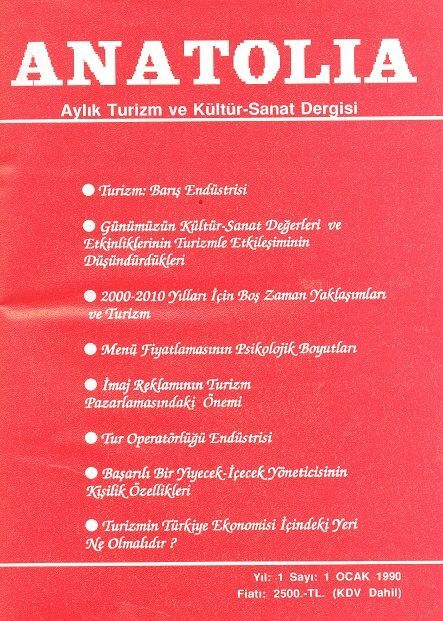
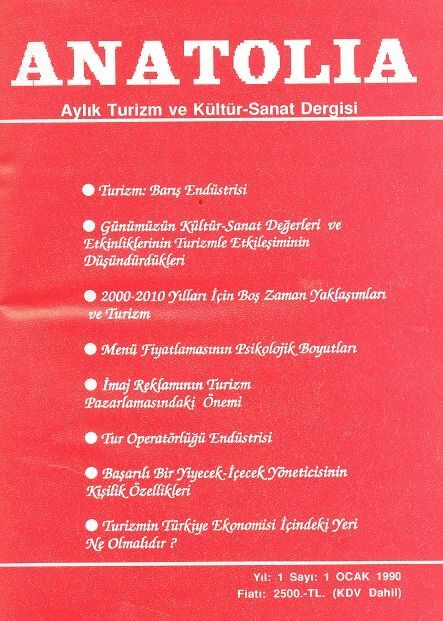
Among the most influential journals and publication series of the period were: Turizm Yıllığı (Tourism Yearbook), Anatolia: Turizm Araştırmaları Dergisi (Anatolia: A Journal of Tourism and Hospitality Research), Turizmde Seçme Makaleler (Selected Articles in Tourism)
These outlets contributed significantly to the institutionalization of tourism scholarship and provided a platform through which Turkish researchers could engage with both national and international academic debates.
Contribution to Tourism Education
The second generation played an important role in the expansion of tourism education throughout Türkiye. Many members became faculty members in newly established tourism schools, vocational schools, and university departments during the 1990s and early 2000s.
Through teaching, curriculum development, graduate supervision, and academic administration, they contributed to the training of future generations of tourism researchers and professionals. Their efforts helped transform tourism from a relatively small academic specialization into a well-established field of higher education within the Turkish university system.
Significance and Legacy
The Second Generation Tourism Scholars in Türkiye represents a critical phase in the maturation of tourism scholarship. Building upon the foundations established by the first generation, these scholars introduced more specialized research agendas, stronger methodological rigor, and closer engagement with tourism practice.
Their work contributed to the internationalization of Turkish tourism research, the expansion of tourism education programs, and the development of a more diversified academic community. Consequently, the second generation occupies a pivotal position in the history of tourism education and tourism research in the Republic of Türkiye, serving as a bridge between the pioneering era of tourism scholarship and the globally connected research environment of subsequent generations.
References
Kozak, N. (2000). Türkiye’de Akademik Turizm Literatürünün Gelişim Süreci Üzerine Bir İnceleme, Doğu Akdeniz Üniversitesi Turizm Araştırmaları Dergisi, 1(1): 15-55.
See Also