Third Generation Tourism Scholars in Türkiye
Tourism Academics and Researchers Tourism and Hospitality Scholars Gastronomy and Culinary Arts Scholars Recreation Scholars Leisure Scholars
(Türkiye)
-
2026

Third Generation Tourism Scholars in Türkiye is a category within the generational classification of tourism scholars developed by Nazmi Kozak. According to this framework, tourism academics in the Republic of Türkiye can be examined through successive generations characterized by differing educational backgrounds, research orientations, methodological approaches, and international influences. The third generation generally includes scholars who became academically prominent between the late 1990s and approximately 2010 and who played a major role in the internationalization of tourism research in Türkiye.
Definition and Historical Context
The concept of the Third Generation Tourism Scholars emerged from efforts to understand the evolution of tourism scholarship in Türkiye. Within Kozak’s classification, the third generation followed the pioneering first generation and the institutionalizing second generation, representing a period during which Turkish tourism research became increasingly integrated into global academic networks.
The emergence of this generation coincided with significant developments in higher education, international academic mobility, and the globalization of tourism research. By the late 1990s, tourism had become a mature academic field in Türkiye, with expanding undergraduate and graduate programs, increasing international cooperation, and growing participation in global scholarly communities.
As a result, third-generation scholars developed within a markedly different academic environment from that experienced by earlier generations.
Educational Background
One of the most distinctive characteristics of the third generation is that the overwhelming majority received their undergraduate education directly in tourism-related disciplines. Unlike many first-generation scholars, who entered tourism from fields such as economics, business administration, geography, or sociology, third-generation academics were generally trained within specialized tourism education programs from the beginning of their academic careers.
A significant proportion also pursued graduate education abroad, particularly in countries with established tourism and hospitality research traditions. International master's and doctoral programs exposed these scholars to contemporary theoretical frameworks, advanced research methodologies, and global academic publishing practices.
This international educational experience contributed significantly to the transformation of tourism scholarship in Türkiye.
Research Orientation and Methodology
The third generation is distinguished by its strong emphasis on empirical research, fieldwork, and internationally recognized research methods.
Compared with the first and second generations, third-generation researchers placed greater importance on: Research design, Quantitative analysis, Statistical methodologies, Survey-based research, Consumer behavior studies, Hospitality management research, Destination marketing, Tourism economics, Organizational and managerial issues.
Their research interests tended to focus primarily on micro-level topics rather than the macro-level tourism policy and planning issues that had attracted considerable attention from earlier generations.
Consequently, research themes such as tourist satisfaction, destination image, service quality, customer behavior, organizational performance, and marketing effectiveness became increasingly prominent within Turkish tourism scholarship.
Internationalization of Turkish Tourism Research
Perhaps the most significant contribution of the third generation was the internationalization of tourism research in Türkiye.
Unlike previous generations, whose primary academic audiences were domestic, third-generation scholars increasingly sought to publish in international journals, participate in international conferences, and engage with global academic debates. Their research agendas were frequently shaped by developments occurring within the broader international tourism research community.
This generation viewed tourism scholarship not merely as a national academic endeavor but as part of a global field of inquiry. Consequently, they became active participants in international networks of tourism and hospitality research.
Academic Career Development and Specialization
A distinctive institutional factor influencing this generation was a change in Türkiye's academic promotion system.
Around 2000, tourism ceased to function as a separate associate professorship (doçentlik) field within the national academic promotion structure. As a result, many tourism academics pursued academic advancement through related disciplines such as: Marketing, Management and Organization, Business Administration, Economics, Consumer Behavior, Human Resources Management.
This institutional arrangement encouraged increased disciplinary specialization and interdisciplinary research. It also influenced the theoretical and methodological orientations of many third-generation scholars, whose work frequently reflected perspectives originating outside traditional tourism studies.
Academic Publishing and Scholarly Communication
The publication practices of the third generation differed significantly from those of earlier cohorts.
While first- and second-generation scholars relied primarily on Turkish-language journals, third-generation academics increasingly followed and contributed to international scholarly publications. Their principal reference points became journals published in North America, the United Kingdom, Australia, and other major centers of tourism research.
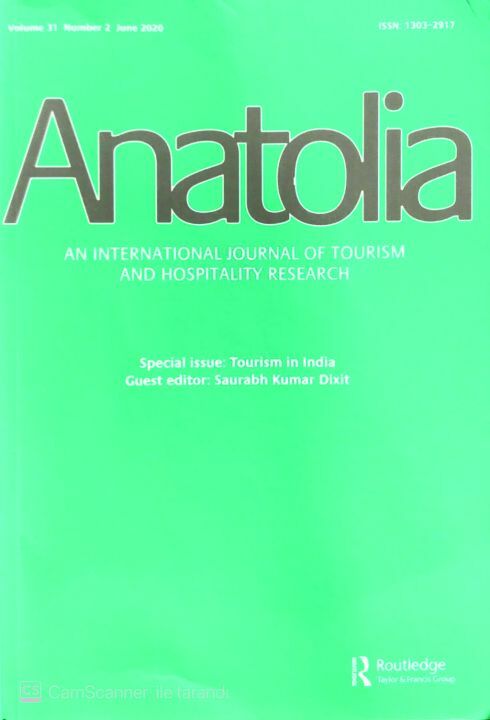
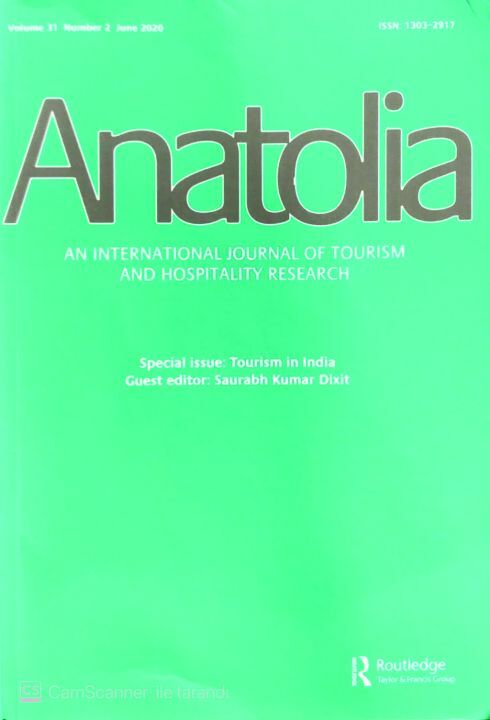
Among journals published in Türkiye, Anatolia: An International Journal of Tourism and Hospitality Research became particularly important. As an English-language, internationally refereed journal, Anatolia provided Turkish researchers with a bridge between national and international academic communities and served as a prominent outlet for internationally oriented tourism scholarship.
International Influences
The third generation was shaped overwhelmingly by developments occurring outside Türkiye.
The strongest influence came from tourism and hospitality research conducted in the United States, which provided many of the dominant theoretical models, methodological approaches, and publication standards adopted by Turkish scholars. American tourism research traditions emphasizing quantitative analysis, management theory, marketing research, and consumer behavior became particularly influential.
The United Kingdom represented a second major source of influence, especially in areas such as tourism policy, destination studies, sustainable tourism, and critical tourism research.
Through these influences, third-generation scholars helped align Turkish tourism research more closely with international academic standards and practices.
Contribution to Tourism Education
Members of the third generation played a crucial role in expanding tourism education throughout Türkiye during the 2000s. Many became faculty members in newly established tourism faculties, schools of tourism and hospitality management, and graduate programs.
Through their teaching, supervision of graduate students, publication activities, and participation in international academic networks, they contributed to the training of subsequent generations of tourism researchers.
Their efforts also accelerated the adoption of international research standards, publication practices, and quality expectations within Turkish tourism academia.
Significance and Legacy
The Third Generation Tourism Scholars in Türkiye represents a transformative phase in the history of tourism scholarship. Building upon the institutional foundations established by earlier generations, these scholars helped integrate Turkish tourism research into the global academic community.
Their emphasis on international publication, methodological rigor, disciplinary specialization, and global scholarly engagement significantly increased the visibility and impact of Turkish tourism research. As a result, the third generation occupies a pivotal position in the modernization and internationalization of tourism studies in the Republic of Türkiye and serves as a bridge between the nationally focused scholarship of earlier decades and the globally connected academic environment of the twenty-first century.
References
Kozak, N. (2000). Türkiye’de Akademik Turizm Literatürünün Gelişim Süreci Üzerine Bir İnceleme, Doğu Akdeniz Üniversitesi Turizm Araştırmaları Dergisi, 1(1): 15-55.
See Also