Piononos de Santa Fe / Piononos de Granada (Santa Fe, Granada, Andalusia, Spain)
Traditional Food Resources COUNTRIES AND TERRITORIES Spain
Santa Fe, Granada, Andalusia, Spain
-
2026

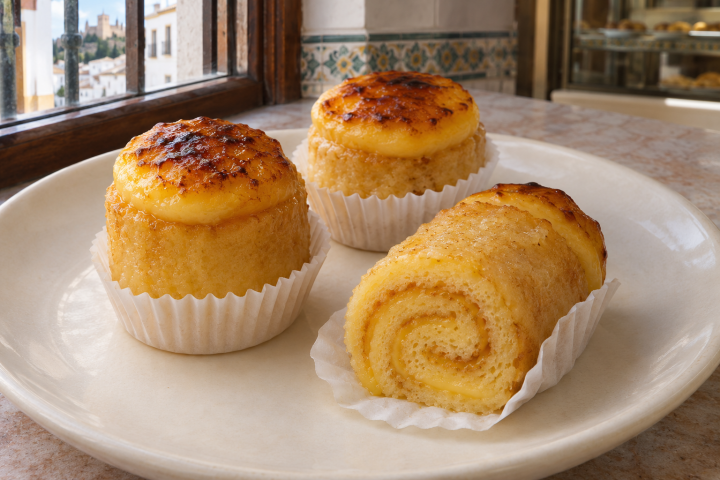
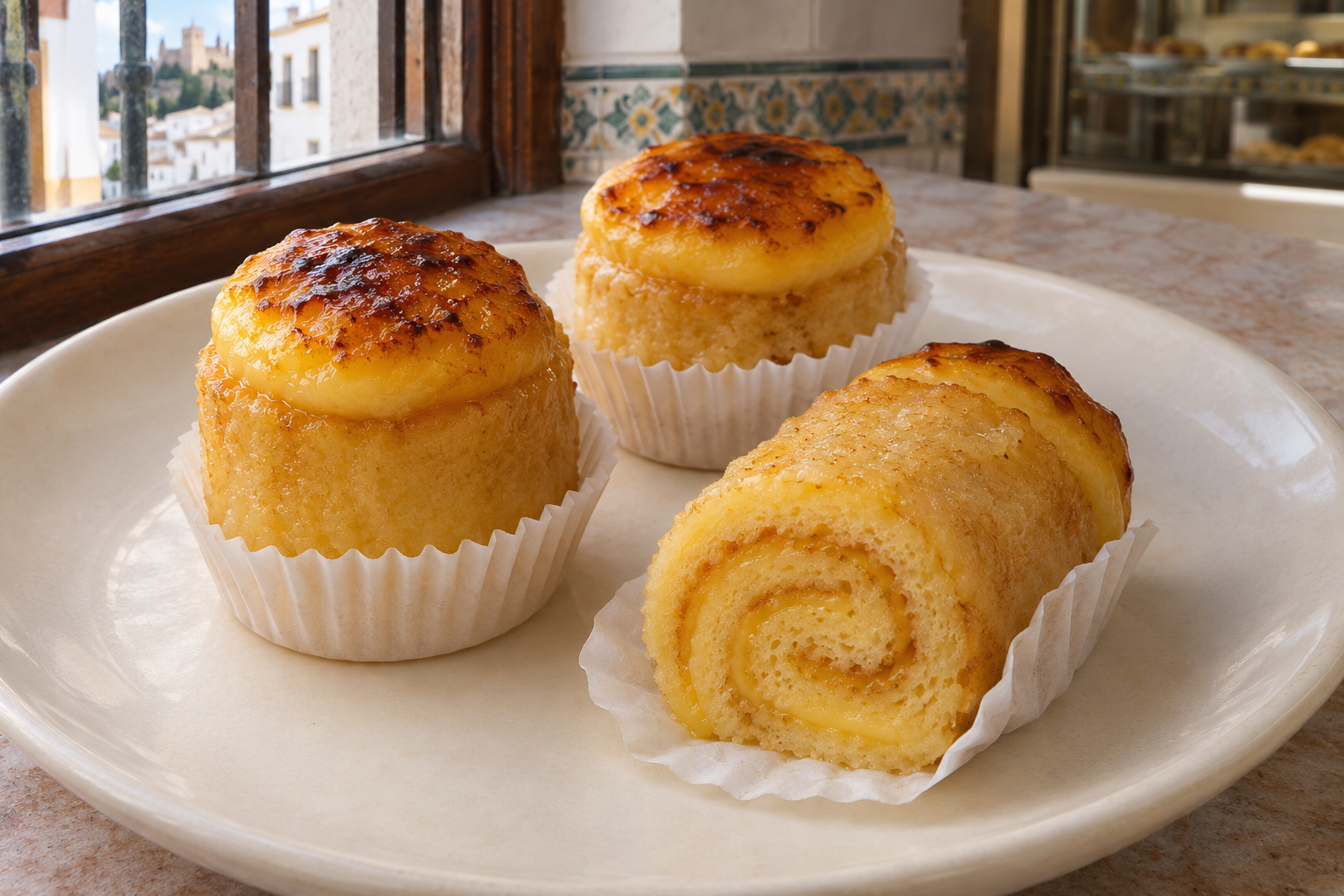
The Santa Fe version is associated with Ceferino Isla González, who opened a pastry workshop on the town’s Calle Real in 1897. According to the Isla family, the confectioner shaped the pastry as a tribute to Pope Pius IX, known in Italian as Pio Nono. The white paper case suggested the pope’s cassock, while the rounded cap of toasted cream represented his white skullcap. The name was already in use for sweets elsewhere in Spain before Isla opened his shop.
Bakers spread a thin sheet of sponge with egg cream, moisten it with sugar syrup and roll it into a spiral. They cut the roll into short cylinders, stand each piece on end and finish it with a spoonful of cream. A little sugar caramelised on top gives the pastry a toasted surface above the soft sponge. Some bakers scent the syrup with cinnamon or anise; the upright spiral and browned cap remain recognisable across recipes.
Santa Fe’s pastry shops helped establish the sweet as a speciality of Granada province. Customers from the city once travelled to the town to buy it, and bakeries in Granada now make their own versions. The individual pastry is small enough to eat in one or two bites, often with coffee. For weddings and other celebrations, local confectioners also make a larger tarta de pionono for slicing and sharing.
References
Ayuntamiento de Santa Fe. (2020). La ruta del pionono: Historia y tradición en Santa Fe. Ediciones Municipales; Clifford, C. (2015). Traditional pastries of southern Spain. Culinary Press; Martínez, L. (2018). La doçaria y pastelería tradicional de Andalucía. Editorial Andaluza; Rodríguez, A. (2019). Sabores de Granada: Historia y recetas. Diputación de Granada.
See Also:
See Also
Map