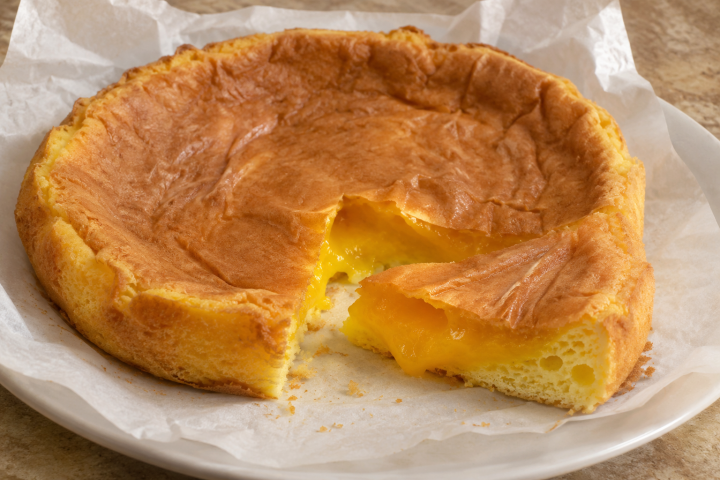
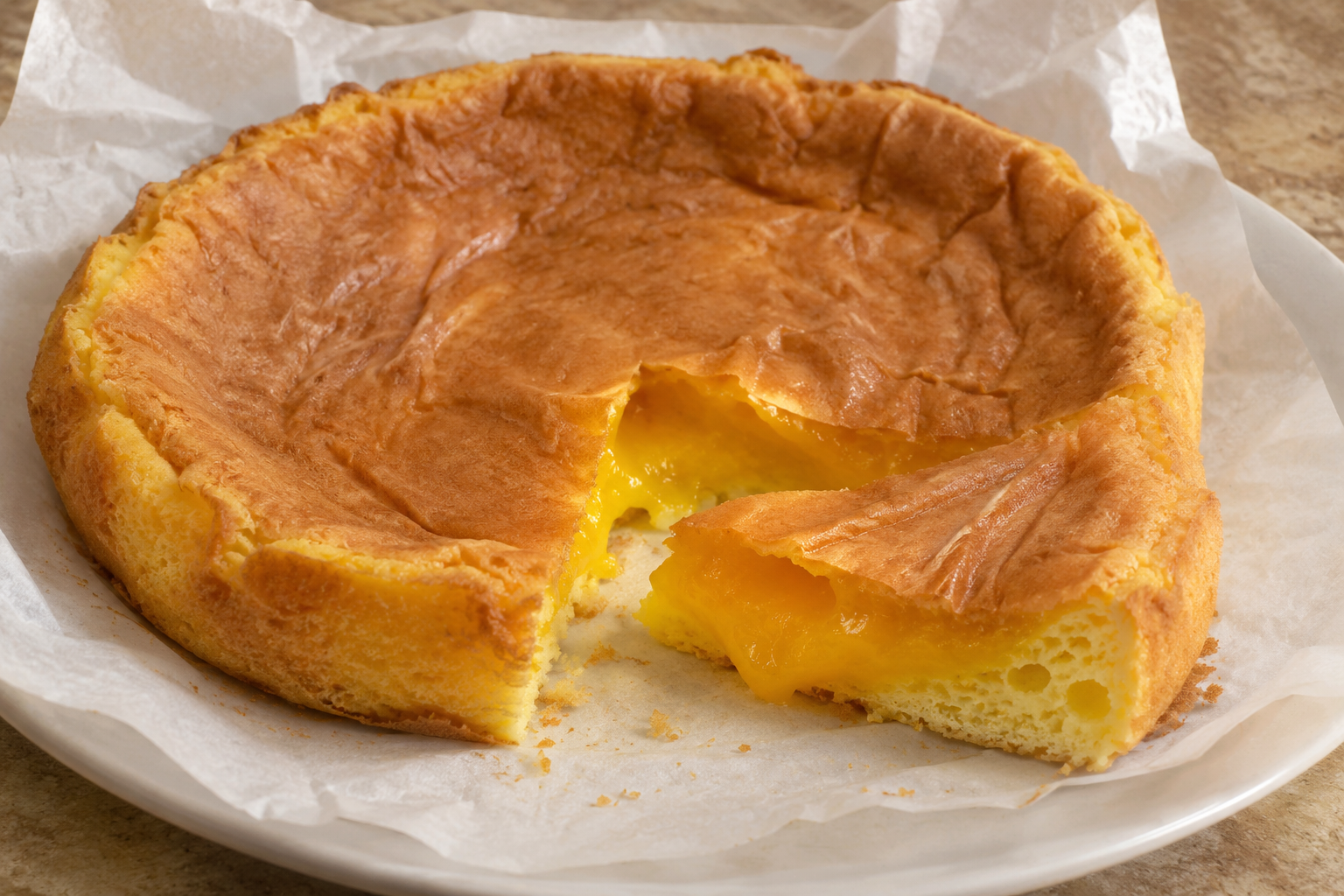
Pão-de-Ló de Alfeizerão (Alfeizerão, Alcobaça, Portugal)
Traditional Food Resources COUNTRIES AND TERRITORIES Portugal
Alfeizerão, Alcobaça, Portugal
-
2026

Bakers whisk whole eggs, extra yolks and sugar until the mixture is pale and airy, then gently fold in wheat flour. Some recipes also include salt and a little grape brandy. The batter is baked in a round tin lined with paper. The timing gives the cake its characteristic texture: the outer sponge sets while the centre remains soft enough to eat with a spoon. Both textures come from the same batter, with no separate cream filling.
Local tradition traces the recipe to the Cistercian nuns of Santa Maria de Cós, near Alcobaça. One story attributes the creamy centre to a baker who took the cake out of the oven early while preparing it for King Carlos I; the king is said to have liked it that way. The history of the women who baked it for sale is better documented. Around the turn of the twentieth century, Amália Grilo and her family made cakes to order. In 1906, Manuel Vieira Natividade described their production as a local household industry and recorded the cake’s appearance at the Alcobaça Industrial Exhibition.
Visitors can taste the speciality at the Casa do Pão de Ló de Alfeizerão, founded in 1925, which offers guided visits to its oven followed by a tasting. Another local address, Café Ferreira, opened in 1947 under Maria Ferreira, Amália Grilo’s daughter-in-law, continuing the family’s baking tradition.
References
Almeida, M. (2019). Doçaria tradicional de Alcobaça e Alfeizerão. Edições Culturais; Câmara Municipal de Alcobaça. (2020). Sabores e tradições da região de Alcobaça; Freitas, J. (2015). A doçaria portuguesa: História, receitas e tradições. Verbo; Rodrigues, A. (2018). Tesouros da pastelaria portuguesa. QuidNovi.
See Also:
See Also
Map