Pastela Moruna / Pastilla (Morocco and Granada, Andalusia, Spain)
Traditional Food Resources COUNTRIES AND TERRITORIES Spain
Granada, Andalusia, Spain
-
2026

In Morocco, the pie is known as bastila or bstilla. It has longstanding associations with the urban kitchens of Fez, Rabat and Tétouan. Its history is particularly well documented in Tétouan: an 1889 record from the court of Sultan Hassan I names four enslaved palace cooks sent to the city to learn local dishes. Their repertoire included three kinds of bastila. During the twentieth century, the pie became a celebration dish across Morocco, often served before the main course at weddings and banquets.
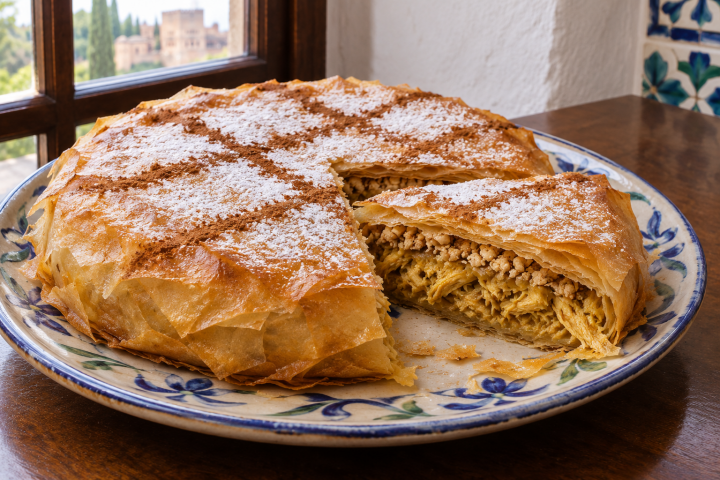
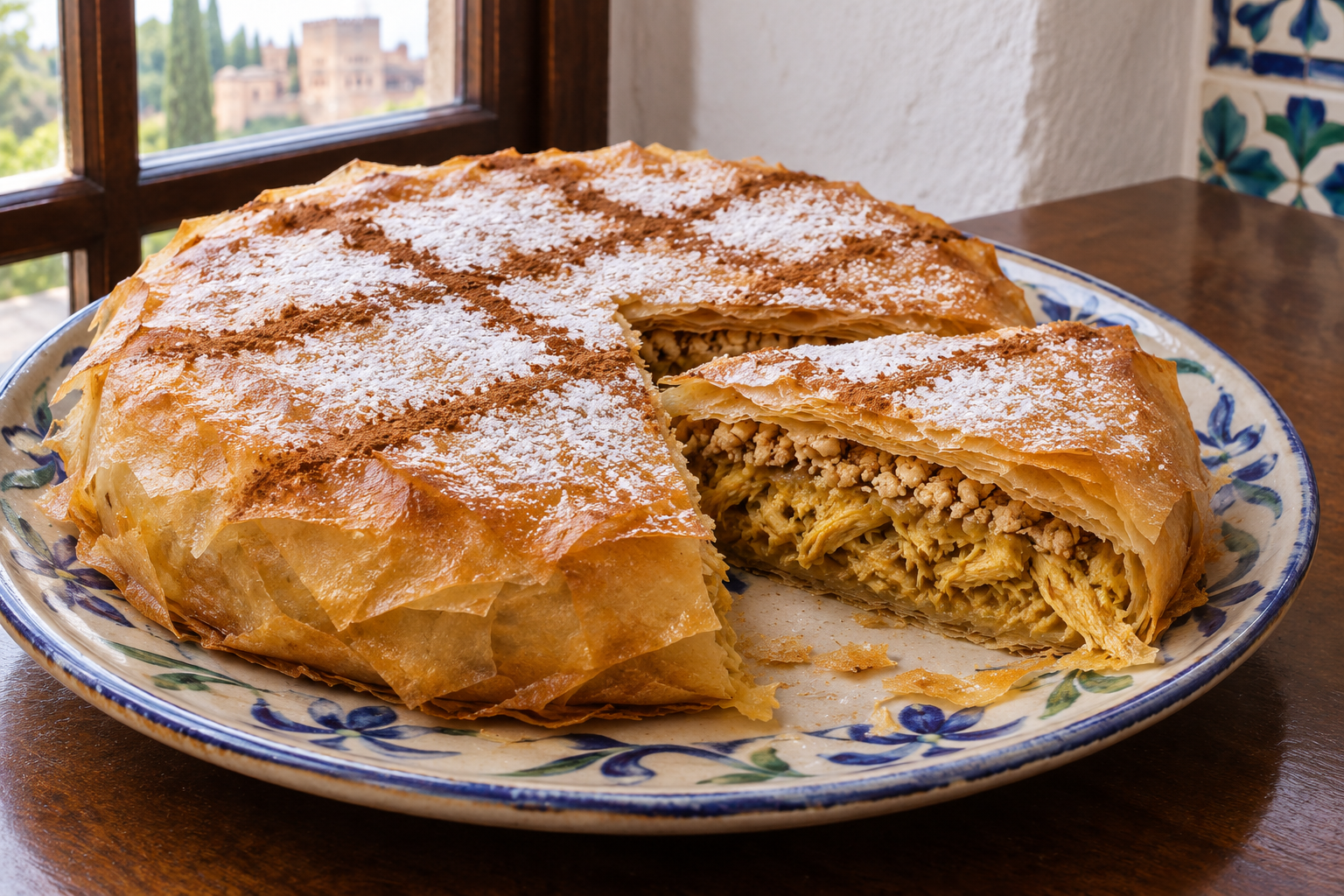
For the poultry version, cooks simmer pigeon or chicken with onions, herbs and spices such as saffron and ginger. They remove the meat from the bones, reduce the cooking liquid and stir in beaten eggs until they set. The meat and eggs are layered with crushed almonds, sugar and cinnamon inside overlapping sheets of warqa, a thin Moroccan pastry. Filo is a common substitute. Once the pie is baked, cooks dust the golden crust with icing sugar and often trace a lattice of cinnamon across the top. It is served warm, while the pastry is still crisp.
In Granada, the name pastela de pollo appears on menus in and around the Albaicín. At Riad Elvira on Calle Elvira, for example, the filling combines chicken, almonds, cinnamon and egg; Arrayanes also offers a fish version. These menus give visitors a way to explore Moroccan cooking in present-day Granada, alongside the city’s distinct medieval Andalusi culinary heritage.
References
Ayuntamiento de Granada. (2021). Rutas gastronómicas e identidad cultural de Granada. PMG; Clifford, C. (2015). The food of Moorish Spain. Culinary Books; Martínez, L. (2016). La cocina hispano-musulmana: Historia y sabores de Al-Andalus. Editorial Comares; Rodríguez, A. (2019). Gastronomía tradicional de Granada y su legado. Diputación de Granada.
See Also:
See Also
Map