Pastéis de Santa Clara (Coimbra, Portugal)
Traditional Food Resources COUNTRIES AND TERRITORIES Portugal
Coimbra, Portugal
-
2026

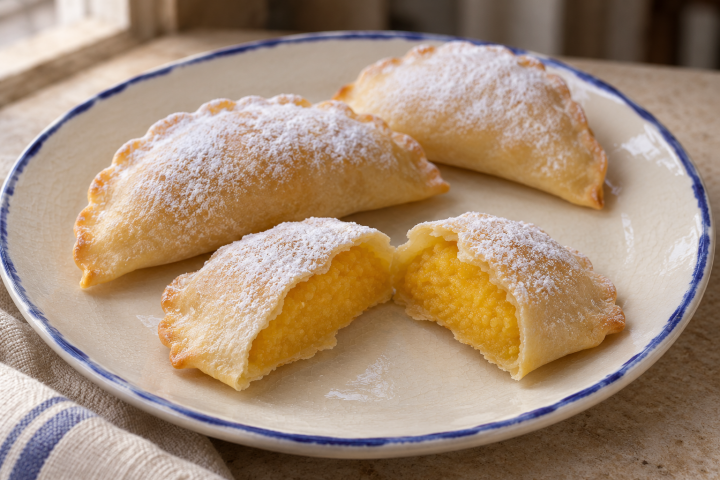
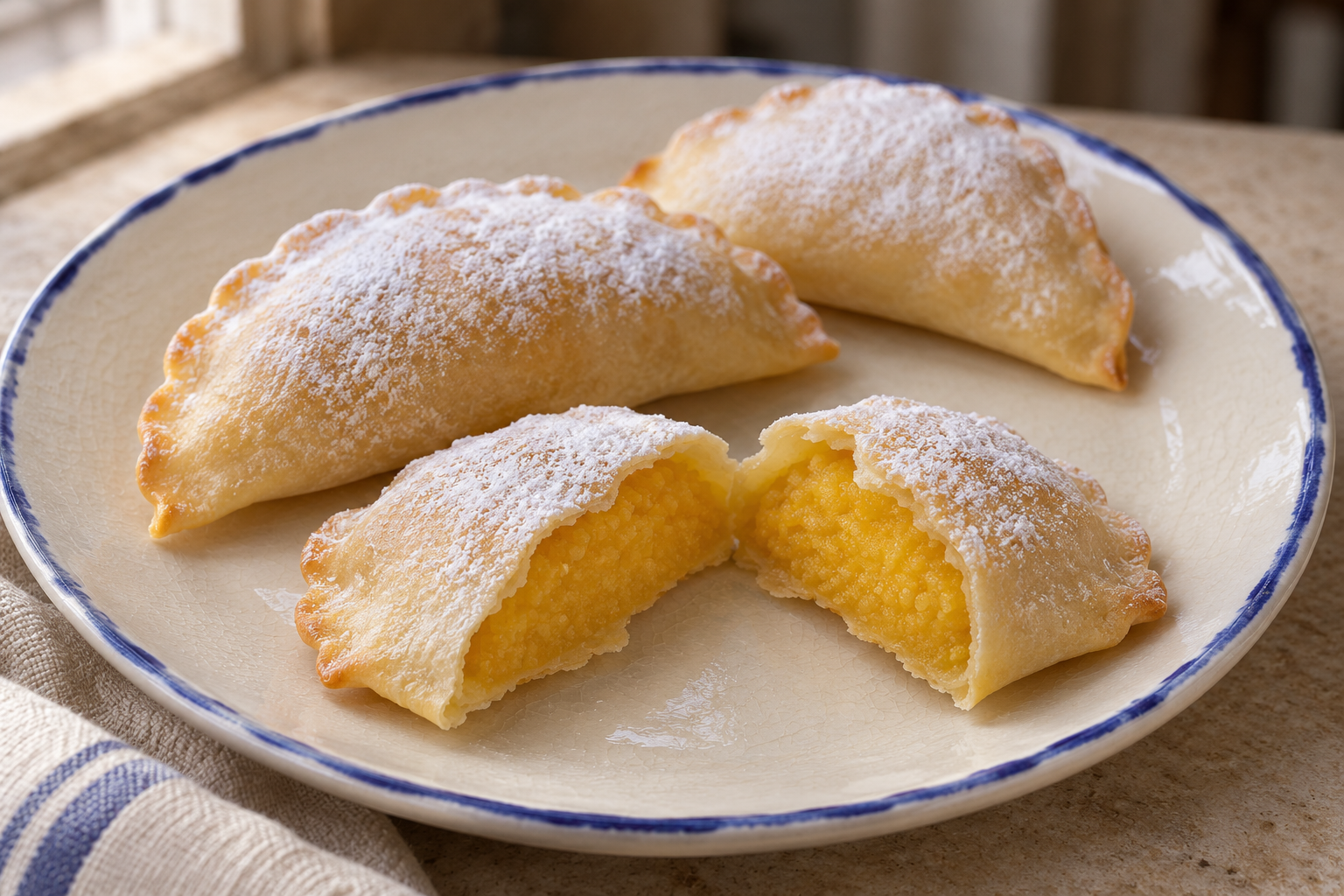
The pastries take their name from Coimbra’s community of Poor Clare nuns. Their medieval monastery, Santa Clara-a-Velha, stood beside the River Mondego. Repeated floods led the nuns to move to Santa Clara-a-Nova on higher ground in 1677. Nineteenth-century accounts record that the nuns sold pastries, although the exact recipe they used is uncertain. Women confectioners in Coimbra carried on the trade, and by the 1930s and 1940s the egg-filled pastry was well established in the city’s bakeries.
The filling is a form of doce de ovos, a Portuguese sweet made from egg yolks and sugar. Bakers boil sugar and water to make a syrup, let it cool, then stir in the yolks and finely ground blanched almonds. They return the mixture to the heat until it is thick enough to hold its shape. For the shell, they roll a dough of flour, butter and a little cold water into a thin sheet. They cut it into rounds, spoon the filling onto each one and fold it in half. A brushing of beaten egg and a sprinkling of sugar give the baked shell a light crust around the moist almond centre.
Sold individually in Coimbra’s pastelarias, the pastries are eaten throughout the day, often with coffee. Visitors can also find them at the city’s Mostra de Doçaria Conventual e Contemporânea, where local confectioners and cultural associations present them alongside other Coimbra specialities, including arrufadas, sweet buns, and manjar branco, a white pudding associated with the Monastery of Celas.
References
Bandeira, A. (2014). Doçaria conventual de Coimbra e sua região. Coimbra Editora; Câmara Municipal de Coimbra. (2020). Património histórico e gastronómico de Coimbra; Coimbra, M. (2018). Sabores e tradições do Mondego. Edições Coimbra Cultural; Rodrigues, J. (2019). Tesouros da gastronomia portuguesa: Doçaria. Âmbar.
See Also:
See Also
Map