Queijo Picante da Beira Baixa (Beira Baixa, Portugal)
Traditional Food Resources COUNTRIES AND TERRITORIES Portugal
Beira Baixa, Portugal
-
2026

The cheese comes from the inland pastures of central Portugal, around Castelo Branco, Idanha-a-Nova, Fundão and neighbouring municipalities. Its recipe reflects the region’s long history of keeping both sheep and goats: cheesemakers can use raw milk from either animal or blend the two. Picante is one of three cheeses covered by the Queijo da Beira Baixa Protected Designation of Origin, alongside Amarelo and Castelo Branco.
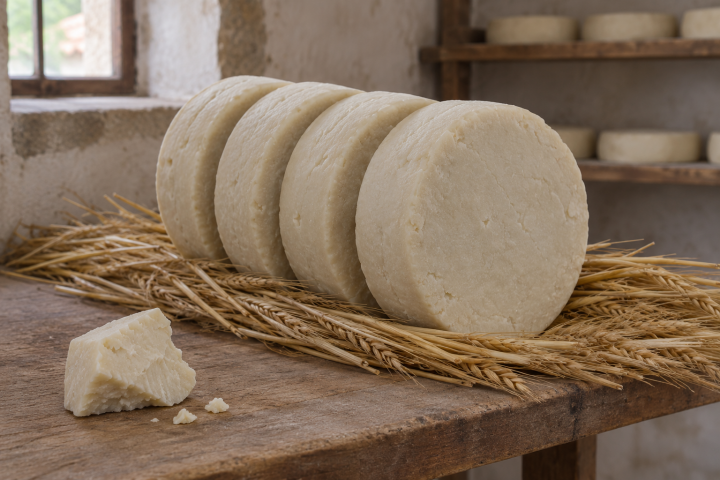
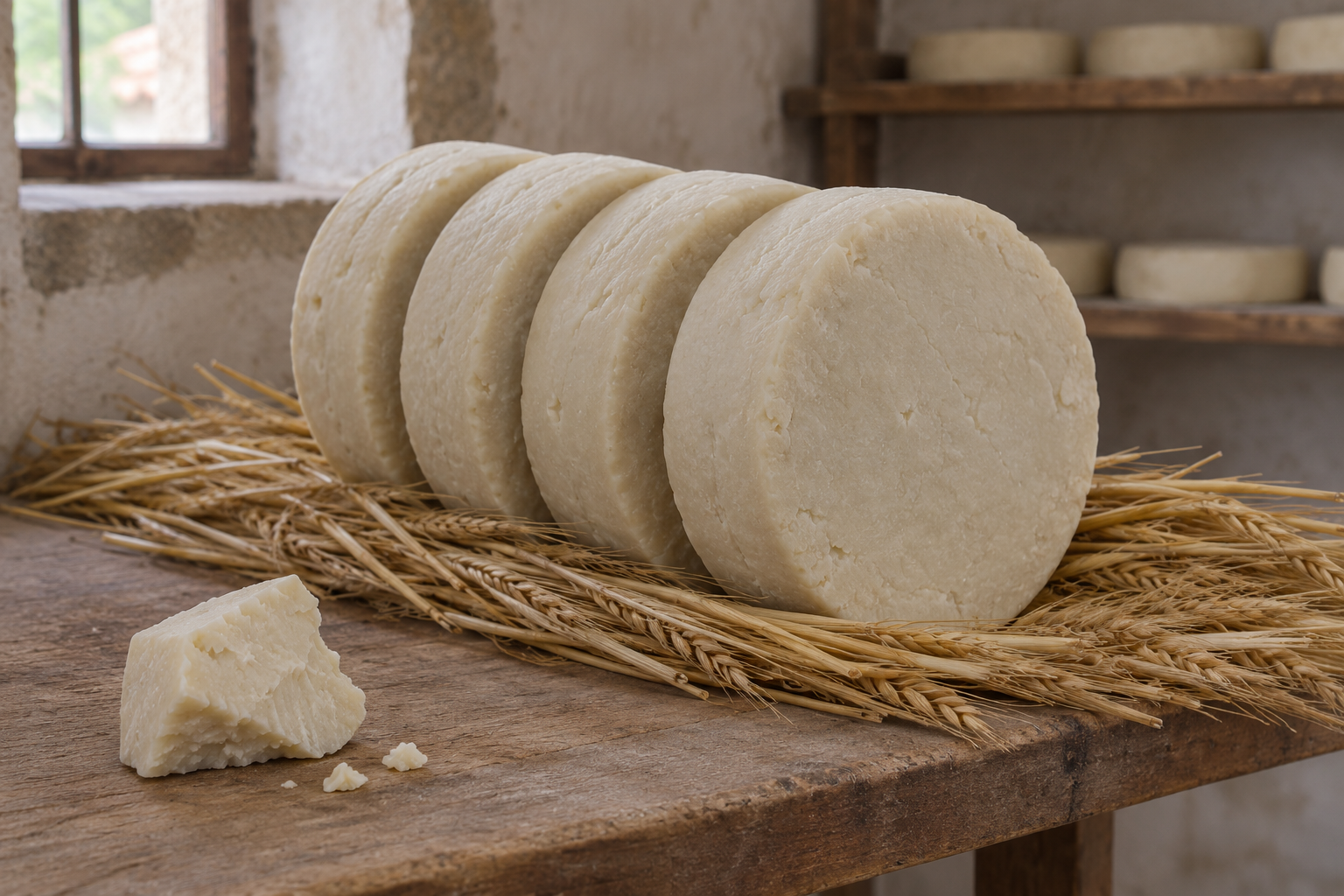
Cheesemakers set the milk with animal rennet, then cut and drain the curd, press it into low cylindrical moulds and salt the wheels. In one traditional method, they stack the young cheeses in a formation called a castelo (“castle”) and cover them with salt. After salting, the wheels may be set on edge on a bed of rye straw, with their flat faces touching. The straw helps regulate moisture during ripening.
After at least 120 days, the cheese has a firm to hard texture and crumbles when cut. A wheel typically weighs between 400 grams and one kilogram. Its pale interior, sometimes tinged with grey, has few openings and no distinct rind. The bite suggested by the word picante comes from maturation; pepper and paprika are not ingredients.
In Beira Baixa, the cheese is served in small pieces with country bread, either as a petisco before the meal or as a cheese course afterwards. Regional tastings often pair it with a Beira Interior wine. Tasting Picante alongside Castelo Branco makes the distinction between them especially clear: the latter is a softer ewe’s milk cheese set with cardoon flowers.
References
Almeida, M. (2016). Queijos tradicionais de Portugal: Beira Baixa. Coimbra Editora; Câmara Municipal de Castelo Branco. (2019). Património gastronómico e queijo de Castelo Branco; Direção-Geral de Agricultura e Desenvolvimento Rural. (n.d.). Queijo da Beira Baixa DOP. Produtos Tradicionais Portugueses. https://tradicional.dgadr.gov.pt/pt/cat/queijos-e-produtos-lacteos/97-queijos-da-beira-baixa-dop-queijo-de-castelo-branco-queijo-picante-da-beira-baixa-e-queijo-amarelo-da-beira-baixa; Rodrigues, J. (2018). Tesouros gastronómicos de Portugal. Âmbar.
See Also:
See Also
Map