Tapas de Granada (Spain)
Food and Gastronomy Events Gastronomy and Food Tourism Food Heritage Tourism Traditional and Heritage Food Establishments Traditional Food Resources Street Foods Cultural and Regional Foods Traditional Foods Local Foods COUNTRIES AND TERRITORIES Portugal Food and Beverage Services
Spain
-
2026

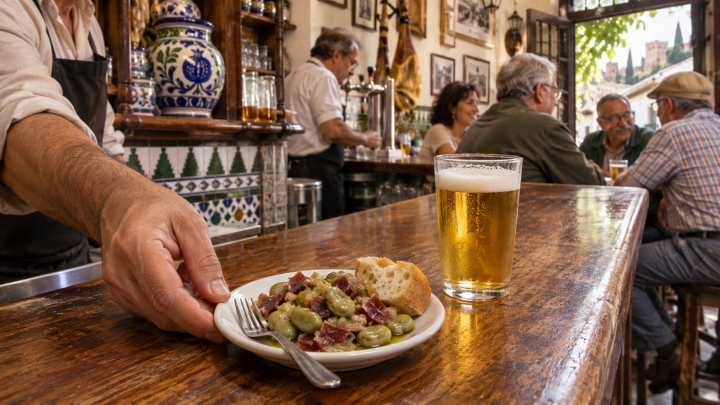
In Spanish, tapa names the portion of food, while ir de tapas or tapear describes the social outing. Friends or relatives meet at a bar, often around lunchtime or in the evening, and may walk to another nearby for the next round. A tapa can be an appetizer, but several rounds can also make up an informal lunch or dinner. The practice is especially associated with Granada, although bars elsewhere in Spain also offer food with a drink.
Local newspapers document the custom well before the Spanish Civil War. In January 1910, the Granada café run by Antonio Quirosa, known as El Aparcero, advertised a glass of wine with a slice of salchichón (cured sausage) for ten céntimos. In 1911, the Granada arts journal La Alhambra also mentioned the Andalusian custom of drinking wine with tapas. These records show how food and drink were paired in the early twentieth century, although they do not establish when the practice began. The familiar story that tavernkeepers first covered wine glasses with ham to keep out flies belongs to the folklore of tapas.
What arrives with a drink depends on the bar. In some establishments, the kitchen chooses the tapas and serves a different dish with each successive round. Others let customers choose from a short list (tapa a elegir) or serve the same house specialty with every round. A ración is a larger portion ordered separately, often for the table to share.
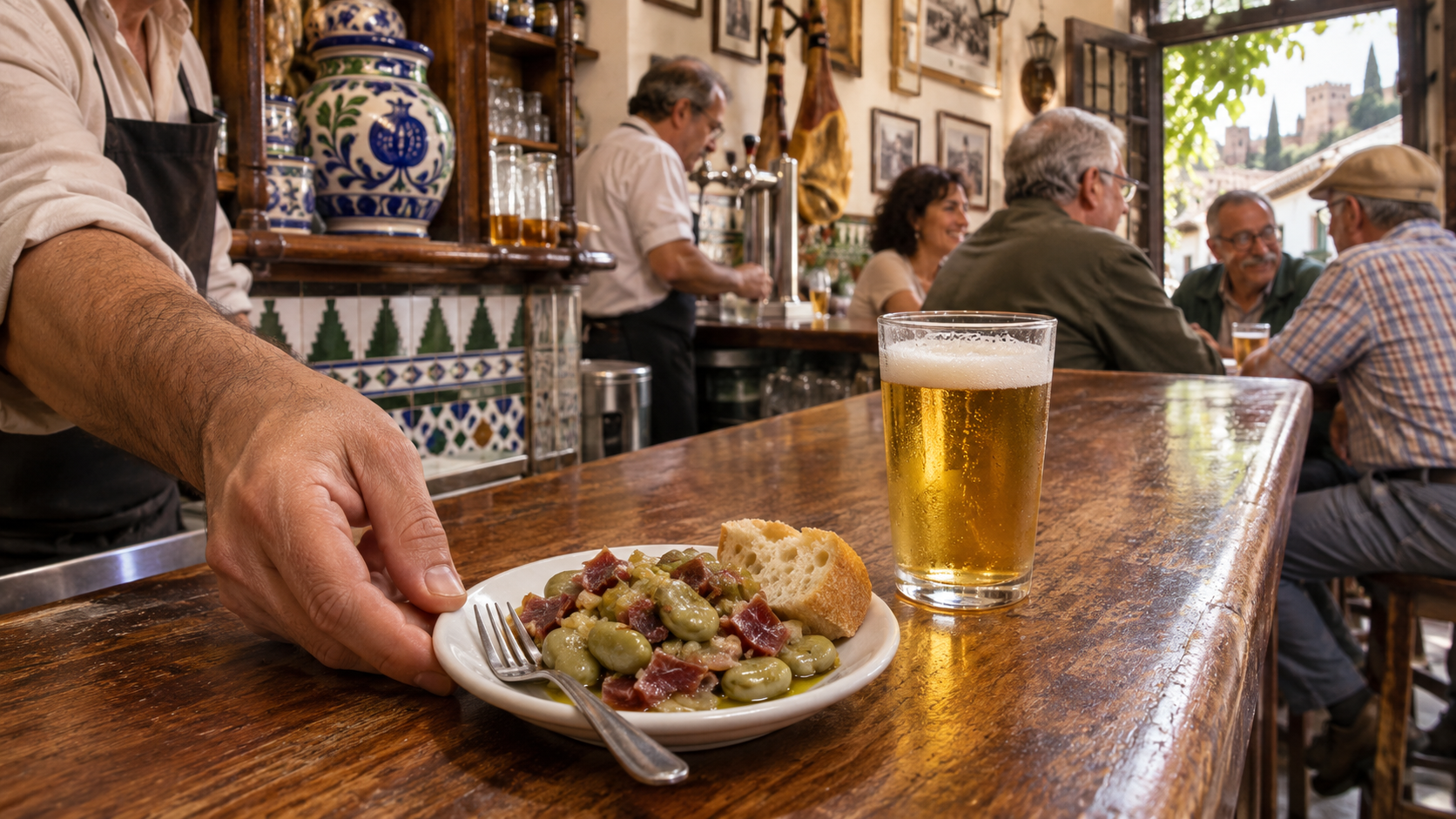
A tapa is defined by how it is served, so there is no single recipe or nutritional profile. A bar may offer sliced cheese or cured ham, a small plate of habas con jamón (broad beans with ham), callos (stewed tripe), or a portion of pescaíto frito (small fried fish). Seasonal customs also shape what people eat together: for the Día de la Cruz on 3 May, fresh broad beans are traditionally eaten with salaíllas, local salted bread.
Granada’s tapas routes follow the geography of its neighborhoods. Calle Navas near the town hall, the squares of the Albaicín, and Campo del Príncipe in the Realejo are established meeting places. Beyond the historic center, La Chana is popular with university students for its generous portions. The city and the provincial hospitality federation have also promoted local cooking through the Granada de Tapas competition, which brings residents and visitors into participating bars and restaurants to try the cooks’ entries.
The custom and its ingredients have different kinds of recognition. Jamón de Trevélez, a cured ham produced in the Alpujarra of Granada, holds a Protected Geographical Indication that applies to the ham itself. In 2018, Spain opened proceedings to recognize tapas as a nationwide cultural tradition. Granada’s tapas culture has no separate inscription on UNESCO’s Representative List of the Intangible Cultural Heritage of Humanity.
References
Turismo; Harbottle, L. (2004). Food for thought: Culinary traditions and social identity in southern Spain. Routledge; Medina, F. X. (2005). Food culture in Spain. Greenwood Press; Moreno, R. (2012). Historia del tapeo andaluz: De la barra a la mesa. Ediciones de Sur.
See Also
Map