Hippies in Türkiye
Social, Inclusive and Demographic Tourism Youth Tourism
(Türkiye)
-
2026

Hippies in Türkiye refers to the presence and influence of members of the international hippie movement who traveled through and stayed in the Republic of Türkiye between the mid-1960s and the late 1970s. Situated on the overland route connecting Western Europe with South Asia, Türkiye became one of the principal transit and resting points on the famous Hippie Trail, attracting hundreds of thousands of young travelers. Their presence contributed significantly to the early development of tourism in several regions of the country and left a lasting imprint on Türkiye’s tourism history.
Origins of the Hippie Movement
The social and cultural roots of the hippie movement can be traced to the Beat Generation that emerged in the United States during the 1950s. Beat writers and intellectuals challenged conventional social values, consumer culture, and political authority, creating the foundations for a broader countercultural movement.
During the 1960s, this movement evolved into what became known as the hippie movement. Characterized by opposition to war, rejection of materialism, communal lifestyles, environmental awareness, and personal freedom, hippies rapidly became a global cultural phenomenon. Their influence extended beyond North America and Western Europe and reached even countries within the socialist bloc.
One of the movement’s most recognizable symbols was the concept of “Flower Power,” promoted by poet Allen Ginsberg in 1965 as a nonviolent response to war and political conflict. Because of their association with flowers as symbols of peace, hippies became widely known as “Flower Children.”
The movement advocated pacifism, environmental responsibility, communal living, and the rejection of rigid social hierarchies. These ideals attracted large numbers of young people seeking alternative lifestyles and experiences outside mainstream society.
Arrival of Hippies in Türkiye
The first members of the broader countercultural travel movement arrived in Türkiye during the 1950s, when Beat Generation travelers began passing through the country on their journeys to the Middle East and Asia. However, the substantial arrival of hippies occurred after 1965.
During the 1960s and 1970s, distinctions between beatniks, hippies, and independent backpackers were often blurred in public discourse. Turkish media and local communities frequently referred to all long-haired foreign travelers carrying backpacks as “hippies,” regardless of their actual affiliations.
Türkiye’s strategic geographical position made it a natural stop on the overland route linking Europe with destinations such as Iran, Afghanistan, Pakistan, India, Nepal, and Tibet. As a result, the country became one of the most important transit zones along the Hippie Trail.
The period between approximately 1965 and 1979 represented the peak years of hippie travel through Türkiye. This era effectively ended following the Iranian Revolution of 1979, which disrupted the traditional overland route connecting Europe and South Asia.
Sultanahmet: The Heart of the Hippie Trail in Türkiye
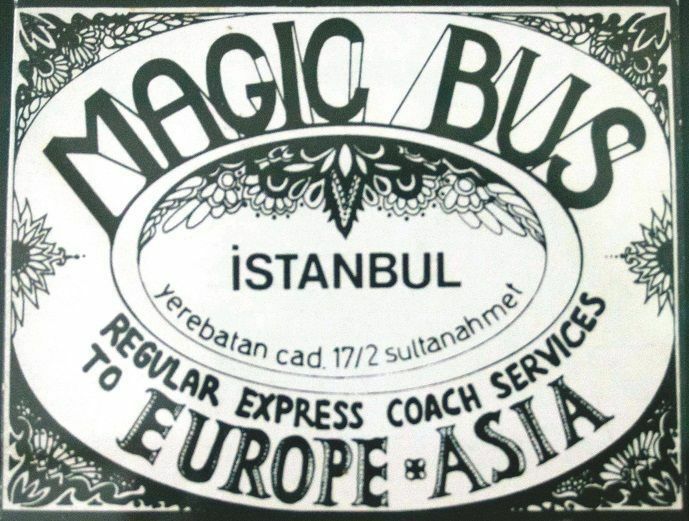
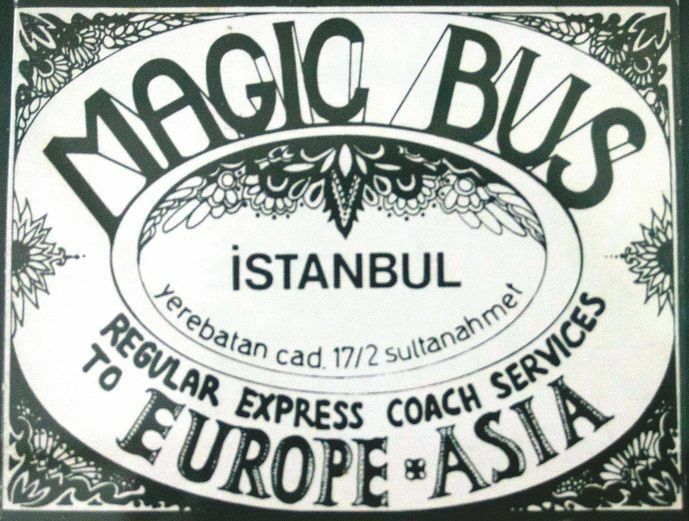
The district of Sultanahmet in Istanbul emerged as the principal gathering place for hippies traveling through Türkiye.
Several factors contributed to its popularity. Located within Istanbul’s Historic Peninsula, Sultanahmet offered easy access to major historical attractions such as Hagia Sophia, the Blue Mosque, and the former Hippodrome. Equally important were its transportation connections. During the period, nearby Sirkeci served as Istanbul’s principal railway gateway to Europe, while routes toward Anatolia and Asia also passed through the area.
When large numbers of travelers began arriving in the mid-1960s, Sultanahmet was still primarily a residential neighborhood rather than a tourism district. Families lived in the area, and traditional neighborhood life remained dominant. As increasing numbers of hippies settled temporarily in the district, hostels, small hotels, cafés, and restaurants gradually emerged to serve their needs.
Vehicles arriving from Europe—including cars, minibuses, buses, and camper vans—often remained parked in the district for extended periods while travelers rested, exchanged information, and prepared for the next stage of their journeys.
As a result, Sultanahmet evolved into one of the most famous backpacker districts in the world and became synonymous with the Hippie Trail experience.
Beyond Istanbul: Hippies Across Anatolia
Although Istanbul served as the principal hub, hippies traveled extensively throughout Türkiye.
Many visitors explored destinations that would later become some of the country’s most important tourism centers, including:
- Cappadocia
- Side
- Alanya
- Marmaris
- Fethiye
- Kuşadası
These visits often occurred decades before mass tourism arrived in these regions. Hippies traveled by bus, private vehicle, motorcycle, bicycle, and camper van, establishing direct contact with local communities.
The traditional overland route across Türkiye generally followed a corridor extending from Istanbul through Bolu, Ankara, Çorum, Yozgat, Erzincan, and Ağrı before crossing into Iran. Along this route, travelers interacted extensively with local residents and became familiar figures in many towns and villages.
In addition, travelers visited numerous cities in southern and western Türkiye, including Adana, Mersin, Gaziantep, Hatay, and various destinations throughout the Aegean region.
Influence on Tourism Development
The presence of hippies had a notable impact on the development of tourism in Türkiye.
Many destinations that later evolved into major tourism centers first became known internationally through the experiences of independent travelers and backpackers. Through word-of-mouth recommendations, travel narratives, and personal networks, hippies contributed to the global visibility of locations that had previously received little international attention.
Equally important were the interactions between travelers and local communities. Numerous accounts describe local residents offering food, accommodation, and hospitality to foreign visitors at little or no cost. These encounters created some of the earliest forms of direct contact between international tourists and local populations in many parts of Türkiye.
For this reason, some tourism historians regard hippies as among the first large-scale independent international travelers to contribute significantly to the development of modern tourism in Türkiye.
Public Perceptions
The arrival of large numbers of hippies generated diverse reactions among Turkish society.
Many local residents were intrigued by their appearance, lifestyle, and behavior, which differed considerably from prevailing social norms. Popular expressions such as “backpack tourists” or “long-haired tourists” became associated with foreign travelers during this period.
Despite occasional cultural misunderstandings, interactions between hippies and local communities were generally characterized by curiosity and hospitality. In many regions, memories of the hippie era remained influential long after the movement itself had disappeared.
Indeed, in some tourism destinations, the image of the foreign tourist continued to be associated with hippies for decades afterward.
Legacy
The hippie movement occupies a distinctive place in the tourism history of the Republic of Türkiye. Between the mid-1960s and the late 1970s, the country served as one of the principal crossroads of the Hippie Trail, welcoming hundreds of thousands of independent travelers from around the world.
Their presence contributed to the emergence of backpacker tourism, increased international awareness of Türkiye’s cultural and natural attractions, and helped stimulate tourism development in destinations that later became globally recognized tourism centers.
Today, the legacy of the hippie era survives in the historical memory of places such as Sultanahmet, Cappadocia, Fethiye, Marmaris, Alanya, and Side, where the encounters between travelers and local communities formed an important chapter in the evolution of modern Turkish tourism.
References
Kozak, N. (TURBAN) (2019). Türkiye’de Hippiler (1965 – 1979). İçinde; N. Kozak (Editör), Dünden Bugüne Türkiye’de Turizm Kurumlar, Kuruluşlar, Turizm Bölgeleri ve Meslekler (ss. 859-908). İstanbul: Yılmazlar Matbaası.
See Also