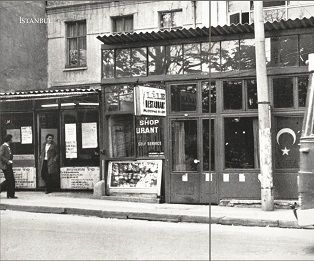
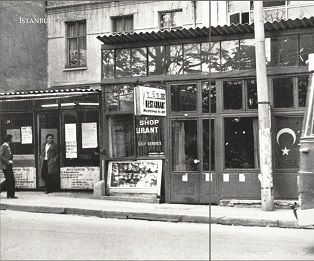
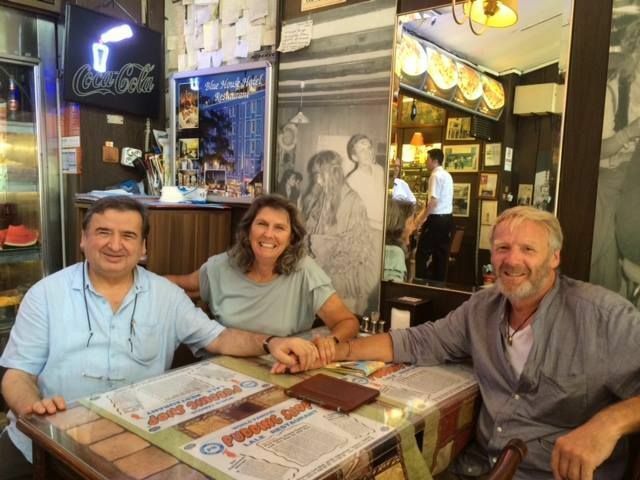
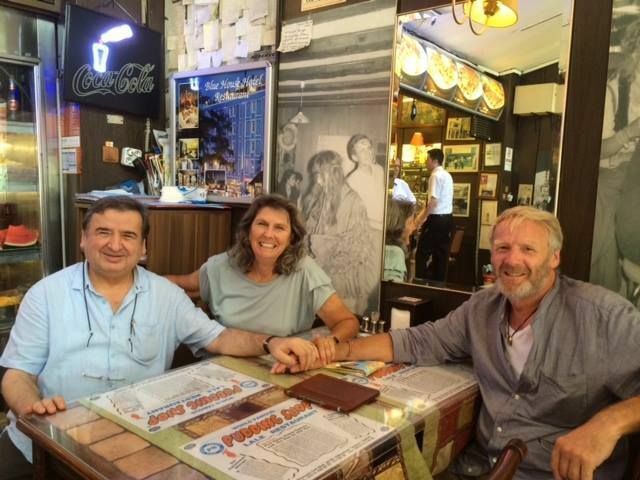
Pudding Shop (Lale Restaurant), Istanbul
FOOD AND BEVERAGE ESTABLISHMENTS Restaurants and Dining Establishments Quick-Service Food Establishments Fast Food Restaurant
(İstanbul, Türkiye, 1957)
-
2026

Pudding Shop, originally known as Lale Pastanesi (Lale Restaurant/Patisserie), is one of the most iconic tourism establishments associated with the international hippie movement and the famous Hippie Trail that connected Europe with South Asia during the 1960s and 1970s. Located in the historic Sultanahmet district of Istanbul, Türkiye, the establishment became an internationally recognized meeting point for backpackers, overland travelers, and members of the counterculture movement who passed through Türkiye on their journeys toward destinations such as Iran, Afghanistan, Pakistan, Nepal, and India.
Definition and Historical Background
Pudding Shop occupies a unique place in the history of tourism in the Republic of Türkiye. Although it began as a modest neighborhood patisserie, it evolved into one of the most famous traveler gathering places in the world during the height of the Hippie Trail era.
The business was established in 1957 by Ahmet Çolpan and his sons İdris Çolpan and Namık Çolpan. The Çolpan family had migrated to Istanbul from the district of Araç in Kastamonu Province during the 1940s. Ahmet Çolpan had previously worked as both an apprentice and master confectioner at Ali Muhiddin Hacı Bekir, one of Türkiye’s most historic confectionery companies, before opening his own business.
The original establishment operated as a small patisserie under the name Lale Pastanesi on Divanyolu Avenue in Sultanahmet. The current premises are not located in the original building. Following the expropriation of the original property by public authorities in 1966, the business relocated to its present location, where it continues to operate today.
Development into a Tourism Landmark
During its early years, Lale Pastanesi primarily served traditional Turkish desserts, puddings, pastries, tea, coffee, and breakfast items. Over time, the menu expanded to include beer service and home-style cooked meals while maintaining its original confectionery identity.
The transformation of the establishment into an international tourism landmark occurred during the late 1960s and early 1970s, when large numbers of young travelers began arriving in Istanbul as part of the Hippie Trail. Sultanahmet became one of the principal stopping points on this overland route, and travelers sought places where they could meet fellow backpackers, exchange information, and organize onward journeys.
At the time, there were relatively few establishments catering to the needs and lifestyles of these international travelers. Pudding Shop successfully filled this niche and became one of the most important social hubs within Istanbul's emerging backpacker culture.
Origin of the Name “Pudding Shop”
The establishment was originally known as Lale Pastanesi, named after the Turkish word lale (tulip). However, many foreign visitors found the Turkish name difficult to pronounce.
As increasing numbers of international travelers began frequenting the establishment, they started referring to it informally as the Pudding Shop, a reference to the milk puddings and desserts that constituted one of its signature products. In response to the popularity of the nickname among foreign customers, the business officially adopted the name Pudding Shop around 1970.
The new name quickly became internationally recognized and appeared in numerous travel accounts, guidebooks, and media reports related to the Hippie Trail.
The Hippie Trail Connection
Pudding Shop became one of the most famous gathering places on the Hippie Trail, the overland travel route linking Western Europe with South Asia from the 1950s through the late 1970s.
Travelers visiting Istanbul frequently used the establishment as an informal communication center. Before the advent of mobile phones, email, and the internet, backpackers exchanged information through notice boards, handwritten messages, and personal encounters.
Visitors used the restaurant to:
- Arrange transportation to destinations farther east,
- Find travel companions,
- Buy or sell vehicles,
- Exchange accommodation information,
- Share travel experiences and route advice,
- Establish social connections with fellow travelers.
As a result, Pudding Shop became far more than a restaurant. It functioned as an informal tourism information center and a social institution within the international backpacker community.
Its reputation spread globally through word-of-mouth communication and travel literature, making it one of the most recognizable tourism establishments associated with the Hippie Trail.
Food and Beverage Services
Despite its international fame, Pudding Shop remained fundamentally a family-operated food and beverage establishment.
Its menu traditionally included:
- Turkish milk puddings,
- Cakes and pastries,
- Tea and coffee,
- Breakfast items,
- Beer,
- Home-style Turkish dishes.
The combination of affordable prices, a relaxed atmosphere, and hospitality toward foreign visitors contributed significantly to its popularity among budget travelers.
Unlike many businesses that catered specifically to tourists, Pudding Shop retained much of its local character while simultaneously serving an international clientele.
Ownership and Continuity
One of the most remarkable aspects of Pudding Shop is its continuity. Since its establishment in 1957, the business has remained under the management of the same family.
This continuity has contributed to its authenticity and historical significance. While the social and tourism landscape of Sultanahmet has changed dramatically since the 1970s, Pudding Shop continues to operate in the same neighborhood and remains a recognized landmark within Istanbul’s tourism history.
Legacy and Significance
Pudding Shop occupies a distinctive place in the global history of tourism. Few tourism-related establishments associated with the Hippie Trail have survived into the twenty-first century while retaining their historical identity and continuing operations.
The restaurant is remembered not only as a food and beverage establishment but also as a symbol of independent travel, youth mobility, cultural exchange, and the international counterculture movement. For many former travelers, a visit to Pudding Shop remains an important nostalgic pilgrimage associated with memories of the Hippie Trail and the formative experiences of long-distance overland travel.
Today, Pudding Shop is widely regarded as one of the most famous tourism establishments in the Republic of Türkiye and one of the enduring symbols of Istanbul’s role in the global backpacker movement of the twentieth century.
References
Aksak, M. (2019). Mahmut Aksak. (Görüşen: Nazmi Kozak). İçinde; Kozak, N. (Ed), Türkiye Turizmi Sözlü Tarih Araştırması Görüşme Metinleri Cilt - IX: Turizm Bakanlığı, TURBAN, TURİNG, TMGT, TMTF, Hippiler, Turizm Yatırımcılığı, Diğer Alanlar (ss. 568-581). İstanbul: Yılmazlar Matbaası; Çolpan, N. (2018). Namık Çolpan. (Görüşen: Nazmi Kozak). İçinde; Kozak, N. (Ed), Türkiye Turizmi Sözlü Tarih Araştırması Görüşme Metinleri Cilt - IX: Turizm Bakanlığı, TURBAN, TURİNG, TMGT, TMTF, Hippiler, Turizm Yatırımcılığı, Diğer Alanlar (ss. 582-587). İstanbul: Yılmazlar Matbaası; Kozak, N. (Editör) (2019). Türkiye’de Hippiler (1965 – 1979). İçinde; N. Kozak (Ed), Dünden Bugüne Türkiye’de Turizm Kurumlar, Kuruluşlar, Turizm Bölgeleri ve Meslekler (ss. 859-908). İstanbul: Yılmazlar Matbaası.
See Also
Map