Olfaction-Based Gastronomy
Gastronomy
-
2026

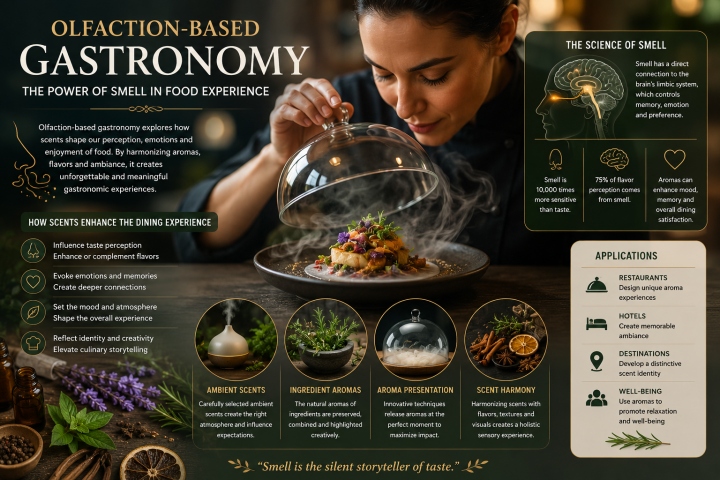
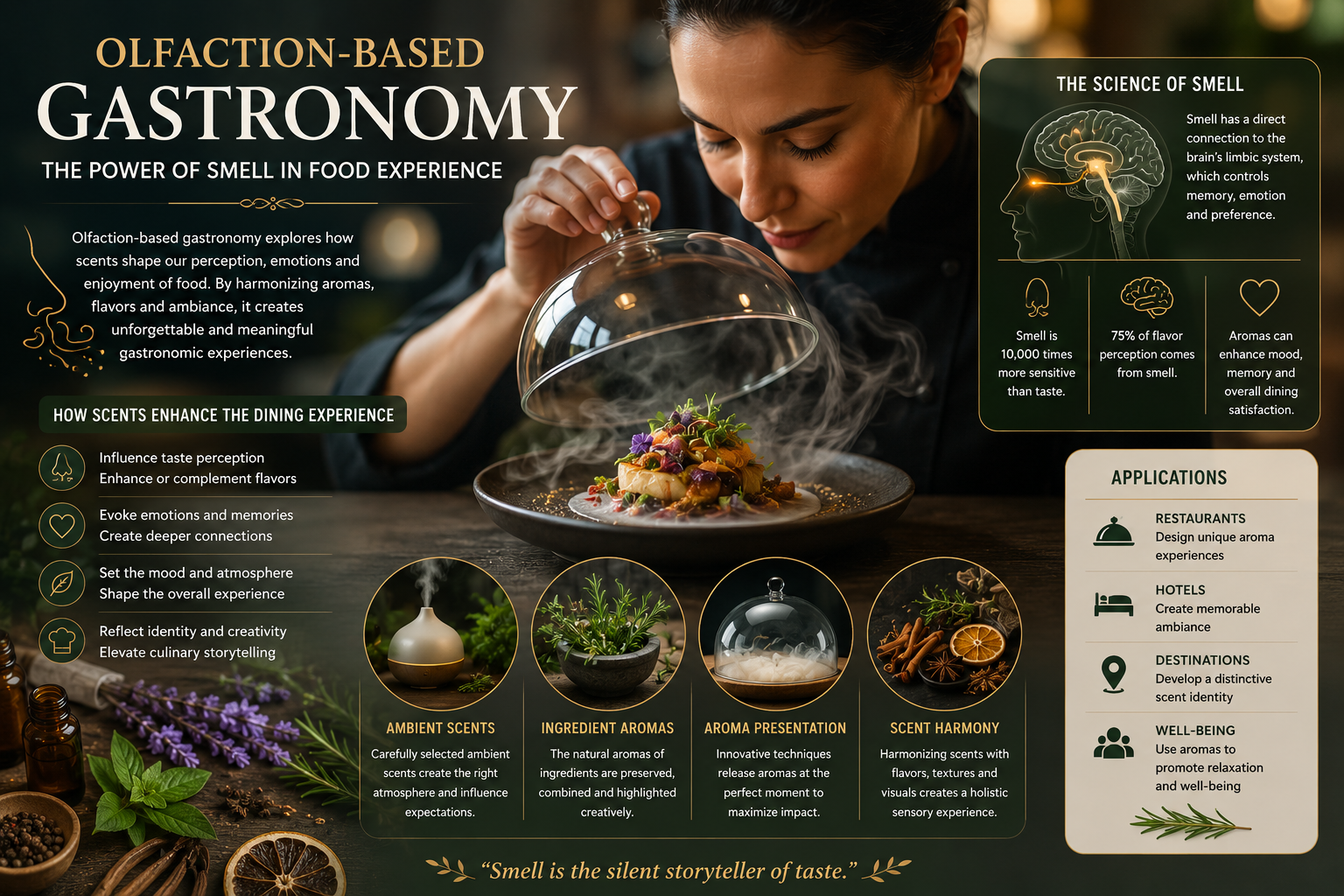
Olfaction-based gastronomy is an approach that emphasizes the decisive influence of the sense of smell on perception, cognitive processes, and gastronomic satisfaction in food and beverage experiences. This concept extends beyond the chemical aroma composition of foods by integrating ambient scents, the brain’s perceptual mechanisms, and cross-modal sensory interactions into gastronomic practices. Olfaction-based gastronomy highlights both the scientific and aesthetic significance of smell in flavor perception and experience design.
Although scientific studies examining the relationship between smell and flavor date back several decades, the topic has gained increasing prominence in the gastronomy literature since the 2000s with the emergence of neurogastronomy and multisensory gastronomy research. In particular, bibliometric studies adopting a scientific perspective on the relationship between food and smell demonstrate that a considerable number of publications were produced between 1980 and 2022, with a marked increase in the frequency of keywords such as smell, food, and gastronomy. This trend indicates the steady expansion of olfaction-oriented research within the field of gastronomy.
Although the term itself has not been formally introduced by a single individual, pioneering studies in neurogastronomy and multisensory gastronomy have provided the theoretical and experimental foundations that have brought the role of smell in gastronomy to the forefront. Neurogastronomic research examines the interactions among taste, smell, and the brain, thereby providing a scientific framework for understanding the influence of olfaction on gastronomic perception.
An olfaction-oriented culinary culture is regarded as a multidimensional approach in which smell is associated not only with the chemical properties of food but also with the way the brain interprets and evaluates sensory stimuli. Within this context, the following elements are particularly noteworthy:
- Olfactory Perception and Flavor Experience: In addition to taste, both orthonasal (through the nostrils) and retronasal (through the nasopharyngeal pathway) olfactory perception play a crucial role in shaping the overall flavor experience.
- Management of Ambient Scents: Environmental scents presented simultaneously with meals can be used to influence emotional responses and establish an experiential context.
- Aromachology and Sensory Marketing: Research investigates the effects of scents on consumer behavior and their role in enhancing customer satisfaction.
- Cross-Modal Aroma Interactions: The neural and sensory interactions among different aroma components are evaluated for their potential to enhance perceived flavor quality.
By integrating these elements, olfaction-based gastronomy enriches both the scientific foundations and the practical applications of dining experiences. In recent years, the field has generated a growing body of literature, supported by an increasing number of bibliometric studies focusing on multisensory dining experiences and food–olfaction relationships. Contemporary discussions primarily focus on the psychological implications of scent design in dining experiences, innovative gastronomic applications, and the effectiveness of sensory marketing strategies. In this context, the role of ambient scents in fostering emotional engagement and the potential of smell to enhance flavor perception have emerged as increasingly prominent research topics.
References
Eker, A., Soylu, S., & Kabacık, M. (2023). Yiyecek ve koku konulu çalışmaların bibliyometrik analizi. Journal of Hospitality and Tourism Issues, 5(2), 132–147; Girona-Ruíz, D., Cano-Lamadrid, M., Carbonell-Barrachina, Á. A., López-Lluch, D., & Esther, S. (2021). Aromachology related to foods, scientific lines of evidence: A review. Applied Sciences, 11(13), Article 6095; Melis, M., Tomassini Barbarossa, I., & Sollai, G. (2023). The implications of taste and olfaction in nutrition and health. Nutrients, 15(15), Article 3412; Spence, C. (2022). On the use of ambient odours to influence the multisensory experience of dining. International Journal of Gastronomy and Food Science, 27, Article 100444; Tokat, P., & Yılmaz, I. (2022). Neurogastronomy: Factors affecting the taste perception of food. International Journal of Gastronomy Research, 2(1), 1–10.
See Also: