Culinary Science
Culinary Arts and Gastronomy Culinary Arts
-
2026

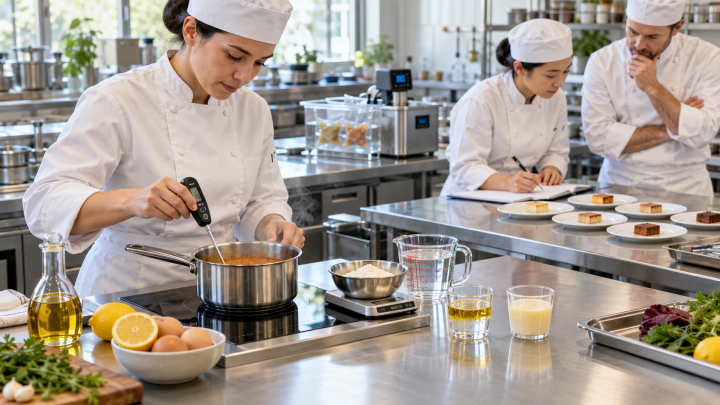
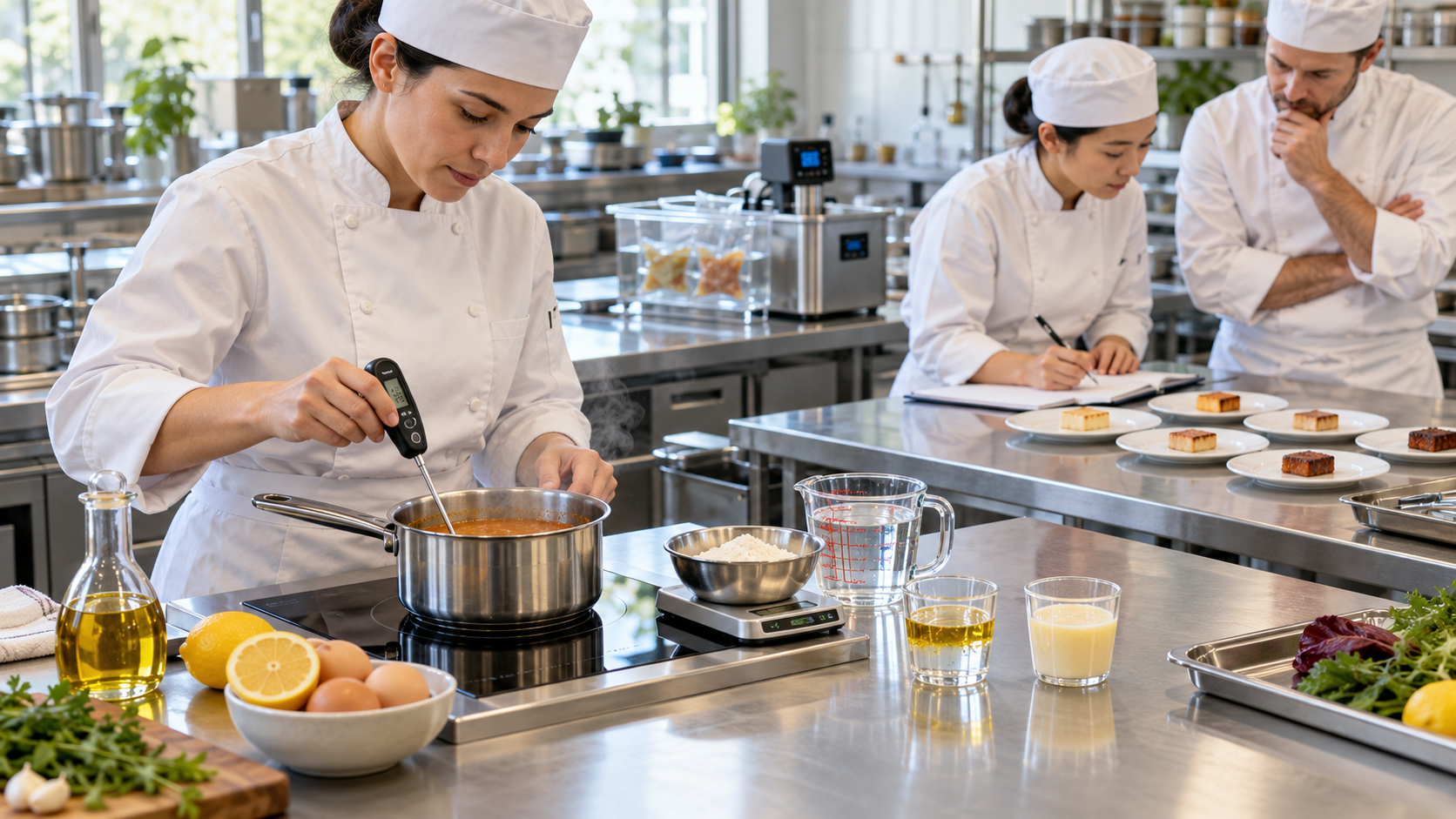
Culinary science is an interdisciplinary field that applies scientific principles and research methods to the selection, preparation, processing, cooking, and presentation of food. It connects culinary knowledge and practical skills with the systematic study of ingredients, food transformations, and sensory experiences. Its principal concerns include ingredient functionality, cooking processes, food safety, nutritional characteristics, sensory evaluation, and product development. Through experimentation and analysis, culinary science seeks to explain culinary phenomena and improve the consistency and quality of prepared foods.
Culinary practices have historically developed through observation, experience, and the transmission of knowledge between generations. Traditional methods often embody practical understanding of how ingredients behave, even when the mechanisms involved have not been formally explained. Scientific investigation provides ways to examine this knowledge, test customary practices, and identify the conditions under which particular results occur. Culinary science therefore brings practical experience into dialogue with experimental research, supporting both the evaluation of established techniques and the development of new applications.
The field draws on chemistry, physics, biology, microbiology, nutrition science, and sensory science. Chemistry contributes to understanding food composition and the reactions that occur during preparation and cooking. Physics explains heat transfer, the behavior of liquids and gases, and the structural and mechanical properties of foods. Biology and microbiology inform the study of biological processes, fermentation, spoilage, and food safety. Nutrition science examines how ingredients and processing conditions affect nutritional composition and nutrient availability. Together, these disciplines provide a basis for investigating the relationships between culinary processes and food quality.
A central area of study concerns the behavior of proteins, carbohydrates, fats, and water during food preparation. Protein denaturation and subsequent aggregation can change the texture and structure of foods such as meat and eggs. Starch gelatinization, which occurs when starch is heated with sufficient water, contributes to thickening and texture development. Caramelization involves the thermal transformation of sugars, while the Maillard reaction involves reducing sugars and amino groups and contributes to browning and flavor formation. Emulsion formation, foam stability, and gelation provide further examples of phenomena relevant to sauces, desserts, baked goods, and other culinary preparations.
Culinary science also investigates the processing conditions that influence these transformations. Temperature, time, moisture, acidity, ingredient proportions, and mechanical treatment can affect the characteristics of the finished product. Changes in these variables may produce different results even when the main ingredients remain the same. Research methods include controlled experimentation, instrumental measurement, comparative analysis, and statistical evaluation. Recording ingredients and procedures systematically supports reproducibility, helps explain variations in product quality, and provides a basis for recipe development and process improvement.
Sensory evaluation examines how people perceive the appearance, aroma, taste, texture, and other sensory characteristics of food. Flavor perception involves interactions among taste, smell, and oral sensations, while serving temperature and the context of consumption can also influence the eating experience. Systematic sensory methods can identify differences between products, describe their sensory characteristics, and assess consumer acceptance. These applications support the refinement of recipes and the development of products suited to particular preferences and service settings.
Culinary science overlaps substantially with food science, which investigates the physical, chemical, and biological properties of foods and the processes used to produce, preserve, and distribute them. Culinary science places particular emphasis on culinary practice, ingredient interactions, and the sensory qualities of prepared foods. The distinction is one of emphasis rather than a complete separation of subject matter. Culinary arts emphasize practical skill and creative expression, while gastronomy encompasses broader relationships among food, culture, society, and the experience of eating.
Molecular gastronomy is closely related to culinary science through its investigation of the physical and chemical mechanisms underlying culinary transformations. As a scientific discipline, it is distinct from the use of specialized equipment or novel presentation techniques in a kitchen. Its findings may inform culinary innovation, but scientific investigation and culinary production have different immediate objectives. Collaboration among scientists, chefs, and educators enables research findings to inform practice and allows practical culinary questions to generate new research.
Scientific and technological developments have expanded the equipment and processes available for culinary applications. Examples include precisely controlled sous-vide cooking, vacuum processing, and the use of gelling agents, thickeners, and emulsifiers to modify food structure. Equipment adapted from laboratory practice, such as centrifuges and rotary evaporators, has also been used in specialized culinary settings. Such applications require an understanding of ingredient properties, equipment performance, and processing conditions. Their value depends on their suitability for the intended product and production context.
Food safety is an integral part of culinary science. Preparation, cooking, cooling, and storage conditions influence microbial survival and growth, while handling practices affect the risk of contamination. Scientific assessment helps establish suitable processing conditions and evaluate how changes in ingredients, equipment, or procedures affect safety. In controlled-temperature and reduced-oxygen applications, particular attention is required to cooking duration, temperature, cooling, and subsequent storage. Sensory quality and microbiological safety therefore require separate assessment, as an acceptable appearance, aroma, or texture does not by itself establish that a food is safe.
In tourism and hospitality, culinary science supports menu development, recipe standardization, quality control, and staff education in hotels, restaurants, catering businesses, and other food-service settings. It can assist in adapting regional dishes to different production volumes and service conditions while evaluating changes in their sensory characteristics. Within gastronomy tourism, it also provides a basis for explaining ingredient behavior and preparation techniques in cooking demonstrations and educational activities. These applications connect scientific understanding with professional practice and the presentation of culinary traditions.
References
Gustafsson, I.-B. (2004). Culinary arts and meal science—A new scientific research discipline. Food Service Technology, 4(1), 9–20; Hegarty, J. A. (2006). Developing “subject fields” in culinary arts, science, and gastronomy. Journal of Culinary Science & Technology, 4(1), 5–13; McGee, H. (2004). On food and cooking: The science and lore of the kitchen (Rev. ed.). Scribner; Ozilgen, Z. S. (2019). Cooking as a chemical reaction: Culinary science with experiments (2nd ed.). CRC Press; Risbo, J., Mouritsen, O. G., Frøst, M. B., Evans, J. D., & Reade, B. (2013). Culinary science in Denmark: Molecular gastronomy and beyond. Journal of Culinary Science & Technology, 11(2), 111–130; Ruiz, J., Calvarro, J., Sánchez del Pulgar, J., & Roldán, M. (2013). Science and technology for new culinary techniques. Journal of Culinary Science & Technology, 11(1), 66–79.
See Also:
See Also