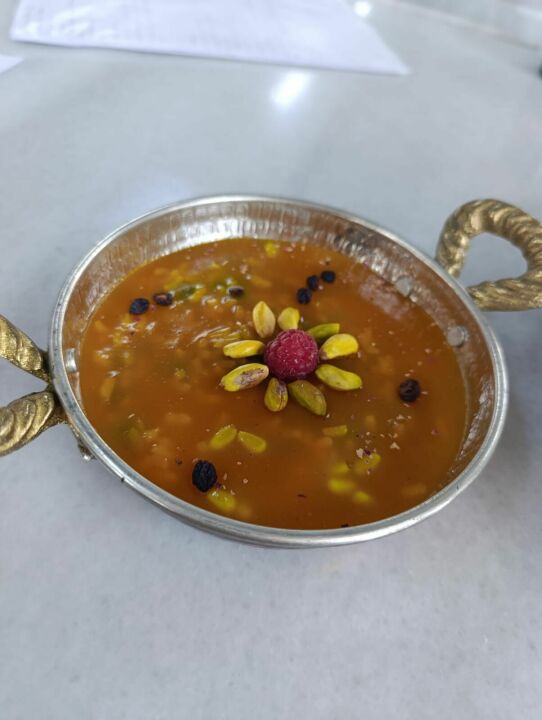
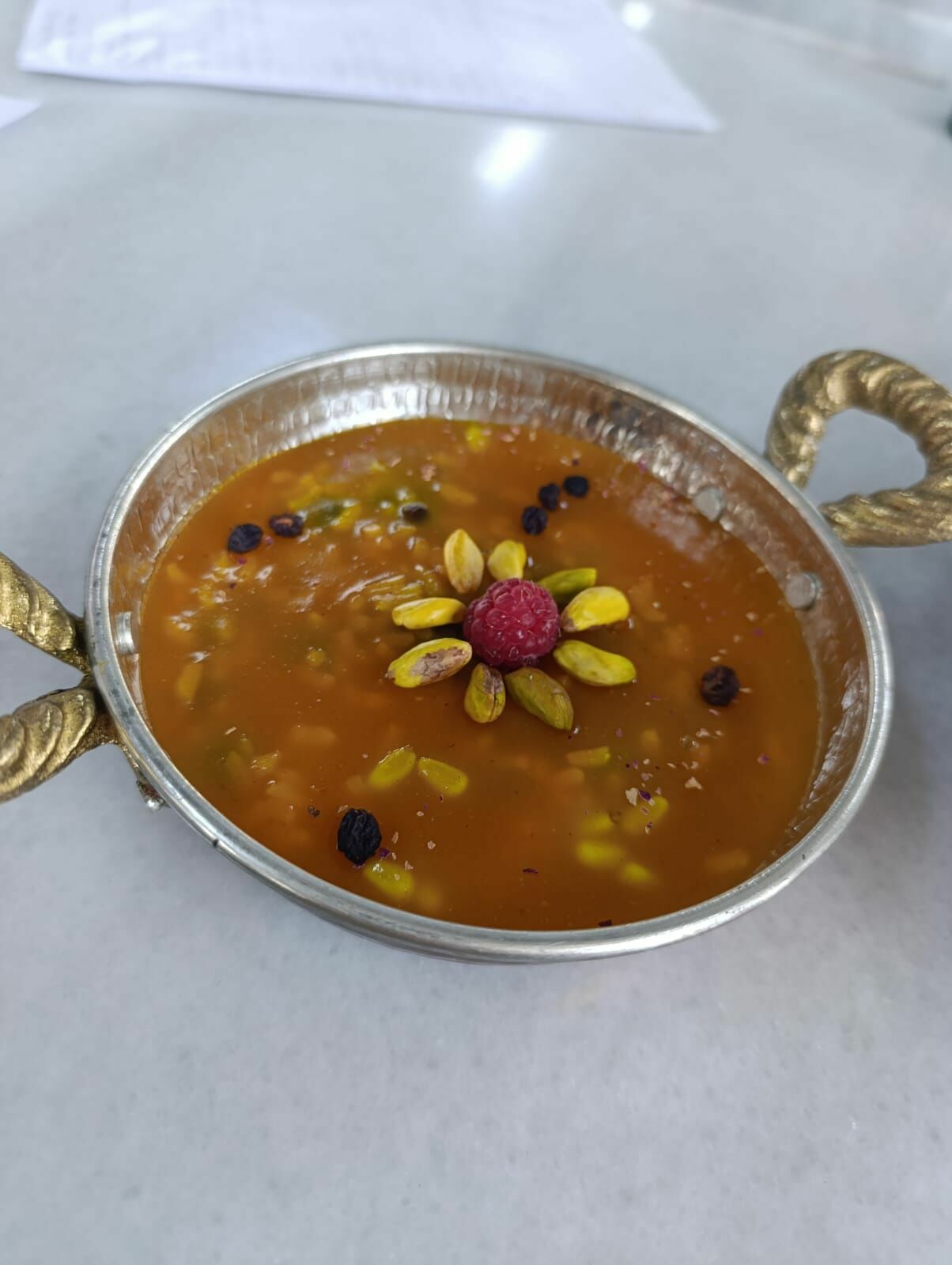
Ottoman Zerde Dessert
Culinary Arts and Gastronomy Gastronomy COUNTRIES AND TERRITORIES Türkiye
-
2026

Zerde is one of the most significant rice-based desserts of Ottoman palace cuisine and occupies an important place in Turkish culinary culture because of its distinctive yellow color derived from saffron and its ceremonial role in special occasions. As a traditional dessert that has survived from the Ottoman culinary heritage to the present day, zerde derives its name from the Persian word zard, meaning “yellow.” Although various accounts concerning the origins of zerde appear in historical sources and in the writings of Evliya Çelebi, these narratives have not been conclusively verified from a historical perspective.
Comparable in texture to jelly-like and milk-based desserts, zerde was widely consumed throughout the Ottoman Empire. As one of the principal grain-based desserts of its time, it was prepared with rice, honey, saffron, and various nuts. Zerde became an indispensable dessert at weddings, feasts, and religious festivals, while also being served at charitable banquets for the poor. During the Ottoman period, it was particularly known as a dessert distributed to those in need through public soup kitchens (imarets).
Served at weddings, victory celebrations, and religious festivals, zerde was also presented alongside rice and meat dishes during large-scale banquets associated with the tradition known as Çanak Yağması (“Bowl Seizure”). Within this tradition, participants were permitted to take the serving bowls at the conclusion of the feast. Over time, zerde became closely associated with joyous occasions and celebrations, particularly circumcision ceremonies, weddings, and military victories. During the reign of Sultan Suleiman the Magnificent, menus featuring zerde were reportedly served to soldiers following military victories.
Today, zerde continues to be preserved as a traditional dessert for weddings and religious celebrations in many regions of Türkiye. The dessert retains its traditional character in cities such as İstanbul, Gaziantep, Balıkesir, Konya, Şanlıurfa, Tekirdağ, and Edirne. It is distributed during birth celebrations and throughout the first ten days of Muharram. In Edirne, one of Türkiye’s major rice-producing regions, regional variations such as milk-based zerde are also common. In Karabük, zerde remains one of the traditional desserts prepared during religious festivals, while in Konya the custom of serving zerde to wedding guests continues to this day.
Festivals are regarded as important instruments for promoting culinary culture. Numerous national and international events are organized annually in Türkiye, contributing both to regional promotion and to local economic development. The inclusion of traditional desserts such as zerde in these events represents an effective means of supporting cultural and gastronomic tourism.
As a surviving example of Ottoman culinary heritage, zerde has gained renewed visibility within the context of gastronomic tourism in recent years. Presented at traditional wedding feasts, local festivals, cultural heritage events, and gastronomy festivals featuring Ottoman cuisine, zerde is regarded as a culinary product that embodies both historical continuity and cultural identity. In destinations with well-established gastronomic identities, particularly Edirne, Konya, and Gaziantep, zerde is recognized as one of the traditional desserts that contributes to the promotion and preservation of local culinary heritage.
References
Bahadır, Ş. D. (2023). From healing to appetite in the Ottoman period: An example of a 946 dated banquet register. Edebi Eleştiri Dergisi, 7(2), 424–441. https://doi.org/10.31465/eeder.1337723; Bakan, R. (2021). Evaluation and innovation of milk-based desserts in Turkish cuisine (Unpublished master's thesis). Pamukkale University, Institute of Social Sciences; Hürriyet. (n.d.). How to make zerde? The preparation and recipe of zerde dessert from Ottoman cuisine to the present day. Retrieved July 10, 2025, from https://www.hurriyet.com.tr/; İntepe, M. C. (2025). History of Turkish desserts from past to present. Toros University Journal of Food, Nutrition and Gastronomy, 4(1), 55–66. https://dergipark.org.tr/en/download/article-file/3892321; Sevimli, Y., & Sönmezdağ, A. S. (2017). Special occasion desserts: Their importance in cultural tourism. International Journal of Rural Tourism and Development (IRTAD), 1(2), 18–28. https://turizmvekalkinma.org/index.php/irtadjournal/article/view/66/59
See Also:
See Also