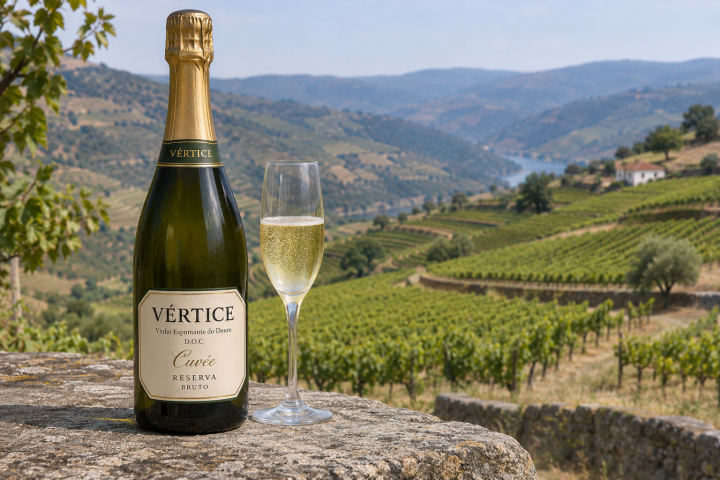
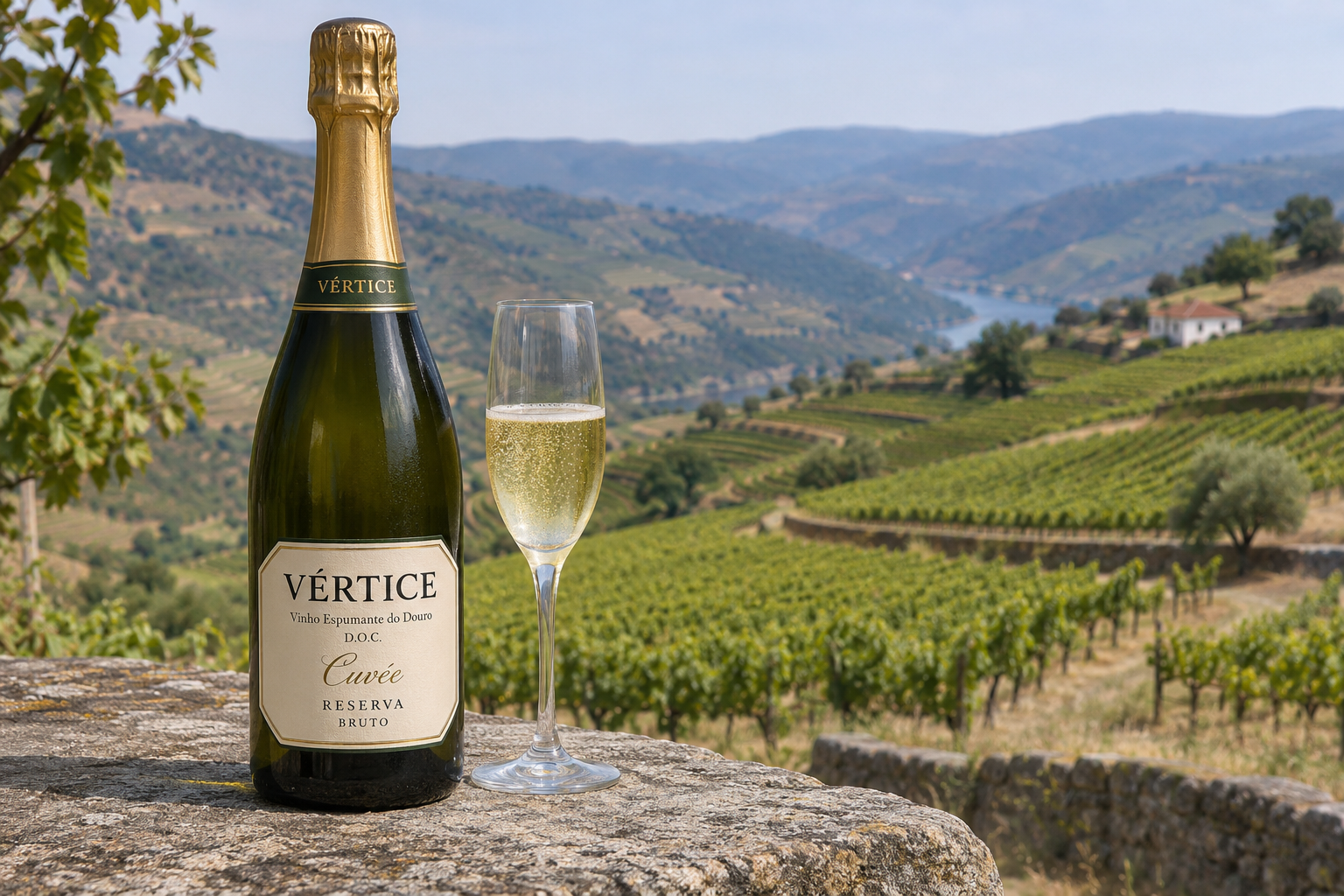
Espumante Vértice (Alijó, Douro, Portugal)
Alcoholic Beverages COUNTRIES AND TERRITORIES Portugal
Alijó, Douro, Portugal
-
2026

In the early 1980s, Douro winegrower João Carvalho Maia worked a harvest at Schramsberg Vineyards in California’s Napa Valley. He subsequently invited its owner, Jack Davies, to Portugal. Davies and his team made small experimental batches with grapes from three Portuguese wine regions: Vinho Verde, Bairrada, and the Douro. After several years of trials, they selected the Alijó plateau in the Cima Corgo subregion of the Douro. Caves Transmontanas was founded in June 1989. Portuguese winemaker Celso Pereira, who had participated in the trials, took responsibility for production that year.
Elevation helps explain the choice of Alijó in a region better known for Port. At around 550 metres above sea level, vineyards on granite soils experience cooler conditions than those closer to the Douro River. The grapes ripen more slowly and retain the acidity sought in a sparkling base wine. Several Vértice releases carry the designation Vinho Espumante do Douro. Under the rules for the Douro protected designation of origin, the base wine must qualify for the appellation, and the second fermentation must take place in the bottle.
The range includes blends and wines made from a single grape variety. One bottling of the white Vértice Cuvée combined four white varieties—Gouveio, Malvasia Fina, Rabigato, and Viosinho—with the red grape Touriga Franca. In the 2013 Vértice Rosé, Touriga Franca gave a pale pink colour to a blend that also included Gouveio and Malvasia Fina. Other releases include the vintage-dated Millésime and separate bottlings of Gouveio, Chardonnay, and Pinot Noir.
In the método clássico, the winemaker adds yeast and sugar to the still base wine before sealing it in the bottle. As the yeast consumes the sugar, carbon dioxide dissolves in the wine, producing its bubbles. The wine then rests on the spent yeast, or lees, which can give it aromas of bread or toasted nuts. Before final corking, the sediment is collected in the neck and expelled, a process called disgorgement. The 2013 Rosé matured for 16 months, whereas the 2007 Vértice RD spent approximately 14 years on its lees before disgorgement in 2022. The initials RD stand for récemment dégorgé, French for “recently disgorged.”
In northern Portugal, the wines appear on restaurant and hotel wine lists. Vidago Palace, for example, has listed the Cuvée, Rosé, and Millésime alongside sparkling wines from Bairrada and Távora-Varosa. The producer recommends serving Vértice at 7–9 °C and suggests smoked salmon or prawn tart with the rosé. For visitors exploring the Douro through its food and wine, these bottlings offer a way to taste how the region’s upland vineyards differ from the warmer slopes associated with Port.
References
Caves Transmontanas. (2020). Vértice: A arte do espumante no Douro; Instituto dos Vinhos do Douro e do Porto. (2021). Regulamento da denominação de origem Douro; Mayson, R. (2020). The wines of Portugal. Infinite Ideas; Robinson, J. (Ed.). (2006). The Oxford companion to wine (3rd ed.). Oxford University Press.
See Also:
See Also
Map