Herdade do Esporão Wines (Reguengos de Monsaraz, Alentejo, Portugal)
Alcoholic Beverages COUNTRIES AND TERRITORIES Portugal Branded Hotel
Reguengos de Monsaraz, Alentejo, Portugal
-
2026

The estate lies near Reguengos de Monsaraz, in one of the eight subregions of the Alentejo Protected Designation of Origin. Its boundaries were recorded in 1267, when the property was known as Defesa do Esporão, and have changed little since. The modern wine business began in 1973, when José Roquette and Joaquim Bandeira bought the estate. Its occupation during the land reforms that followed Portugal’s 1974 revolution delayed their plans. The first Esporão Reserva Tinto came from the 1985 harvest, and exports began in 1989. Contemporary art has appeared on the Reserva labels since that first vintage; the label for the 2023 red, for example, features work by Portuguese architect Álvaro Siza Vieira.
Grape selection matters in Reguengos, where summers are hot and dry and vineyard soils vary even within the estate. A research vineyard grows 189 grape varieties, one per row, so researchers can compare how different vines respond to heat and water stress under the same conditions. The collection also preserves Portuguese varieties that have fallen out of commercial use. The estate completed the organic conversion of its vineyards in 2019, and its red and white Reservas from that harvest were the first to carry organic certification.
The Reserva wines illustrate two approaches to blending. The 2023 Reserva Tinto combined Aragonez, Alicante Bouschet, Touriga Nacional, Cabernet Sauvignon, Syrah, and Trincadeira, and matured for twelve months in French and American oak barrels. For the 2022 Reserva Branco, the winemakers blended Antão Vaz, Arinto, and Roupeiro. Three-quarters of the wine fermented in stainless steel and the rest in oak; six months on the fine lees, the yeast sediment left after fermentation, gave the white a fuller texture. Both wines carry the Alentejo designation of origin. The 2022 Colheita Tinto, by contrast, matured in concrete and carries the broader Alentejano Protected Geographical Indication. Esporão also makes vinho de talha, reviving the regional practice of fermenting grapes in large earthenware vessels.
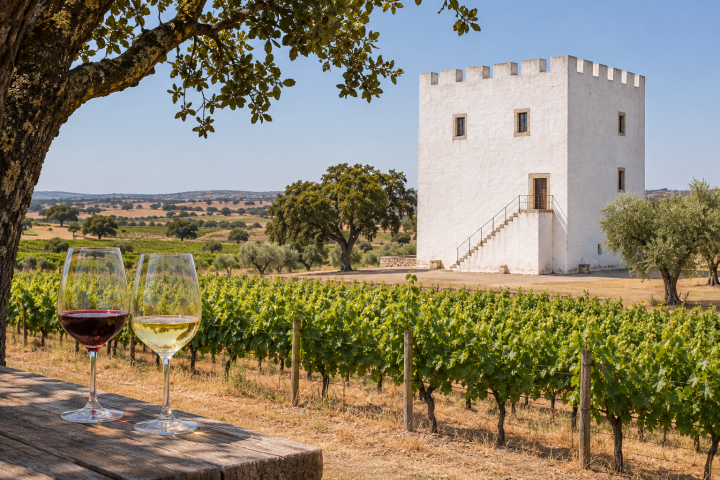
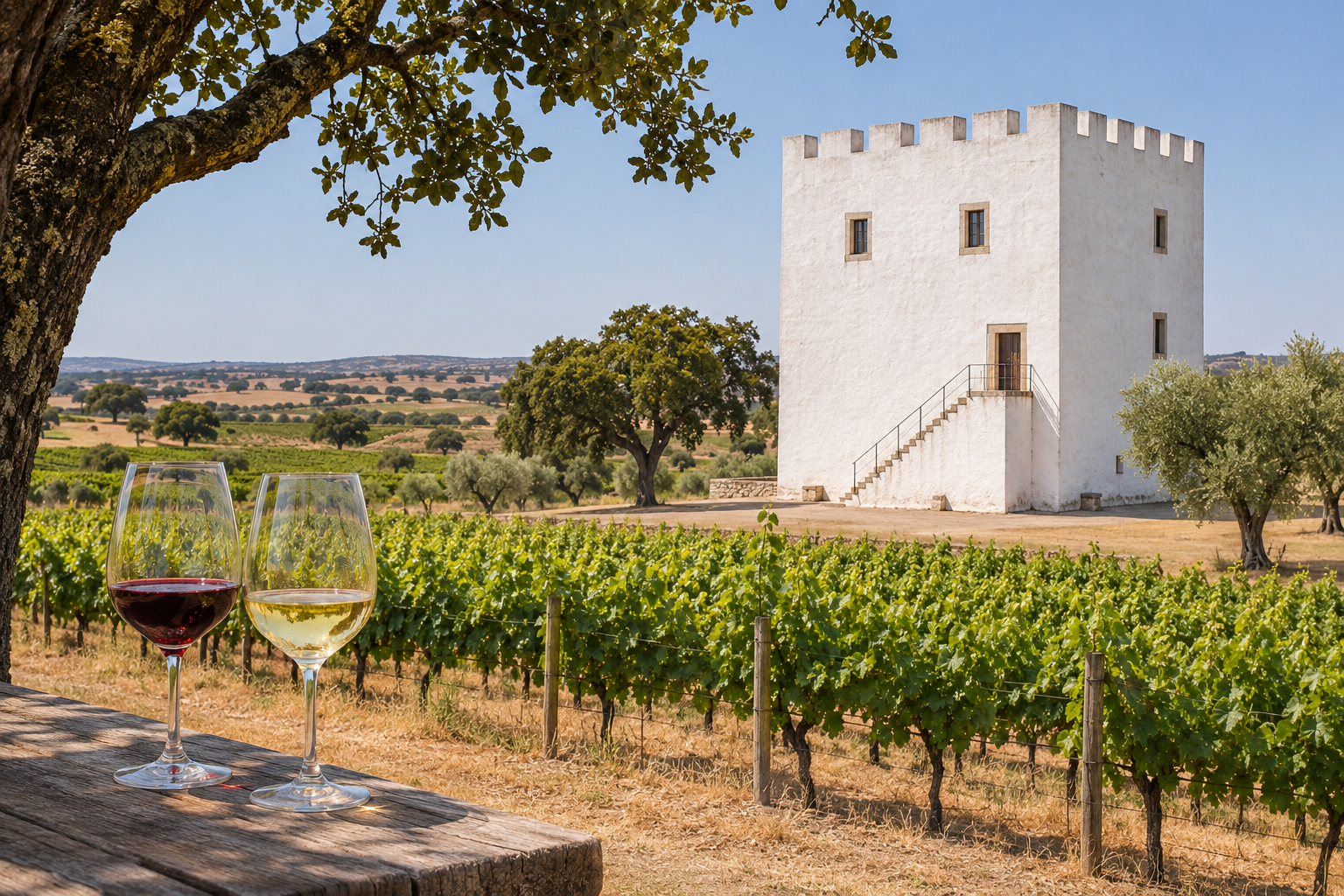
The estate opened to wine tourism in 1997. Guided visits begin among the vines and continue into the wineries, where tastings allow visitors to compare Colheita and Reserva wines. The estate also offers olive oil tastings and serves seasonal Alentejo cuisine. In the historic Esporão Tower, a small museum displays finds from nearby Perdigões, a prehistoric ceremonial complex uncovered in 1996 while land was being prepared for a vineyard.
References
Comissão Vitivinícola Regional Alentejana. (2021). Caderno de especificações da denominação de origem Alentejo; Esporão, S.A. (2020). Herdade do Esporão: 40 anos de história e sustentabilidade; Mayson, R. (2020). The wines of Portugal. Infinite Ideas; Robinson, J. (Ed.). (2006). The Oxford companion to wine (3rd ed.). Oxford University Press.
See Also:
See Also
Map