Moscatel de Favaios (Douro Demarcated Region, Portugal)
Alcoholic Beverages COUNTRIES AND TERRITORIES Portugal
Douro Demarcated Region, Portugal
-
2026

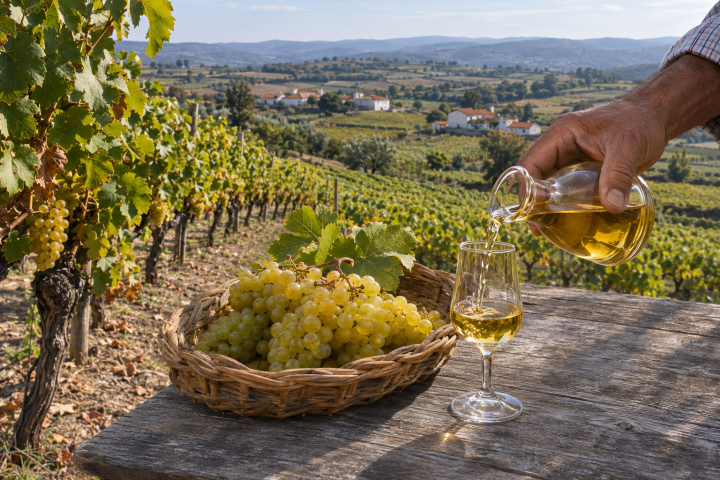
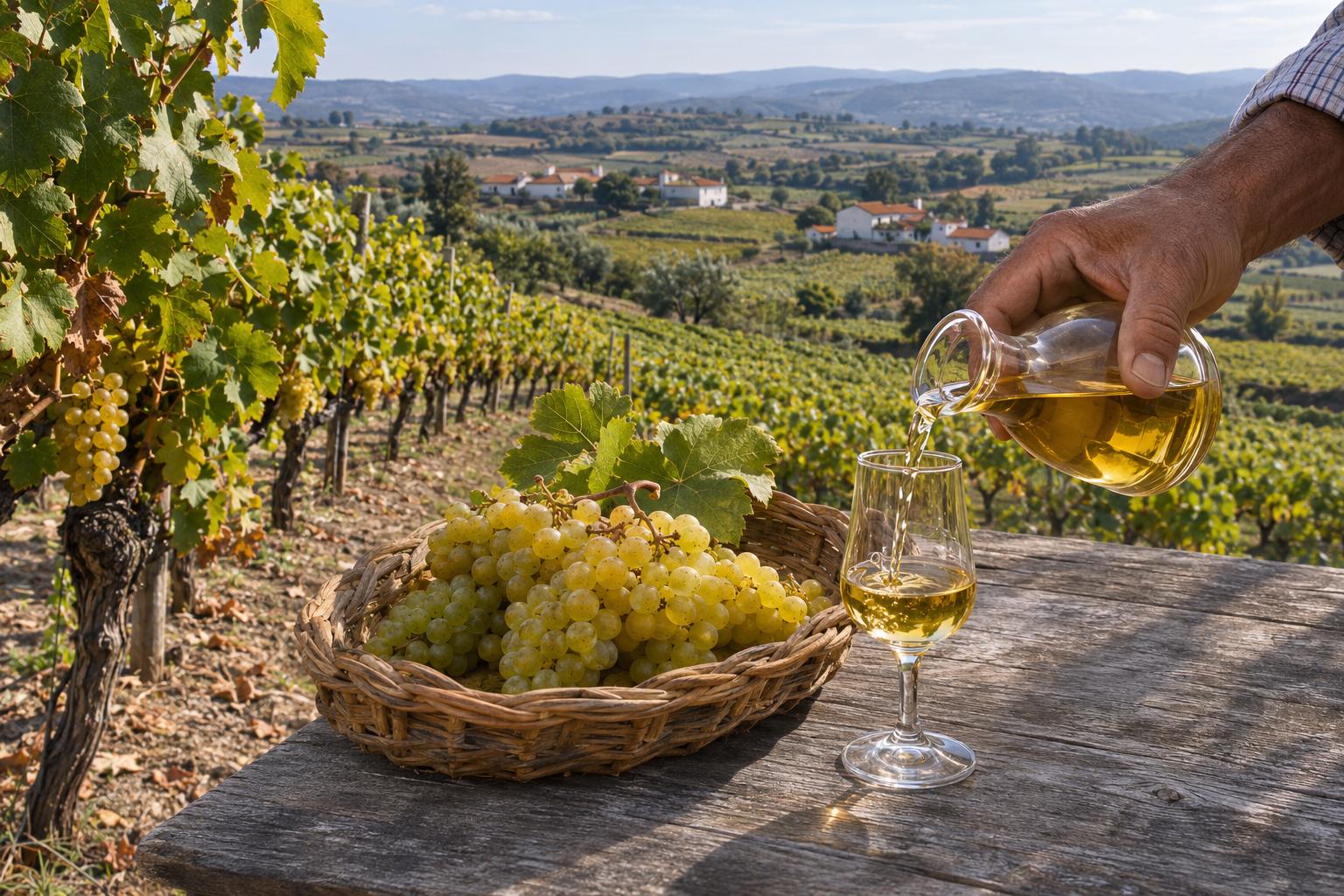
Favaios lies in the municipality of Alijó, in the Cima Corgo subregion of the Douro. The local grape, Moscatel Galego Branco, is known internationally as Muscat Blanc à Petits Grains. The vineyards that supply the local cooperative’s Clássico grow at elevations of 450 to 580 metres. The cooler conditions on the plateau help the grapes retain the acidity that balances the finished wine’s sweetness. Favaios gives the wine its familiar name, while bottles carry the designation Moscatel do Douro under the Douro Protected Designation of Origin.
By the mid-nineteenth century, Favaios growers were fortifying wine made from this single grape variety. Britain and Brazil became important export markets. In the 1930s, rules that favoured lower vineyards and excluded grapes grown on granite made it difficult for many plateau growers to obtain permission to fortify their wine. Local growers founded the Adega Cooperativa de Favaios in 1952, and it received its first harvest in 1956. By pooling their grapes, members could make, age, and sell the wine together.
For the cooperative’s Clássico, the crushed grapes ferment with their skins for three to four days to extract the variety’s floral and citrus aromas. The winemakers then add grape spirit, stopping fermentation while some of the grapes’ own sugar remains. The wine matures in wood for about three years before blending and bottling at approximately 17% alcohol by volume. The result is golden, with aromas of tangerine, lime, and honey. The 10 Anos blends several harvests and retains notes of orange peel alongside toasted nuts. A Colheita, by contrast, comes from a single harvest and spends at least seven years in wood.
The cooperative introduced Favaíto in 1985. Its 55-millilitre bottle made the wine a familiar sight in Portuguese neighbourhood cafés and village taverns. It is served chilled on its own, mixed with beer, or poured over ice with tonic and lemon. In Favaios itself, visitors can taste the wines at the cooperative and explore the village’s two best-known trades at the Núcleo Museológico de Favaios – Pão e Vinho. Housed in an unfinished eighteenth-century manor, the museum tells the story of the wine alongside that of trigo de quatro cantos, the four-cornered wheat loaf that local bakers still bake in wood-fired ovens.
References
Adega Cooperativa de Favaios. (2020). Favaios: A história de uma aldeia e do seu moscatel; Instituto dos Vinhos do Douro e do Porto. (2021). Regulamento da denominação de origem Douro – Moscatel do Douro; Mayson, R. (2020). The wines of Portugal. Infinite Ideas; Robinson, J. (Ed.). (2006). The Oxford companion to wine (3rd ed.). Oxford University Press.
See Also:
See Also
Map