Port Wine / Vinho do Porto (Douro and Porto, Portugal)
UNESCO World Heritage Site Alcoholic Beverages COUNTRIES AND TERRITORIES Portugal
Douro and Porto, Portugal
-
2026

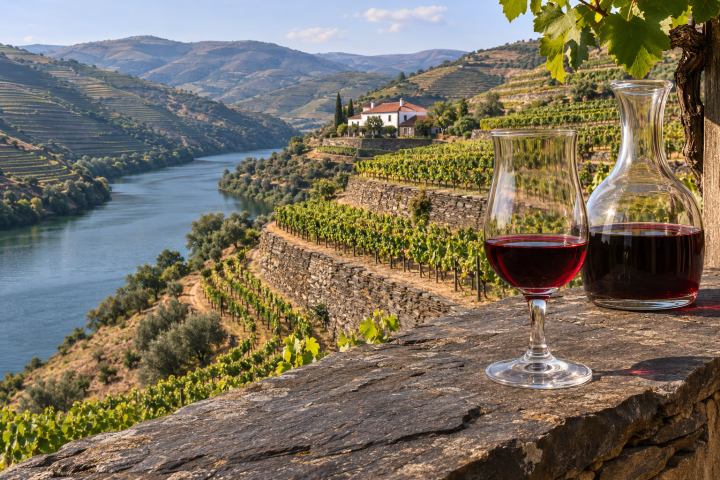
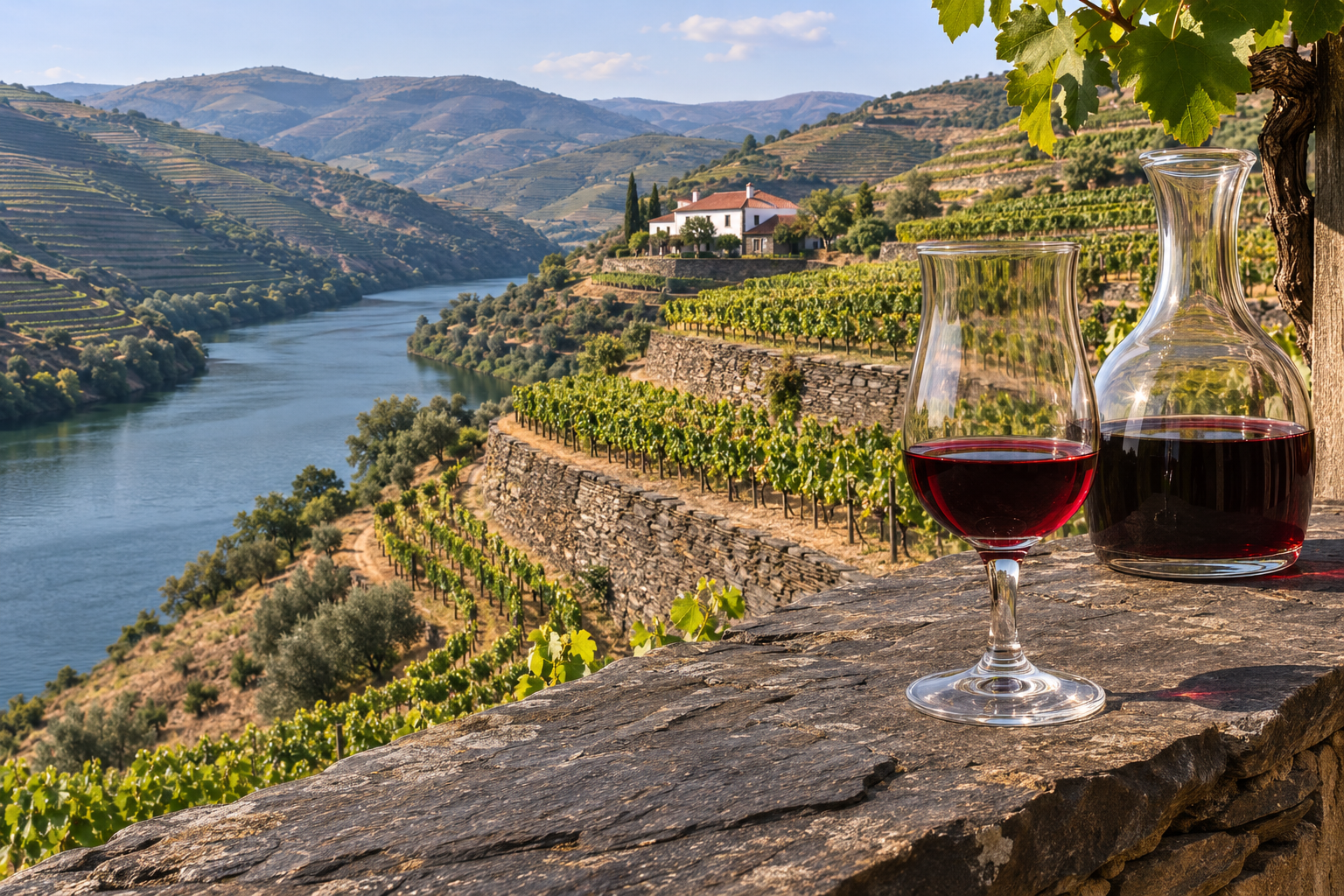
The Porto Protected Designation of Origin covers wine made from grapes grown in three Douro subregions: Baixo Corgo, Cima Corgo, and Douro Superior. From west to east, Atlantic influence diminishes and growing conditions become hotter and drier. On steep slopes of fractured schist, generations of growers built stone terraces to hold the soil and make cultivation possible. Flat-bottomed sailing boats called barcos rabelos once carried casks downriver to the wine merchants’ lodges in Vila Nova de Gaia, across the river from Porto. The cooler maritime climate favoured slow maturation there, although producers can also age Port in the Douro itself.
Trade with England expanded in the late seventeenth century and received a further boost from the Methuen Treaty of 1703, which gave Portuguese wines a tariff advantage over French wines. Early shipments were often dry; merchants sometimes added spirit to finished wine to protect it during transport. The practice that gives most Port its sweetness today—adding spirit during fermentation—became standard only in the nineteenth century. In 1756, under the Marquis of Pombal, the Portuguese Crown chartered the Companhia Geral da Agricultura das Vinhas do Alto Douro to regulate the trade. Granite boundary stones, some still standing, marked vineyards approved to supply the export market. Today, the Instituto dos Vinhos do Douro e do Porto oversees certification.
Most Ports blend several grape varieties. Touriga Nacional, Touriga Franca, Tinta Roriz, Tinta Barroca, and Tinto Cão are important for reds; Malvasia Fina, Gouveio, and Viosinho are among those used for whites. Some estates still tread red grapes by foot in shallow granite tanks called lagares. Treading extracts colour and tannins from the skins during the short fermentation; mechanical systems can perform the same task. The winemaker then adds grape spirit at about 77% alcohol by volume. This stops the yeast before it consumes all the grape sugar. Most finished Ports contain 19–22% alcohol.
The main red styles differ in where and how they mature. Ruby retains its deep colour and fresh fruit character. Vintage Port comes from a single harvest, is bottled in the second or third year after harvest, and can mature for decades in glass. Late Bottled Vintage (LBV) also comes from one harvest but is bottled in the fourth to sixth year and is generally ready to drink on release. Aged Tawny develops amber tones and flavours of nuts and dried fruit through prolonged contact with oxygen in wooden casks. An age indication such as “20 Years Old” describes the character of the blend; its component wines may be younger or older. A Colheita instead names a single harvest and spends at least seven years in wood. White Port ranges from dry to sweet, while rosé Port is generally made to be enjoyed young.
Dry white Port is served chilled as an aperitif, sometimes with tonic. Aged Tawny accompanies almond desserts, while mature Vintage Port is traditionally decanted to leave its sediment behind and may be served with blue cheese. Visitors can taste these differences in Gaia’s historic lodges or at vineyard estates, known as quintas, around Pinhão. At Peso da Régua, the Douro Museum occupies the former wine company’s headquarters. Farther along the valley, the terraces form part of the Alto Douro Wine Region, inscribed on the UNESCO World Heritage List in 2001 as a living cultural landscape.
References
Bradford, S. (1983). The story of port: The Englishman’s wine. Christie’s Wine Publications; Robinson, J. (Ed.). (2006). The Oxford companion to wine (3rd ed.). Oxford University Press; Simões, J. (2015). A rota do vinho do Porto: História e património. Edições Afrontamento; UNESCO World Heritage Centre. (n.d.). Alto Douro Wine Region. World Heritage List. https://whc.unesco.org/en/list/1046
See Also
Map