Historic City of Coimbra / Cidade Histórica de Coimbra (Coimbra District, Portugal)
Cultural Heritage Destination COUNTRIES AND TERRITORIES Portugal Visitor Attractions, Culture and Heritage
Coimbra District, Portugal
-
2026

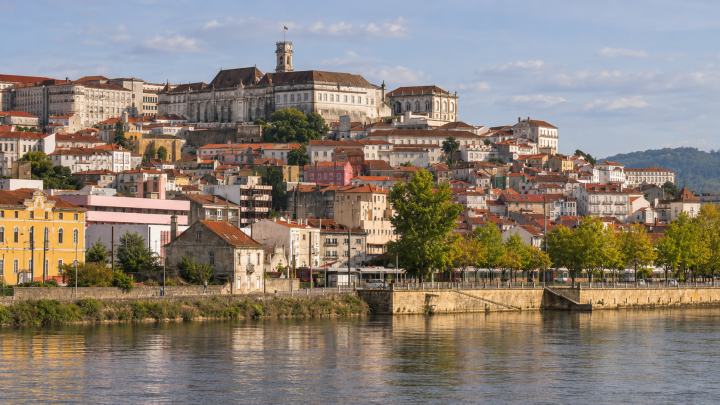
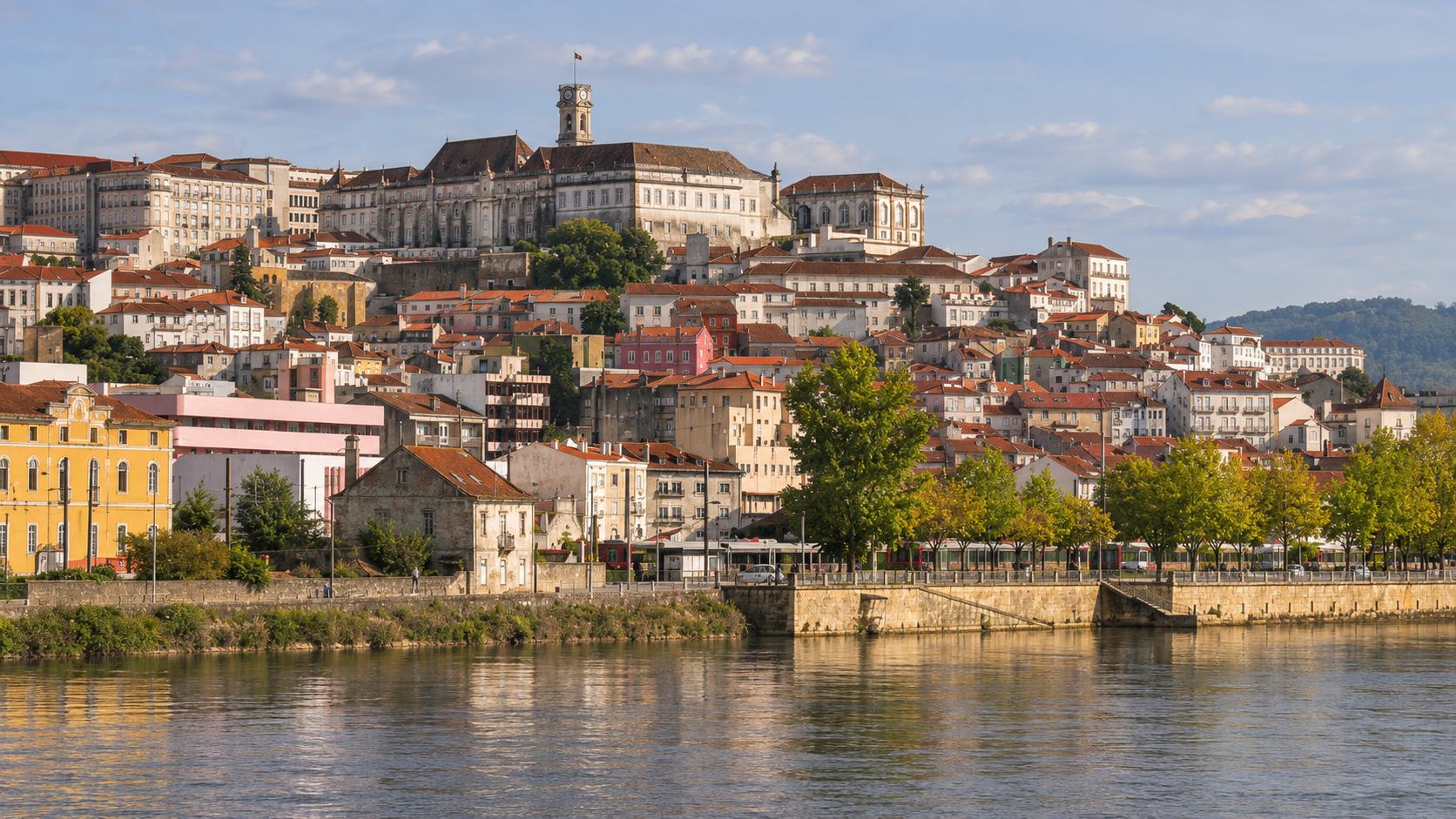
Coimbra’s historic centre rises from the right bank of the Mondego to the hilltop occupied by the university. The upper town, known as the Alta, developed within medieval walls around the citadel and cathedral. Below it, merchants and artisans settled in the Baixa, where narrow streets still connect the river crossing, the Praça do Comércio, and the Monastery of Santa Cruz. The Arco de Almedina, once a principal gateway through the walls, marks the passage between the two districts. Beyond the arch, the steps of the Quebra Costas lead towards the Old Cathedral.
The hill was inhabited before the Roman period. Under Roman rule, the settlement developed as Aeminium, a town on the road between Olisipo (Lisbon) and Bracara Augusta (Braga). Its best-preserved Roman structure is the cryptoporticus, a system of vaulted galleries that provided a level platform for the forum on the steep hillside. Expanded in the first century CE, the galleries still support part of the former bishops’ palace, now the Machado de Castro National Museum. Aeminium succeeded nearby Conímbriga as an episcopal seat and eventually inherited the name from which “Coimbra” derives.
Under Islamic rule, the governor’s fortified residence occupied the summit. After Ferdinand I of León and Castile captured Coimbra in 1064, the city became a stronghold on the Mondego frontier. In 1131, Afonso Henriques moved his court from Guimarães to Coimbra. It became a principal royal residence during the formation of the Portuguese kingdom and is traditionally identified as the birthplace of six kings of its first dynasty. Its role as the monarchy’s political centre diminished when Afonso III shifted the court towards Lisbon in the mid-thirteenth century, conventionally dated to 1255.
Two churches illustrate the religious and political life of medieval Coimbra. In the lower town, the Monastery of Santa Cruz, founded in 1131 by Augustinian canons, housed the royal archives and chancellery. Its church contains the tombs of Portugal’s first two kings, Afonso Henriques and his son Sancho I. The carved tombs visible today date to the monastery’s remodelling under Manuel I in the early sixteenth century. In the upper town, the twelfth-century Old Cathedral (Sé Velha) retains its crenellated Romanesque exterior and a Gothic cloister. In 1772, the episcopal seat moved a short distance uphill to the former Jesuit church, now the New Cathedral (Sé Nova).
The university was founded in Lisbon in 1290 by King Denis, with papal approval from Nicholas IV. It first moved to Coimbra in 1308 and subsequently alternated between the two cities until John III established it permanently in Coimbra in 1537. In 1544, it settled in the former royal palace, now known as the Paço das Escolas. The Sala dos Capelos, once the throne room, became the setting for doctoral ceremonies. Around the palace courtyard stand the Chapel of Saint Michael and the Baroque Joanina Library, completed in 1728, with the cells of the former academic prison below. In the lower town, Rua da Sofia was laid out to accommodate colleges where members of religious orders lived and studied.
Later changes left their own mark on the city. The university reforms of 1772 expanded the teaching of experimental science through facilities including the Chemistry Laboratory and the Botanical Garden. From 1943, the Estado Novo government cleared part of the old Alta for new university buildings, demolishing residential streets and relocating inhabitants to outlying neighbourhoods. In 2013, UNESCO inscribed University of Coimbra – Alta and Sofia on the World Heritage List. The designation brings together the hilltop university precinct and the colleges along Rua da Sofia as evidence of how higher education shaped the city.
Across the Mondego, on the left bank, the Gothic ruins of Santa Clara-a-Velha record a different aspect of Coimbra’s relationship with the river. Repeated flooding forced the Poor Clare community to leave in 1677 for Santa Clara-a-Nova on higher ground. The new monastery houses the tomb of Queen Isabel of Portugal, the city’s patron saint. Nearby, the gardens of Quinta das Lágrimas are associated with the story of Prince Pedro and Inês de Castro.
Coimbra remains the district capital and a centre for education, medicine, and cultural tourism. The university’s visitor circuit recorded approximately 380,000 visits in 2025 and offers timed admission to the Joanina Library. One of the clearest expressions of the relationship between the university and the city takes place outside the ticketed monuments: at the opening of Queima das Fitas, the annual student festival, performers in black academic capes gather on the steps of the Old Cathedral for the Serenata Monumental, singing Coimbra’s distinctive repertoire to the accompaniment of guitars.
References
Alarcão, J. (2008). Coimbra: A montagem da cidade romana e medieval. Imprensa da Universidade de Coimbra; Anacleto, R. (1997). Coimbra: Cidade de arte e de história. Câmara Municipal de Coimbra; Craveiro, M. L. (2011). O património artístico da Universidade de Coimbra. Edições Almedina; UNESCO World Heritage Centre. (n.d.). University of Coimbra – Alta and Sofia. https://whc.unesco.org/en/list/1387
See Also
Map