Sanctuary of Our Lady of Fátima / Santuário de Nossa Senhora do Rosário de Fátima (Fátima, Ourém, Santarém District, Portugal)
Religious Architecture and Sacred Heritage Religious Complex Religious and Spiritual Tourism COUNTRIES AND TERRITORIES Portugal Religious and Sacred Tangible Heritage Religious Buildings and Sites
Santarém, Portugal
-
2026

On 13 May 1917, Lúcia dos Santos and her cousins Francisco and Jacinta Marto, siblings from the nearby village of Aljustrel, reported the first of six appearances of the Virgin Mary. According to their accounts, five took place at Cova da Iria and one at nearby Valinhos. The final appearance was reported on 13 October. Pilgrims began gathering at Cova da Iria that year. In 1930, José Alves Correia da Silva, Bishop of Leiria, declared the visions worthy of belief and formally authorized public devotion to Our Lady of Fátima.
The Chapel of the Apparitions remains the devotional center of the sanctuary. Local mason Joaquim Francisco Barbeiro built it in 1919, and the first Mass was celebrated there on 13 October 1921. After a bombing damaged the chapel in 1922, it was rebuilt and reopened in 1923. Beside it, a statue of Our Lady of Fátima stands on a pedestal marking the spot where, according to the children, Mary appeared above a small holm oak.
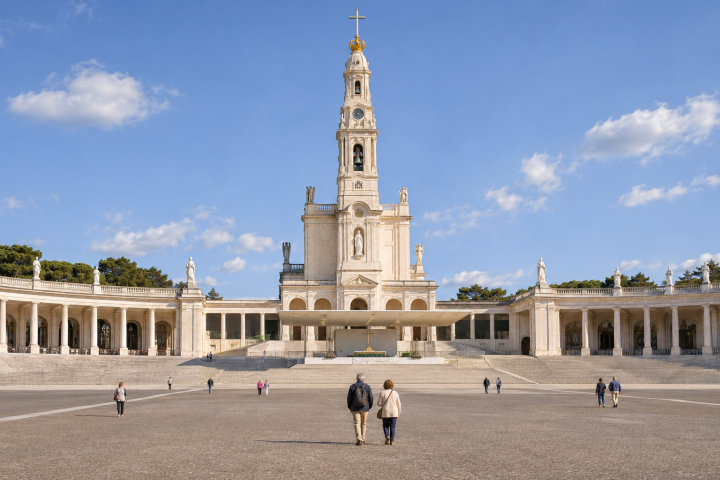
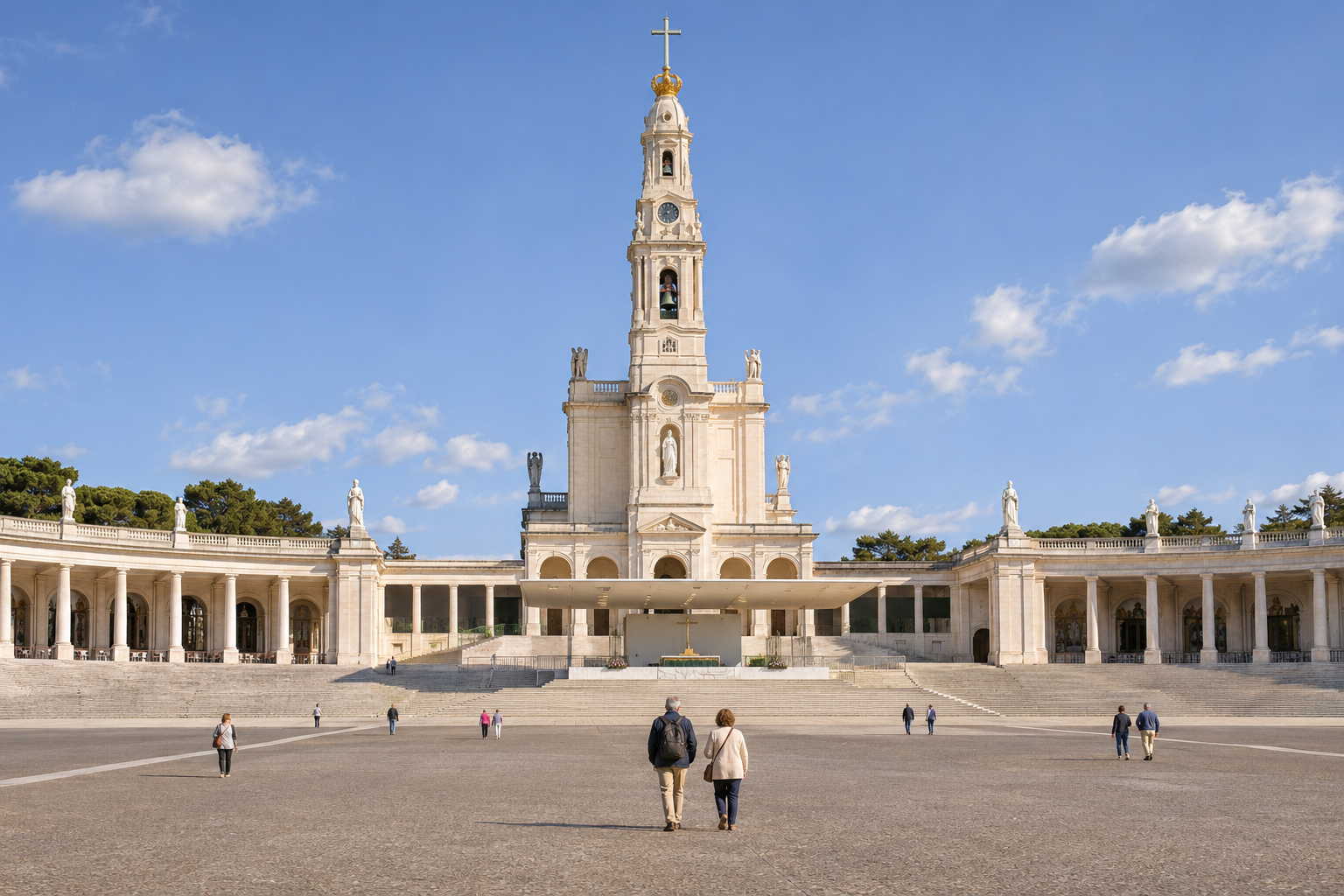
The Basilica of Our Lady of the Rosary stands at the eastern end of the open-air prayer square (Recinto de Oração). Dutch architect Gerardus Samuel van Krieken designed the church, and Portuguese architect João Antunes continued the work. Its foundation stone was blessed in 1928, the church was dedicated in 1953, and Pope Pius XII granted it the title of basilica in 1954. Built of local limestone, it has a 65-meter bell tower topped by a bronze crown and an illuminated cross. António Lino designed the curved colonnades on either side, where ceramic panels depict the Stations of the Cross. All three visionaries are buried in the basilica. Pope Francis canonized Francisco and Jacinta in the square on 13 May 2017, the centenary of the first reported apparition.
At the opposite end of the square, the Church of the Most Holy Trinity was built between 2004 and 2007 to accommodate congregations that had outgrown the older church. Designed by Greek architect Alexandros Tombazis, the circular building measures 125 meters in diameter and seats 8,633 people. Two roof beams span the worship space, leaving the congregation’s view of the altar unobstructed. Dedicated on 12 October 2007, the church received the title of basilica in 2012.
The main anniversary pilgrimages take place on the 12th and 13th of each month from May through October. On the evening of the 12th, pilgrims carrying candles accompany the Marian statue from the chapel to the outdoor altar. Some arrive on foot along the Caminhos de Fátima, a network of marked pilgrimage routes that includes the Tagus Way from Lisbon via Santarém. Visitors can also follow the Way of the Cross toward Valinhos, visit the children’s family homes in Aljustrel, or explore the sanctuary museum’s collection of devotional objects and gifts left by pilgrims. The chapels, basilicas, and prayer square are open for worship throughout the year without an admission fee. In 2025, the sanctuary reported that approximately 6.5 million people had taken part in at least one of its religious celebrations.
References
Bennett, J. S. (2012). When the sun danced: Myth, miracles, and modernity in early twentieth-century Portugal. University of Virginia Press; Fernandes, M. A. (2007). A arquitetura do Santuário de Fátima: Da Capelinha à Basílica da Santíssima Trindade. Cátedra de História da Arte; Santuário de Fátima. (2017). Documentação de Fátima: Fontes e estudos sobre as aparições e o santuário; Tombazis, A. N. (2009). Design of the Church of the Most Holy Trinity in Fátima, Portugal. Journal of Architectural and Planning Research, 26(3), 210–225.
See Also
Map